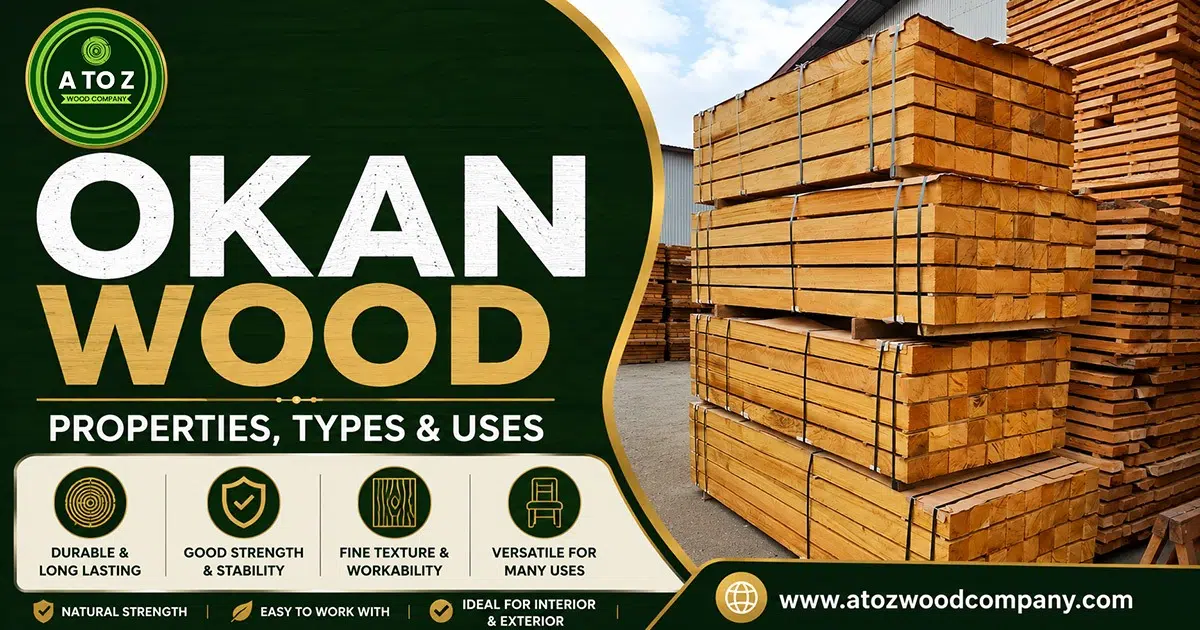
Okan Wood Properties, Types and Uses in Detail

okan wood guide

Okan (Cylicodiscus gabunensis) is a highly dense, durable West African hardwood. Known for its exceptional strength (D40 class) and natural durability (class 1), including resistance to fungi and marine borers, it is frequently imported globally and used as an affordable, eco-friendly substitute for endangered species like Greenheart.

Its impressive strength and durability make okan a favorite for outdoor construction. Some popular applications include bridge decking, railway sleepers, and premium exterior construction. AtoZ Wood Company is a top global exporter of solid African okan hardwood logs and sawn timber at wholesale rates with worldwide delivery.

What is Okan Wood?

Okan is obtained from the tree Cylicodiscus gabunensis, a large tropical hardwood tree native to West African countries including Cameroon, Gabon, the Republic of the Congo, and Equatorial Guinea. Mature okan trees produce large, high-quality logs with high global demand and good pricing.

The heartwood of okan ranges from yellowish-golden to reddish-brown and gradually darkens to a coppery hue with age or exposure. It is clearly distinguishable from the pale-whitish sapwood. The texture is medium to coarse and the grain is usually interlocked, giving the finished okan surface a distinct striped appearance.

Physical Properties of Okan Wood

1. Exceptional Density and Strength

Okan is classified as an intensely dense and heavy hardwood. Its density, ranging from 850 to 960 kg/m³, contributes to:

  • Excellent load-bearing capacity
  • High pressure and bending strength
  • Outstanding wear resistance
  • Superior structural stability

2. Excellent Natural Durability

The heartwood of Okan is classified as Durability Class 1 (Very Durable) under European standards, meaning it has excellent resistance to fungal decay and insects. The wood is practically impregnable against termites, moisture, wood-boring insects, and weather deterioration. Because of its incredible natural durability, Okan is favored for outdoor applications without requiring preservative treatment.

3. High Hardness

Okan is extremely hard, with a Janka hardness rating of approximately 10,000–12,300 N (around 2,250–2,760 lbf), making it highly resistant to everyday wear, dents, abrasion, and general damage. The hardness and wear resistance of okan make it an excellent choice for high-traffic commercial or industrial flooring, heavy-duty decking, truck beds, and loading platforms.

4. Attractive Appearance

As an exotic African hardwood, Okan features an attractive visual appearance with stunning grain patterns. The yellowish-brown heartwood turns rich reddish-brown over time. The interlocked grain causes sawn pieces to feature darker ribbon-like patterns, enhancing the wood’s natural character.

5. Dimensional Stability

Okan is relatively stable under pressure. Moderate shrinkage is possible during drying. Kiln drying is recommended to minimize checking, cracking, and distortion due to its high density.

6. Workability of Okan Wood

The high density of Okan makes it challenging to machine. As a heavy wood, it can be difficult to handle and transport. Machining often leads to rapid dulling of cutting tools. Sawing and planing can be difficult. Pre-drilling before screws or nails is mandatory. Gluing and staining can be challenging.

Types of Okan Wood Products

The only botanical tree species of Okan is Cylicodiscus gabunensis. It has no subspecies. However, okan wood is widely sold and used in many forms, including:

Okan Lumber

Sawn or planed timber boards ready for construction, decking, furniture, landscaping, and structural work.

Okan Decking

Due to its excellent weather resistance and durability, Okan is widely used for commercial outdoor decking construction, including pathways, boardwalks, marina decks, pedestrian bridges, and exterior decks.

Okan Beams

Okan is also extensively sold in the form of large structural beams with exceptional strength for bridges, building structures, marine installations, railways, and heavy construction.

Okan Fresh Logs

AtoZ Wood Company is a prominent global manufacturer and supplier of premium okan round logs, fresh and 100% sustainably harvested from FSC-certified forests.

Common Uses of Okan Wood

Because of its remarkable mechanical properties, unmatched durability, and stunning appearance, Okan is highly sought-after for heavy-duty applications.

Marine and Hydraulic Construction

Okan is an excellent choice for marine applications and is widely used for:

  • Bridge decking
  • Piers
  • Jetties
  • Wharf structures
  • Floating docks
  • Sheet piling

Heavy Structural Construction

Engineers favor Okan for:

  • Heavy timber structures
  • Industrial buildings
  • Retaining walls
  • Sound barriers
  • Utility structures

Outdoor Construction

Its natural resistance to decay and insects makes Okan ideal for:

  • Garden structures
  • Decking
  • Fencing
  • Boardwalks
  • Pergolas
  • Landscape edging

Industrial & Commercial Flooring

Okan is commonly used for building heavy-duty flooring for high-traffic commercial facilities such as factories, warehouses, workshops, and logistics centers.

Transport Industry

Its incredible hardness and impact resistance make Okan suitable for:

  • Truck flooring
  • Trailer beds
  • Loading ramps
  • Heavy transport platforms

Conclusion

Okan is one of the world’s finest, most sought-after heavy-duty exotic hardwoods widely used for demanding structural and exterior applications. Its stunning grain patterns, exceptional density, outstanding durability, high wear resistance, and natural protection against decay make it a wonderful choice for heavy-duty exterior and marine construction, bridges, industrial flooring, decking, and large infrastructure projects.

As one of the major global exporters of African exotic hardwoods, AtoZ Wood Company proudly harvests, processes and sells FSC-certified, sustainable okan wood timber, fresh logs, and products worldwide. Contact us for a wholesale price quote today!

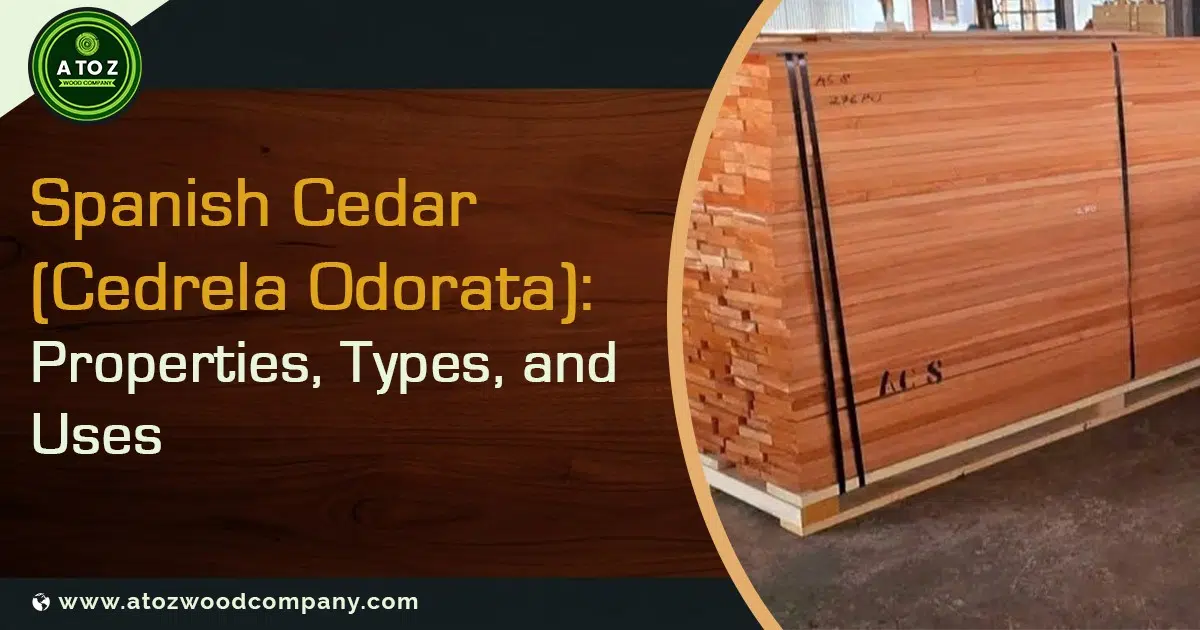
Spanish Cedar (Cedrela Odorata): Properties, Types, and Uses

spanish cedar properties

Spanish Cedar (Cedrela odorata) is a very common and highly valued tropical hardwood sourced primarily from the tropical forests of Central and South America and the Caribbean. Despite its name, it is not a true cedar and instead belongs to the same family as mahogany (Meliaceae).

It is prized for its attractive appearance, natural durability, pleasant aroma, dimensional stability, and versatile usability. In this article, you can read all about the physical properties, varieties (species), and common applications of Spanish Cedar.

What Is Spanish Cedar?

It is a strong and durable hardwood with two major sources:

  1. Well-drained tropical and subtropical forests across America
  2. Plantations across the world

Wood procured from plantations is often paler and less durable than that from natural, old forest trees, which sometimes reach heights of over 30 meters. Despite being lightweight and moderately hard, Spanish cedar offers excellent durability and decay resistance. Its high demand has led to safety and sustainability concerns, and countries like Brazil have heavily regulated the export of this prized hardwood.

Physical Properties of Spanish Cedar


  1. Appearance

The heartwood is usually pale pinkish-brown or reddish-brown with no notable grain patterns. It is known to darken with age and exposure to light. The grain is generally straight, but interlocked grain is also not uncommon. The texture is medium to coarse with a natural, subtle luster.

  1. Lightweight and Strong

Compared to many hardwoods, Spanish Cedar is relatively soft and light, making it easier to handle, transport, machine, and use. At the same time, it’s strong enough for construction and durable furniture making.

  1. Excellent Workability

One of the Spanish Cedar’s greatest advantages is its ease of working. It machines, cuts, planes, shapes, sands, and glues well and doesn’t usually require specialized woodworking tools or methods. It accepts stains, paints, and finishes extremely well.

  1. Natural Resistance to Insects and Decay

It’s natural oils and aromatic compounds help repel termites and other wood-boring insects. It is also resistant to fungal decay, making it suitable for both interior applications and selected exterior uses. 

  1. Pleasant Aroma

It has a unique cedar-like scent, which is one of the primary reasons why it’s preferred for making humidors and cigar boxes. The pleasant smell enhances the flavors of tobacco and keeps insects away.

  1. Dimensional Stability

It is known to maintain excellent dimensional stability throughout its processing and life. That means it’s less prone to warping, cracking, twisting, or checking.

Types (Species) of Spanish Cedar

While the genuine Spanish Cedar (Cedrela odorata) is a single species, many closely related Cedrela species share similar characteristics and are often sold and used interchangeably.

Genuine Spanish Cedar (Cedrela odorata)

This is the main and the most widely traded commercial species, known as Cedrela odorata. It combines pinkish-yellow color tone, light weight, aromatic scent, natural durability, and dimensional stability that Spanish Cedar is prized for.

Cedrela Species

Multiple species in the genus Cedrela are harvested across different countries. Some of these share features similar to genuine Cedrela odorata, including color, density, grain pattern, texture, and workability. Popular examples include Cedrela fissilis, Cedrela huberi, Cedrela oaxacensis, Cedrela montana, Cedrela salvadorensis, and Cedrela tonduzii.

Common Uses

It  is an attractive, durable, and versatile wood used widely worldwide. Some of its top applications include:

Furniture Manufacturing

Its attractive, clean appearance, light weight, ease of machining, and resistance to insects makes it a favorite for high-quality, durable furniture, including wardrobes, cabinets, tables, beds, and decorative items.

Cabinetry and Interior Joinery

It’s excellent response to paint and finish and its natural resistance to insects make it a favorite for kitchen cabinets, decorative moldings, doors, window frames, and joinery work.

Cigar Humidors and Cigar Boxes

Spanish Cedar is extensively used for making premium cigar humidors. The wood’s distinct aroma and resistance to moisture and insects help keep cigars fresh and usable for a long time.

Musical Instruments

It is commonly used for guitar necks and other musical instrument components. Its exceptional strength-to-weight ratio, stability, and ease of working make it an industry favorite.

Veneers and Plywood

Since Spanish Cedar’s supply is limited and often expensive, its decorative veneers and high-quality plywood are commonly used in everyday furniture, interior paneling, and structural applications.

Boat Interiors

Although it cannot withstand prolonged water exposure, Spanish Cedar’s stability, workability, and decay resistance make it a good choice for marine interiors.

Closets and Storage Chests

Its natural aroma and insect resistance make this wood ideal for closets, storage chests, and wardrobes, particularly for storing clothing and expensive textiles.

Conclusion

Spanish Cedar (Cedrela odorata) is one of the world’s most popular tropical hardwoods, known for its unique combination of light weight, beautiful appearance, pleasing aroma, dimensional stability, and natural resistance to insects. It is a favorite for premium furniture, cabinetry, cigar humidors, musical instruments, and veneers

If you’re looking to buy high-quality, sustainable Spanish Cedar timber at wholesale rates, contact AtoZ Wood Company, a leading global timber manufacturer and exporter based in Cameroon.

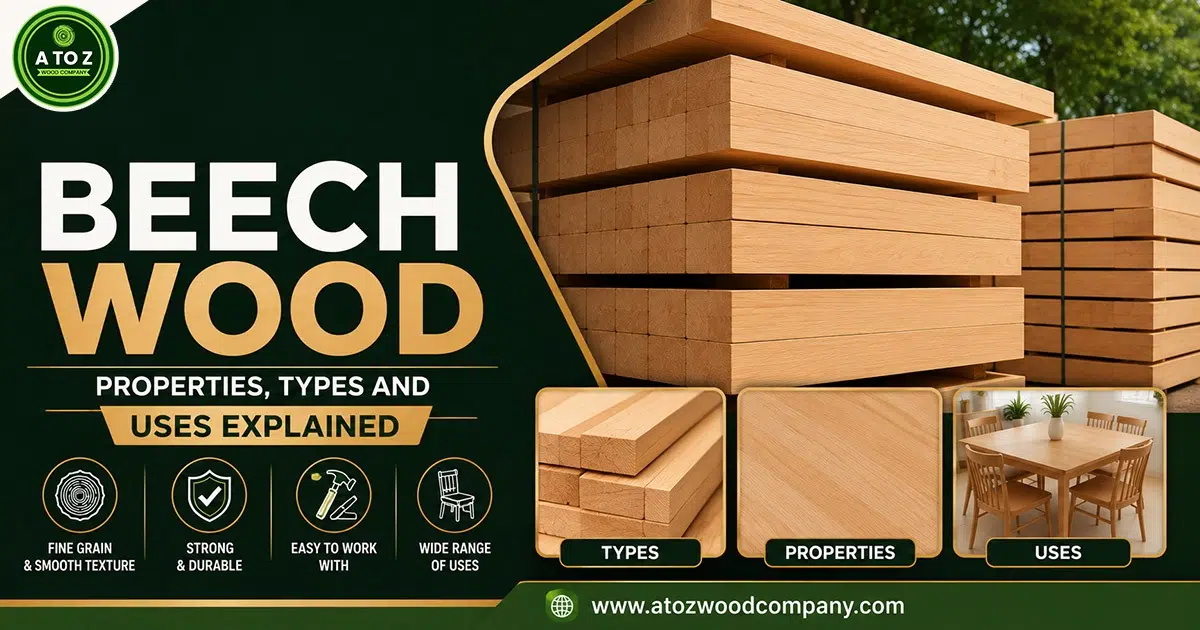
Beech Wood Properties, Types and Uses Explained

Beech Wood Properties, types and uses in detail

Beech is a popular hardwood commonly used in furniture making, interior and exterior construction, and general woodworking. Known for its pale white-brownish color, fine texture, smooth, uniform grain, and excellent strength, beech is a versatile timber with excellent durability and workability. It has more than 14 recognized species.

This article explores the physical properties, types (species), and common uses of beech hardwood timber, helping buyers and woodworkers make informed choices for their projects.

AtoZ Wood Company is a leading Cameroon-based global timber exporter and wholesaler that supplies bulk quantities of both popular and exotic timber species worldwide.

What is Beech Wood?

Fagus sylvatica is a hardwood timber obtained from trees belonging to the Fagus genus in the Fagaceae family. These trees are found across Europe, North America, and parts of Asia.

There are over 14 species of beech, of which European and American beech are the most popular and commercially important.

The heartwood is generally light cream to pale pinkish-brown, while the sapwood is slightly lighter and not always clearly distinguished from the heartwood.

Beech Wood Properties

  1. High Strength and Hardness

It is a strong and durable hardwood with excellent resistance to wear and tear. Its hardness makes it suitable for high-traffic or commercial projects, including furniture, flooring, and work surfaces.

  1. Fine and Uniform Texture

Beech features a white-brownish color, a smooth, fine texture, and a straight grain. This means it’s super easy to machine, polish and finish. It takes paints, stains, and coatings extremely well.

  1. Good Workability

Beech’s uniform, straight grain makes it suitable for cutting, turning, shaping, sanding, and painting. It also responds well to glue, making it ideal for joinery and engineered wood manufacturing.

  1. Steam Bending

One of beech wood’s standout characteristics is its excellent response to steam-bending. The wood can be seamlessly bent into curved shapes while maintaining its stability and strength.

  1. Good Durability

It has excellent resistance to wear and damage. It’s also moderately resistant to decay and insects. Although commonly used in indoor applications, treated beech can withstand heavy moisture exposure.

  1. Consistent Appearance

Properly seasoned and dried beech is dimensionally stable and perfect for interior applications.

Types (Species) of Beech Wood

There are over 14 recognized species of Beech, with the most popular ones being European, American, and Steamed Beech.

European Beech

European beech is the most commercially traded and used variety. It has a pale cream to light pinkish-brown color and a fine, uniform grain. It is widely used in furniture making, flooring, plywood, cabinetry, and interior trimwork.

American Beech

It is similar to European beech in appearance and grain pattern. It has excellent strength and workability, making it suitable for furniture, flooring, veneer, plywood, and interior construction. The right choice depends on availability.

Steamed Beech

Steamed beech is a beech variety that has been treated with steam to improve its appearance and physical properties. It is more uniform, slightly darker reddish-brown with increased strength and stability.

Common Uses of Beech Wood

It  is a versatile hardwood used in a wide range of interior applications, including:

Furniture Manufacturing

It is commonly used for making interior furniture, such as dining tables, chairs, beds, cabinets, shelves, and wardrobes. Its structural integrity and smooth finish make it suitable for both visible and veneered furniture products.

Flooring

Due to its excellent strength and wear resistance, beech is a wonderful choice for flooring with moderate to high foot traffic. Proper finishing and care can make it last many years.

Kitchen and Household Items

Beech timber’s high impact resistance and smooth finish make it suitable for kitchen utensils such as chopping boards, tool handles, rolling pins, spoons, bowls, and storage containers.

Plywood and Veneer

Beech veneer is widely used to create attractive and strong plywood, decorative veneers, furniture components, and wooden interiors.

Interior Joinery

Due to its easy machinability, clear finish, and good response to gluing, beech is commonly used in joinery applications, including doors, stair components, foldable furniture, moldings, wall panels, and trim.

Bent Products

Beech wood properties makes it a preferred wood for steam-bent products, including curved chair frames, stools, handrails, and decorative furniture components.

Toys and Learning Products

It’s smooth texture and resistance to everyday wear make it suitable for wooden toys, puzzles, building blocks, and learning tools.

Conclusion

Beech hardwood is a perfect combination of strength, smooth texture, beautiful appearance, and excellent workability, making it one of the most widely used commercial hardwoods for interior applications. Its excellent

workability, steam-bending, and response to finish and polish make it suitable for both solid wood projects and veneered products, including furniture, flooring, cabinetry, kitchen items, and interior woodworking.

At AtoZ Wood Company, we offer high-quality, 100% authentic and sustainable beech timber at wholesale prices for furniture manufacturers, merchants, architects, builders, and woodworking professionals across the globe. Whether you require bulk quantities of beech timber or just one container, contact us to share your requirements and preferences today.

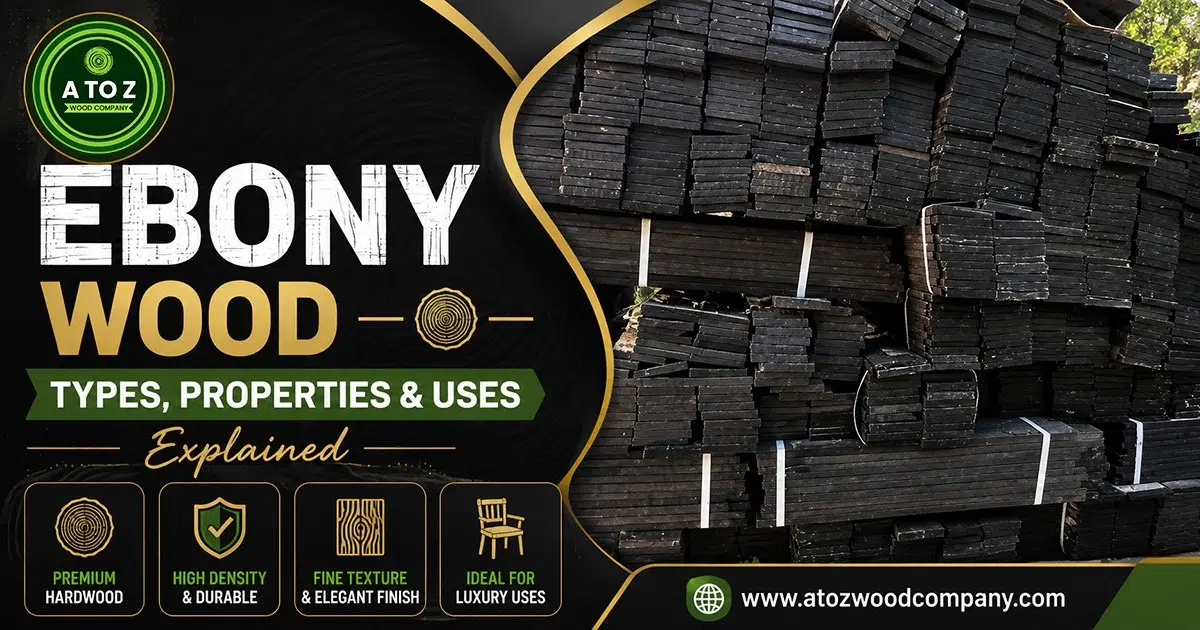
Ebony Wood Types, Properties & Uses Explained

ebony wood types, properties, and uses

Ebony is one of the most popular and sought-after hardwoods in the world. Known for its exceptional strength, deep black color, stunning grain patterns, and versatile applications, ebony is particularly liked for premium projects, including fine furniture, musical instruments, decorative carvings, and luxury crafts.

The term “ebony” is commonly used to refer to multiple species in the genus Diospyros, tropical hardwood trees found primarily in Africa and Asia. The most famous examples include Gaboon Ebony and Black and White Ebony. This article takes a deep dive into the types, properties and uses of ebony wood.

What Is Ebony Wood?

Ebony is a dense, almost black hardwood derived from trees in the Diospyros genus. While many people associate ebony with Gaboon Ebony, which is a solid black timber, ebony has many species, not all of which are completely black. Some varieties are dark brown, chocolate, or blackish with distinct striped patterns that set them apart from each other.

The dark heartwood located at the center of mature ebony trees is the most prized and sought-after because of its exceptional strength, fine texture, and unmatched durability.

Common Types of Ebony Wood

1. Gaboon Ebony (African Ebony)

Also called African Ebony, Nigerian Ebony, and Cameroon Ebony, Gaboon ebony (Diospyros crassiflora) is one of the hardest woods in the world and the most popular ebony species. Native to Equatorial West Africa, it is famous for its uniform jet-black color and no visible grain.

Key characteristics include:

  • Deep black heartwood
  • Fine even texture
  • Extremely dense and heavy
  • Excellent durability

Gaboon ebony is often very expensive and commonly used for luxury furniture, piano keys, musical instrument fingerboards, tool handles, craft, and decorative inlays.

2. Ceylon Ebony

Ceylon ebony (Diospyros ebenum), also known as East Indian Ebony, is native to Sri Lanka and southern India. It features a dark black heartwood, sometimes with grey or dark brown streaks. Known for its exceptional hardness and a refined texture, Ceylon ebony is highly durable and has superior finishing properties. It is frequently used in high-end furniture, cabinetry, ornamental woodwork, carving, chess pieces, premium musical instruments, and turned objects.

3. Macassar Ebony

Macassar ebony (Diospyros celebica), also known as Striped Ebony or Amara Ebony, is found in Southeast Asia, particularly Indonesia. Unlike other ebonies, it features dark black stripes on top of dark brown to blackish heartwood. Known for its distinctive decorative grain, it is harder than Gaboon ebony, very durable, and extremely attractive. Common uses include luxury furniture, veneers, cabinetry, architectural millwork, billiard cues, musical instruments, and custom woodworking projects.

4. Coromandel Ebony

Coromandel ebony (Diospyros melanoxylon) is primarily found in India and Sri Lanka. It is known for its dark heartwood, exceptional hardness, and attractive grain patterns.

Key features include:

  • Dense and durable hardwood
  • Rich dark brownish-black tones
  • Decorative grain figure
  • High wear resistance

It is commonly used for fine furniture, carvings, crafting, and specialty woodworking applications.

Other less common ebony species include Mun Ebony (Vietnamese Ebony) and Persimmon (White Ebony).

Standard Properties of Ebony Wood

Almost all major species of ebony share the following physical characteristics:

Exceptional Strength

Ebony is a solid and strong hardwood. Many species are so dense and heavy that they can sink in water. This makes it resistant to wear.

Extreme Hardness

As one of the hardest woods in the world, ebony is resistant to dents, scratches, and everyday wear, making it a great choice for high-traffic use.

Fine Texture

Ebony’s texture is usually fine and uniform with a straight or interlocked grain. This makes it super easy to polish.

High Durability

Ebony heartwood is prized for its excellent durability, including natural resistance to decay and rot. With routine care, ebony products can last for generations.

Stability & Workability

Ebony shows good dimensional stability when properly dried. Its hardness can make it challenging to machine and requires sharp tools.

Distinctive Appearance

Most ebony species have solid black heartwood, sometimes with striking striped patterns that enhance their market value.

Uses of Ebony Wood

Though ebony is a versatile hardwood with many potential applications, its high price restricts its uses across premium, high-end projects, including.

  1. Musical Instruments and parts such as guitar fingerboards, violin fittings, piano components, clarinet and woodwind instrument parts.
  2. Fine Luxury Furniture, cabinetry, decorative accents, veneers, tabletops, and custom designs.
  3. Decorative Veneers: widely used to make any piece beautiful while maximizing resource efficiency.
  4. Wood Carvings and Sculptures, statues, and ornamental objects.
  5. Turned Objects: Chess pieces, pens, luxury tool handles, bowls, gift items.
  6. Specialty Items: Walking sticks, jewelry boxes, and other specialty products.

AtoZ Wood Company: Premium Ebony Timber at Wholesale Rates

Ebony is one of the world’s most prized hardwoods. Its exceptional strength, beauty, density, hardness, and natural durability make it the go-to choice for fine woodworking and luxury applications. However, the scarce availability and high pricing of ebony make it inaccessible for most.

We at AtoZ Wood Company are committed to making exotic woods like ebony accessible to everyone in the world. Buy authentic, sustainable ebony timber online at atozwoodcompany.com and enjoy worldwide delivery.

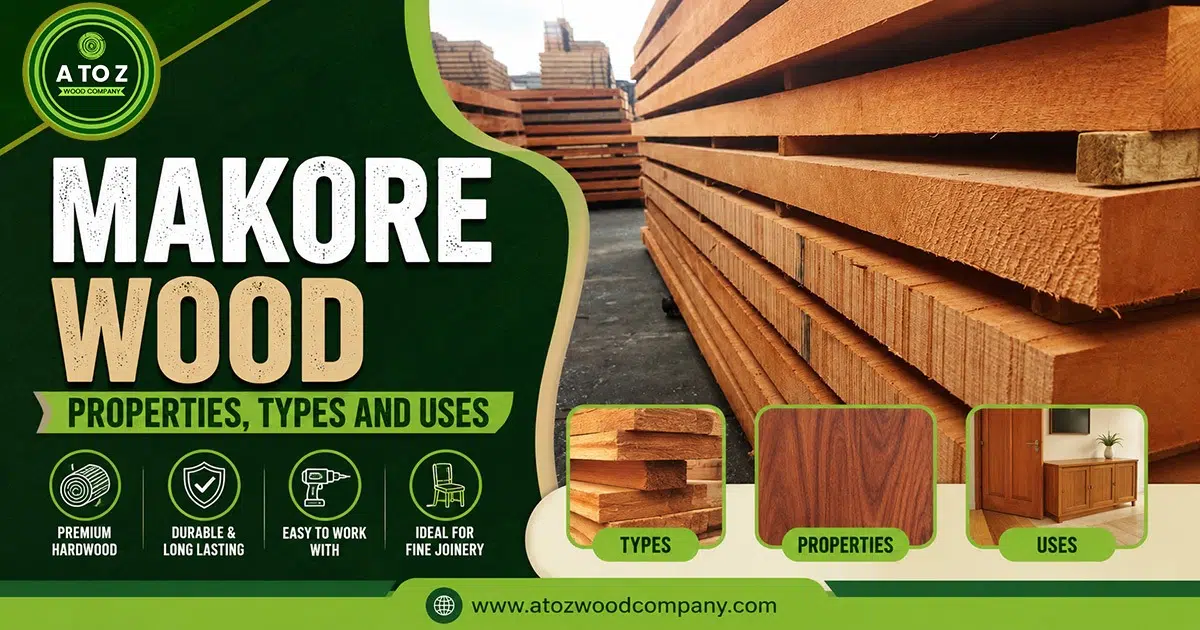
Makore Wood Properties, Types And Uses

Makore wood properites, types and uses

Makore is a fine, highly sought-after African hardwood found in Western and Middle Africa. Prized for its unique appearance, natural durability, and excellent workability, Makore is also sometimes referred to as cherry mahogany due to its similarity to African mahogany. It features an elegant pink or reddish-brown heartwood, often with figured grain patterns. Makore is widely used for making premium furniture, veneers, plywood, cabinetry, flooring, and outdoor projects such as boats.

In this article, we take a deep dive into the physical properties, types, and common uses of Makore hardwood timber.

What is Makore Wood?

Makore (Scientific Name: Tieghemella heckelii or T. africana) is a hardwood timber obtained from trees in the Tieghemella genus within the Sapotaceae family. Native to the tropical rainforests of West and Central Africa, Makore trees are about 180–200 ft (55–60 m) tall with a 4–6 ft (1.2–1.8 m) trunk diameter.

The timber is moderately heavy and looks similar to mahogany. Its unique figured pattern makes it popular for special decorative and artistic applications.

Physical Properties of Makore Wood

Makore wood is known for its excellent combination of beauty and durability.

Color and Appearance

The heartwood ranges from pinkish-brown to reddish-brown or dark red-brown and often darkens with age. The sapwood is light yellowish and clearly separated from the heartwood. Quarter-sawn boards often feature attractive mottled, ribbon, flame, or curly figures that increase the timber’s value for decorative applications.

Grain and Texture

Makore typically has a straight grain, but interlocked grain is not uncommon. The texture is fine to medium with a natural luster (shine).

Density

Makore is moderately heavy. The average dried weight is around 42.9 lbs/ft3, making it easier to handle and work with than many other hardwoods.

Durability

The presence of natural oils makes makore highly durable against decay and insects. The heartwood is naturally resistant to decay by fungi and termite attack, making it suitable for both interior and outdoor applications.

Workability

Generally easy to work with due to its fine texture and straight grain. Direct contact with iron can cause the wood to become discolored and stained. Its high silicon content can cause cutters to blunt. It is generally easy to saw, cut, glue, polish, paint, and finish.

Mechanical Properties

  • Good bending and turning
  • Good dimensional stability after drying
  • High compression strength
  • Moderate hardness
  • Moderate weight
  • Excellent wear resistance
  • Good shock resistance
  • Suitable for heavy-duty construction projects

What are the types (Species) of Makore Wood?

Makore has two major, closely related species.

1. Tieghemella heckelii

This is the most commonly available and traded Makore species. It features a rich reddish-brown color, fine texture, and attractive grain pattern. It is frequently used for premium furniture, veneers, cabinetry, and decorative applications.

2. Tieghemella africana

Often marketed under the same name as Makore (or Douka), this species is almost identical to T. heckelii and is often sold and used interchangeably.

What are the uses of Makore Wood?

Thanks to its attractive appearance, natural durability, and ease of workability, Makore is a popular choice for a wide range of woodworking applications.

Premium Furniture

Makore is extensively used for manufacturing luxury furniture, including dining tables, chairs, cabinets, wardrobes, beds, and office desks. Its rich color tone and visible grain create a sophisticated appearance.

Decorative Veneers

Figured Makore logs are used for making beautiful veneers to be used on furniture panels, tables, doors, wall cladding, and luxury interiors.

Interior Joinery

Makore is widely used for making strong and durable:

  • Doors
  • Window frames
  • Staircases
  • Handrails
  • Moldings
  • Wall paneling

Flooring

Due to its natural durability, structural stability, and wear resistance, Makore is an ideal choice for hardwood flooring in homes, hotels, offices, and commercial buildings.

Cabinetry

Makore’s beautiful, dark brownish tone and excellent response to finish and paint make it highly sought-after for kitchen cabinets, wardrobes, shelves, display units, and storage systems.

Turned and Carved Products

Makore machines cleanly and responds superbly to turning and bending, making it suitable for decorative and ornamental applications, sculptures, and components for musical instruments.

Marine and Exterior Applications

Its natural durability, including resistance to decay and fungi, also makes Makore suitable for boatbuilding, ship interiors, and protected exterior furniture and joinery.

Why use Makore?

  • Beautiful reddish-brown appearance
  • Attractive, unique grain patterns
  • Fine, smooth texture
  • Good workability and machining
  • Good dimensional stability
  • Excellent durability
  • Natural resistance to termites and decay
  • Easy finishing and polishing

Conclusion

Makore is one of the most versatile hardwoods, featuring a perfect combination of beauty, strength, and durability, making it one of the most valuable and sought-after hardwoods in the world. This African exotic wood is prized for its mahogany-like appearance, figured grain patterns, and excellent finishing qualities, making it a favorite for premium furniture, veneers, decorative interior, cabinetry, flooring, and architectural joinery.

If you’re looking for premium, authentic, 100% sustainable Makore hardwood timber, contact AtoZ Wood Company for competitive pricing with assured on-time worldwide delivery. We are a top, globally-recognized African timber wholesaler and exporter, delivering premium hardwoods, softwoods and timber products in 30+ countries. Let’s talk today!

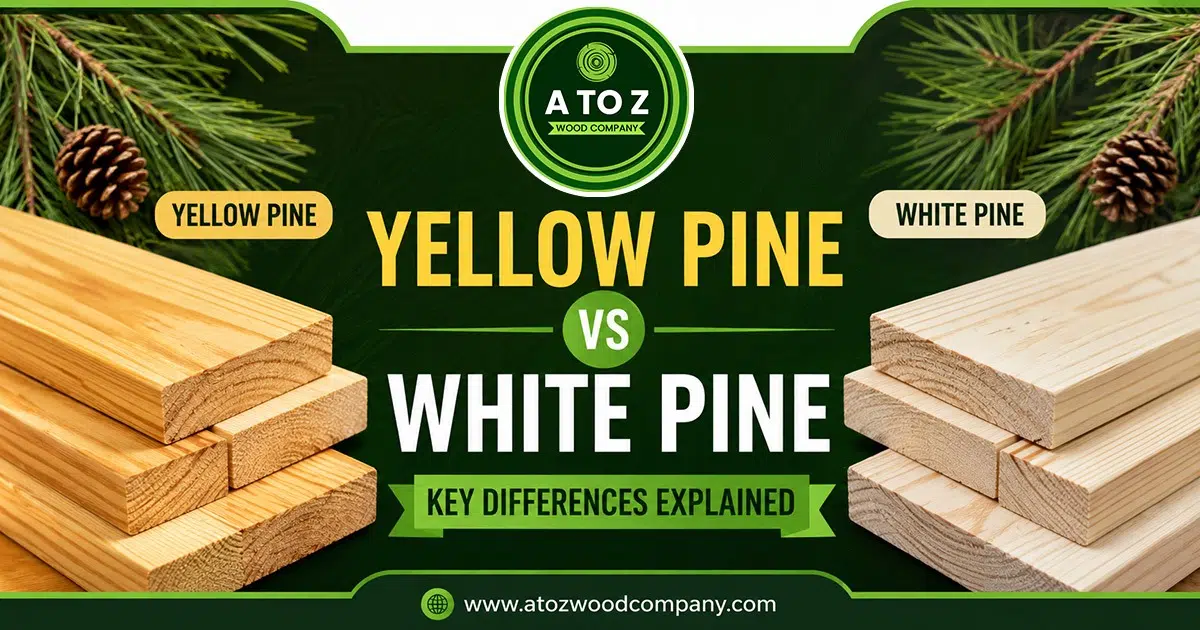
Yellow Pine vs White Pine: Key Differences Explained

yellow pine vs white pine

Pine is one of the most popular timber species in the world. Known for its appealing aesthetics, easy workability, good strength, and competitive pricing, pine comes in many species, with yellow pine and white pine being the most common.

Whether buying timber for construction, furniture making, cabinetry, or interior projects, pine remains an excellent choice. However, choosing the right pine species can be challenging, since all of them share similar characteristics.

In this article, we’ll discuss the major difference between Yellow Pine and White Pine, based on their distinct characteristics, advantages, and applications.

What Is Yellow Pine?

Southern Yellow Pine isn’t a single species but a group of pine species, which includes longleaf, shortleaf, loblolly, and slash pine. Most of these are found in the southeastern United States.

The wood is a yellowish to golden-brown in color with visible grain patterns. Known for its strength and durability, it is widely used in structural applications where strength and stability matter.

Key Characteristics

  • Dense and heavy
  • High strength and load-bearing capacity
  • Attractive Yellowish or golden-brown hue
  • Distinct grain patterns
  • Good to excellent durability
  • Resistant to wear and tear
  • Decent workability; stains and finishes well

Best Uses

  • Structural framing
  • Heavy construction
  • Floor joists
  • Decking
  • Bridges
  • Beams
  • Poles
  • Flooring
  • Plywood
  • Roof trusses
  • Staircases
  • Industrial applications

What Is White Pine?

It is a group of lighter and softer pine species commonly found in North America and Canada. The light brown heartwood is moderately strong and durable and is extensively used in furniture making and home construction. Its easy workability makes it a favorite among woodworkers and craftsmen.

Key Characteristics 

  • Lightweight and easy to handle
  • Moderately durable
  • Light brown color that darkens with age
  • Straight, uniform grain
  • Smooth surface
  • Outstanding workability
  • Minimal shrinkage and warping

Best Uses

  • Furniture making
  • Interior trim
  • Crates & boxes
  • Construction lumber
  • Carving
  • Plywood
  • Boatbuilding

Yellow Pine vs White Pine

Let’s find out the difference between two of the most popular pine species based on appearance, workability, durability and other factors.

1. Appearance

One of the easiest ways to identify Yellow Pine from White Pine is by their appearance.

While Yellow Pine features a rich golden-yellow color with dark grain patterns, White Pine has a lighter cream-colored heartwood with subtle grain lines.

Yellow Pine is ideal for premium applications where bold grain patterns make an immediate impact. White Pine is better suited for a cleaner, softer appearance.

2. Strength and Durability

Yellow Pine stands out for its unmatched strength and hardness, making it one of the strongest softwood species. It’s significantly denser and more durable than White Pine with exceptional load-bearing capabilities. White Pine, on the other hand, is softer and less dense with minimal durability.

3. Workability

Workability refers to the ease of work with hand and machine tools.

White Pine is the clear winner here. Its soft structure and low density make it easier to cut, shape, sand, and nail. It causes less blunting effects on tools.

Yellow Pine’s high density makes it slightly more challenging to cut or saw. It may require sharper tools and more effort.

4. Weight

Weight is a crucial factor when choosing the right timber. Lighter white pine is easy to transport, handle, install, and work with. Yellow Pine, which is considerably heavier, can be more difficult to handle and transport.

5. Resistance to Wear

Due to its high strength and durability, Yellow Pine shows excellent resistance to wear, dents, and scratches, making it perfect for high-traffic areas and heavy-use applications.

White Pine is software and often more prone to dents and everyday wear.

6. Cost

Budget plays a major role in selecting the right timber for a project.

White Pine is typically more affordable due to its easy widespread availability, moderate demand, and easier handling and processing requirements. It’s the perfect wood for interior projects and decorative woodworking.

Yellow Pine typically costs more than white pine, especially for patterned pieces and premium grades. However, its durability and structural stability justify the higher cost.

7. Staining and Finishing

Both woods are generally easy to stain and paint, but the results are often quite different.

Yellow Pine’s darker hue with a solid grain pattern creates a beautiful and instantly appealing stained impression, particularly when colored with darker stains and rustic finishes.

White Pine needs to be conditioned properly in order to achieve even staining. It paints really well and is often the better choice for painted furniture and interior trim work.

Yellow vs White Pine Pros and Cons

Factor Yellow Pine White Pine
Strength High Moderate
Workability Moderate Easy
Weight Heavy Lightweight
Wear Resistance Excellent Low
Cost Higher Affordable
Staining Natural, Rich Results Needs Conditioner
Painting Resin May Bleed Smooth, Even Coverage
Outdoor Use Good (Treated) Limited
Best For Structural & Heavy-Use Interior & Decorative Work

Conclusion

Choosing between Yellow and White Pine is all about your specific project requirements and goals.

Choose Yellow Pine if you need higher strength and durability, better structural integrity and wear resistance, and good outdoor performance (with decay resistance).

Go for White Pine if you seek cost-effective, lightweight timber with easy workability, smooth finishing, and attractive hue for interior woodworking.

At AtoZ Wood Company, we sell all major species of pine, including both yellow pine and white pine. Contact us today to purchase premium-quality pine lumber at wholesale prices with worldwide delivery.

Whether you’re building an exquisite piece of furniture or need reliable wood for a construction project, choosing the right pine species is important. If you’re confused and need help, feel free to contact our support team to talk to a specialist today.

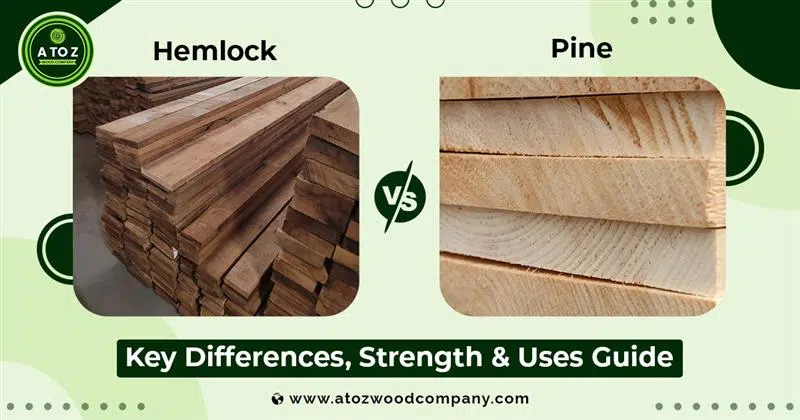
Hemlock vs Pine: Key Differences, Strength & Uses Guide

hemlock vs pine wood

While hemlock and pine wood may appear similar at first glance, these two differ significantly in strength, durability, appearance, workability, and cost.

If you are a builder, contractor, furniture manufacturer, or timber importer looking to make the right choice, this detailed comparison will help you decide which wood suits your project best.

Overview of Hemlock Wood

It is a lightweight softwood primarily sourced from North America and parts of Asia. Western Hemlock is the most commercially used species. It is widely valued in structural framing and industrial applications.

Key Characteristics

  • Color: Light brown with a slight reddish hue

  • Grain Pattern: Straight and uniform

  • Texture: Medium to coarse

  • Density: Moderate (approx. 450 kg/m³)

  • Strength: Good strength-to-weight ratio

  • Resin Content: Low

Advantages

  • Excellent structural performance

  • Stable with minimal warping

  • Takes stain and paint well

  • Good for framing and load-bearing applications

  • Smooth finish when properly planed

Disadvantages

  • Not naturally resistant to decay

  • Low resistance to insects

  • Requires treatment for outdoor use

Hemlock is commonly used in:

  • Structural framing

  • Roof trusses

  • Doors and windows

  • Interior paneling

  • Mouldings

  • Industrial timber components

Overview of Pine Wood

It is one of the most widely used softwoods globally. It grows quickly, making it affordable and easily available. There are many species, including Eastern White Pine, Southern Yellow Pine, and Radiata Pine.

Key Characteristics

  • Color: Pale yellow to creamy white

  • Grain Pattern: Straight but with visible knots

  • Texture: Fine and even

  • Density: Varies by species (400–600 kg/m³)

  • Resin Content: Moderate to high

Advantages

  • Affordable and budget-friendly

  • Lightweight and easy to handle

  • Easy to cut, nail, and glue

  • Good for indoor furniture

  • Widely available

Disadvantages

  • Softer (prone to dents and scratches)

  • Knots may affect structural consistency

  • Needs treatment for outdoor durability

Pine is commonly used in:

  • Furniture manufacturing

  • Interior décor

  • Flooring (treated varieties)

  • Shelving

  • Packaging

  • Construction framing

Hemlock vs Pine: Detailed Comparison

Let’s compare both woods across important decision-making factors.

1. Strength & Structural Performance

When it comes to structural framing, Hemlock generally performs better than standard Pine varieties. It has a more uniform grain structure and fewer knots, which increases its reliability in load-bearing applications.

Southern Yellow Pine, however, is stronger than Hemlock in certain heavy-duty applications due to its higher density.

2. Durability & Outdoor Use

Neither Hemlock nor Pine is naturally highly rot-resistant. Both require pressure treatment for outdoor exposure.

However, treated Pine (especially pressure-treated Pine) is more commonly used for:

  • Decking

  • Fencing

  • Outdoor furniture

Hemlock is less commonly used outdoors unless properly sealed and maintained.

3. Appearance & Grain Pattern

Hemlock has:

  • A cleaner, straighter grain

  • Fewer visible knots

  • More uniform appearance

Pine often contains:

  • Visible knots

  • Rustic aesthetic

  • Color variations

4. Workability & Machining

Pine is easier to machine due to its softness. It cuts, nails, and screws effortlessly. Hemlock, being slightly denser, requires sharper tools but still works well.

For beginners and large-scale furniture production, Pine is often preferred.

5. Cost Comparison

Pine is generally more affordable because:

  • It grows faster

  • It is widely cultivated

  • It has large global supply

Hemlock tends to be slightly more expensive, especially higher grades used in structural applications.

6. Resistance to Warping & Stability

Hemlock is known for dimensional stability. It tends to warp less than lower-grade Pine varieties.

This makes Hemlock a reliable option for:

  • Doors

  • Windows

  • Trim

  • Framing

Choose Pine If You Need:

  • Budget-friendly furniture wood

  • Rustic interior décor

  • Easy-to-work material

  • Outdoor treated lumber

  • Mass production woodworking

Hemlock vs Pine for Furniture

For indoor furniture:

  • Pine is more common due to affordability and ease of machining.

  • Hemlock offers a cleaner look and fewer imperfections.

For premium furniture requiring smooth grain and structural reliability, Hemlock may offer better results. However, Pine remains a top choice for cost-effective furniture production.

Environmental Considerations

Both are softwoods sourced from managed forests. Sustainably harvested timber ensures minimal environmental impact.

When sourcing timber, always choose suppliers that follow:

  • Responsible harvesting practices

  • Sustainable forest management

  • Ethical labor policies

  • Proper kiln drying and treatment

Sustainable sourcing improves durability, reduces waste, and supports eco-friendly construction.

Hemlock vs Pine – Which Is Better?

There is no single “best” wood — it depends entirely on your project requirements.

Factor Hemlock Pine
Strength Good Moderate to High (species dependent)
Cost Moderate Low
Workability Good Excellent
Appearance Clean & uniform Knotty & rustic
Outdoor Use Needs treatment Commonly pressure-treated
Stability Very stable Moderate

Conclusion

Understanding the difference between hemlock and pine helps you select the right timber for strength, budget, durability, and appearance. Both woods serve different purposes in construction and furniture manufacturing.

If you are sourcing timber for bulk supply, commercial projects, or international export, choosing high-quality graded wood from a trusted supplier ensures performance, durability, and long-term value.

Selecting the right wood is not just about cost — it’s about matching the material to the application for maximum efficiency and lifespan.

Padauk vs Rosewood – Which Wood Is Better?

padauk vs rosewood

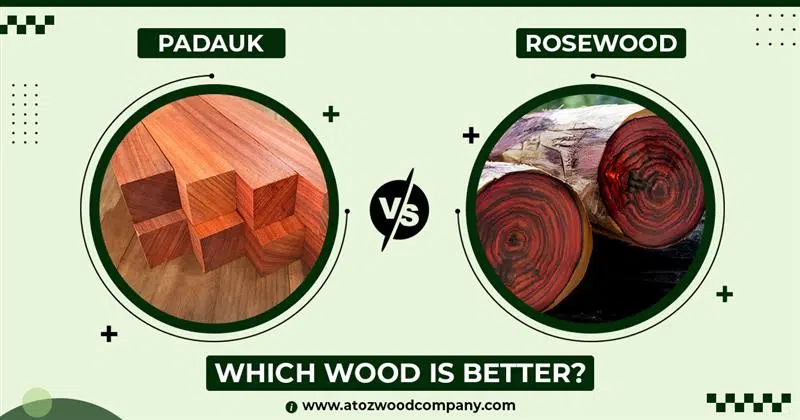
Two premium hardwoods often compared for strength, beauty, and longevity are Padauk and Rosewood. While both are highly valued in the global timber market, they differ significantly in appearance, durability, workability, applications, and price.

In this detailed comparison, we break down Padauk vs Rosewood to help architects, manufacturers, woodworkers, and bulk timber buyers make the right choice.

What Is Padauk Wood?

It is a tropical hardwood primarily sourced from Africa (African Padauk) and parts of Southeast Asia. It is best known for its vibrant reddish-orange color, which deepens into a rich reddish-brown over time.

Key Characteristics of Padauk

  • Color: Bright red to orange-red (darkens with age)

  • Grain: Straight to interlocked

  • Texture: Medium to coarse

  • Density: High

  • Natural oils: Moderate

  • Durability: Very high

It is widely used in flooring, outdoor furniture, decking, staircases, and heavy-duty construction due to its strength and resistance to environmental stress.

What Is Rosewood?

It refers to several species under the Dalbergia genus, sourced mainly from India, Brazil, and parts of Africa. It is famous for its deep brown to purplish tones with dark veining and luxurious appearance.

Key Characteristics of Rosewood

  • Color: Dark brown, purple, or reddish with black streaks

  • Grain: Straight to wavy

  • Texture: Fine and smooth

  • Density: Very high

  • Natural oils: High

  • Durability: Excellent (indoor-focused)

It has long been associated with luxury furniture, musical instruments, decorative veneers, and high-end interiors.

Padauk vs Rosewood: Quick Comparison Table

Feature Padauk Rosewood
Wood Type Tropical hardwood Tropical hardwood
Color Bright red/orange Dark brown to purple
Grain Pattern Straight to interlocked Wavy with dark streaks
Durability Extremely durable Highly durable
Moisture Resistance Very high High
Outdoor Use Excellent Limited
Workability Moderate Difficult (oily)
Sustainability More available Restricted species
Price Mid to high Very high

Durability & Strength Comparison

When it comes to hardness and longevity, both woods perform exceptionally well.

  • Padauk is highly resistant to rot, termites, fungi, and moisture, making it ideal for outdoor and structural use.

  • Rosewood is extremely dense and strong but is best suited for indoor applications, as constant outdoor exposure can affect its appearance.

Appearance & Aesthetic Appeal

  • Padauk stands out due to its bold, vibrant color, making it a popular choice for modern and statement designs.

  • Rosewood offers a classic, elegant look, often associated with premium craftsmanship and traditional furniture.

If visual impact is your priority:

  • Choose Padauk for bold and contemporary designs

  • Choose Rosewood for rich, timeless luxury

Workability & Finishing

  • Padauk machines well but can be abrasive on tools due to its density.

  • Rosewood, because of its high oil content, can be difficult to glue and finish, requiring experienced handling.

Common Uses of Padauk vs Rosewood

Padauk Wood Uses

  • Outdoor furniture

  • Decking & pergolas

  • Flooring

  • Staircases

  • Heavy-duty furniture

  • Exterior cladding

Rosewood Uses

  • Luxury furniture

  • Musical instruments

  • Decorative panels

  • Veneers

  • Handcrafted items

  • Premium interior décor

Price & Availability

  • Padauk wood price is generally more affordable and stable in the international market.

  • Rosewood price is significantly higher due to limited availability, export restrictions, and conservation laws.

For bulk timber supply, Padauk is easier to source and ship legally compared to many Rosewood species.

Sustainability & Legal Considerations

Rosewood species are often protected under CITES regulations, making international trade complex and heavily regulated.

Padauk, when sourced from sustainably managed forests, offers a more reliable and eco-friendly option for global buyers.

Which Wood Should You Choose?

Choose Padauk if you need:

  • Strong outdoor performance

  • Moisture and insect resistance

  • Cost-effective bulk supply

  • Bold, modern aesthetics

Choose Rosewood if you need:

  • Luxury indoor furniture

  • Rich, decorative appearance

  • Premium craftsmanship material

  • Exclusive, high-value projects

Conclusion

Both woods are exceptional hardwoods, but they serve different purposes. Padauk excels in durability, versatility, and outdoor use, while Rosewood dominates in luxury, elegance, and fine detailing.

Understanding your project requirements, budget, and legal considerations will help you make the right choice between the two.

Cedar vs Pine: Which Wood Is Best for Your Project?

difference between cedar and pine wood

When selecting timber for construction, furniture manufacturing, or outdoor applications, choosing the right wood species is critical. Two of the most commonly compared softwoods in the global timber market are Cedar and Pine. While both are versatile and widely used, they differ significantly in durability, strength, appearance, cost, and ideal applications.

At AtoZ Wood Company, we supply high-quality Cedar and Pine timber to buyers across Asia, the Middle East, Europe, Australia, and North America. This detailed comparison will help you decide which timber best suits your project requirements.

What Is Cedar Wood?

It is a premium softwood known for its natural oils, resistance to decay, and long outdoor lifespan. It performs exceptionally well in harsh weather conditions without chemical treatment, making it a preferred choice for exterior applications.

Key Features 

  • Naturally resistant to rot, fungi, and termites

  • Excellent moisture resistance

  • Lightweight and dimensionally stable

  • Distinctive aroma and smooth grain

  • Low maintenance over time

Popular Cedar Types Supplied Globally

  • Western Red Cedar

  • Eastern White Cedar

  • Yellow Cedar

What Is Pine Wood?

pine

It is one of the most widely used and commercially important softwoods worldwide. Known for its strength, affordability, and ease of processing, Pine is extensively used in construction and furniture manufacturing.

Key Features

  • High strength-to-weight ratio

  • Easy to cut, machine, and finish

  • Accepts paint and stains well

  • Cost-effective for bulk supply

  • Widely available from sustainable plantations

Common Pine Varieties

  • Radiata Pine

  • White Pine

  • Yellow Pine

Cedar vs Pine: Side-by-Side Comparison

1. Durability & Resistance

Property Cedar Pine
Rot Resistance Excellent (natural oils) Low (unless treated)
Termite Resistance High Moderate
Moisture Resistance Very high Low

2. Strength & Structural Performance

Factor Cedar Pine
Density Low–Medium Medium–High
Load Bearing Moderate High

3. Appearance & Finish

Cedar

  • Rich reddish-brown to honey tones

  • Straight, fine grain

  • Naturally elegant finish

Pine

  • Light yellow to pale brown

  • Prominent knots (rustic appeal)

  • Can be stained to resemble hardwood

4. Workability & Maintenance

Aspect Cedar Pine
Machining Easy Very easy
Maintenance Low Moderate
Outdoor Treatment Not required Required

5. Cost & Market Availability

Factor Cedar Pine
Price Higher Affordable
Bulk Availability Moderate High

Best Uses of Cedar and Pine

Cedar Wood Applications

  • Outdoor decking

  • Garden and patio furniture

  • Fencing and cladding

  • Sauna interiors

  • Boat building

  • Exterior architectural elements

Pine Wood Applications

  • Structural framing

  • Furniture manufacturing

  • Doors and windows

  • Flooring (treated)

  • Pallets and packaging

  • Interior joinery

Sustainability & Responsible Sourcing at AtoZ Wood Company

At AtoZ Wood Company, sustainability is at the core of our operations.

  • Pine is sourced from fast-growing, managed plantations, ensuring high renewability.

  • Cedar is harvested under strict sustainable forestry guidelines to preserve biodiversity.

  • Our operations follow eco-friendly harvesting, processing, and exporting standards.

We ensure ethical labor practices, minimal environmental impact, and long-term forest management—so our clients receive timber that meets both quality and sustainability expectations.

Cedar vs Pine: Which Should You Choose?

Choose Cedar if you need:

  • Long-lasting outdoor timber

  • Natural resistance without chemicals

  • Premium appearance and minimal upkeep

Choose Pine if you need:

  • Strong, structural wood

  • Cost-effective bulk supply

  • Versatile material for interiors and manufacturing

Conclusion

Both are excellent softwoods, but they serve different purposes. Cedar excels in outdoor durability and premium applications, while Pine dominates in affordability, strength, and large-scale use.

For global buyers, builders, furniture manufacturers, and importers, the right choice depends on project requirements, climate conditions, and budget.

Lumber Manufacturers in USA: Industry Overview

USA lumber manufacturers

The United States is one of the world’s largest consumers of lumber, driven by strong demand from construction, furniture manufacturing, flooring, packaging, and infrastructure projects. With thousands of lumber manufacturers operating across the country, buyers often face one critical challenge: finding reliable, scalable, and sustainable lumber suppliers at competitive prices.

In this guide, we explore the U.S. lumber manufacturing landscape, key lumber-producing regions, popular wood types, current market challenges, and why many American buyers now partner with international timber suppliers like AtoZ Wood Company to secure consistent, high-quality lumber supply.

Overview of the Lumber Manufacturing Industry in the USA

Lumber manufacturing in the USA is a highly developed industry supported by advanced sawmilling technology, strict quality standards, and extensive forest resources. U.S. lumber manufacturers primarily process softwoods for construction and hardwoods for furniture, cabinetry, and interior applications.

Key Industry Facts:

  • The USA is among the top global lumber consumers
  • Strong demand from housing, remodeling, and commercial construction
  • Increasing focus on sustainable and certified wood
  • Rising lumber prices due to supply constraints and regulations

While domestic manufacturers remain vital, many U.S. buyers supplement their sourcing with imported lumber to manage costs, availability, and species diversity.

Major Lumber Manufacturing Regions in the USA

1. Pacific Northwest (Oregon & Washington)

This region is known for:

  • Douglas Fir
  • Western Hemlock
  • Cedar

These species are widely used in construction, structural beams, and outdoor applications due to their strength and durability.

2. Southern United States

States like Georgia, Alabama, and Mississippi dominate softwood production, especially:

  • Southern Yellow Pine
  • Loblolly Pine
  • Slash Pine

Southern mills benefit from fast-growing plantations but face increasing demand pressure.

3. Midwest & Great Lakes Region

Traditionally known for hardwood production, including:

  • Oak
  • Maple
  • Ash
  • Cherry

These hardwoods are popular for furniture, flooring, and cabinetry.

4. Appalachian Region

This region produces premium hardwoods and supplies many domestic furniture and millwork manufacturers.

Popular Wood Types Used by U.S. Lumber Manufacturers

Softwoods:

  • Pine
  • Fir
  • Spruce
  • Cedar

Used mainly for:

  • Framing
  • Roofing
  • Decking
  • Pallets

Hardwoods:

  • Oak
  • Walnut
  • Maple
  • Hickory
  • Cherry

Used for:

  • Furniture manufacturing
  • Flooring
  • Interior finishing
  • High-end woodworking

However, many tropical and exotic hardwoods are not locally available, creating demand for imported lumber.

Challenges Facing Lumber Manufacturers in the USA

Despite a strong industry, U.S. wood manufacturers face several ongoing challenges:

1. Rising Raw Material Costs

Forest management regulations, land costs, and labor expenses have increased production costs.

2. Supply Limitations

Domestic forests cannot meet total demand, especially for:

  • Exotic hardwoods
  • Large-dimension timber
  • Specialty wood species

3. Environmental Regulations

Stricter harvesting rules limit output and increase lead times.

4. Price Volatility

Seasonal demand and global trade fluctuations impact lumber pricing.

As a result, many manufacturers, wholesalers, and construction companies look beyond domestic markets.

Why U.S. Buyers Import Lumber?

Importing lumber has become a strategic move rather than a last resort. Key benefits include:

  • Access to diverse wood species
  • Competitive lumber prices
  • Bulk availability for large projects
  • Stable long-term supply contracts
  • Sustainable forestry options

This is where AtoZ Wood Company plays a crucial role.

AtoZ Wood Company: A Trusted Lumber Supplier for the USA Market

While the USA has strong domestic wood manufacturers, AtoZ Wood Company complements U.S. supply chains by providing high-quality imported lumber tailored to American standards.

What Sets AtoZ Wood Company Apart?

1. Wide Range of Lumber Products

AtoZ supplies:

  • Hardwood logs
  • Sawn timber
  • Wood slabs
  • Custom-cut lumber
  • Treated and kiln-dried wood

Popular species supplied to U.S. buyers include:

  • African Mahogany
  • Teak alternatives
  • Iroko
  • Okoume
  • Sapele
  • Afromosia

Tropical hardwoods for furniture and decking

2. Sustainable & Certified Sourcing

AtoZ follows strict sustainable forestry practices:

  • Controlled harvesting (limited trees per hectare)
  • Long regeneration cycles
  • Eco-friendly processing methods

Ethical labor and community development

This aligns with the growing sustainability requirements of U.S. lumber buyers.

3. Bulk & Project-Based Supply

Whether you are a:

  • Lumber wholesaler
  • Construction company
  • Furniture manufacturer
  • Flooring supplier

AtoZ offers bulk shipment capacity with consistent quality and specifications.

4. Competitive Lumber Pricing

By sourcing directly from managed forests and processing facilities, AtoZ helps U.S. buyers:

  • Reduce procurement costs
  • Minimize middlemen
  • Lock in stable pricing

5. Worldwide Shipping to the USA

AtoZ exports lumber to major U.S. ports with:

  • Proper documentation
  • Export compliance
  • Secure packaging
  • Reliable lead times

Lumber Manufacturers in USA vs International Timber Suppliers

Factor U.S. Manufacturers AtoZ Wood Company
Species Variety Limited to local species Wide global selection
Price Stability Affected by domestic demand More competitive pricing
Bulk Availability Often limited High-volume supply
Sustainability Region-based Managed forests & eco policies
Custom Orders Limited flexibility Tailored specifications

For many U.S. buyers, the ideal strategy is a hybrid sourcing model—combining domestic lumber manufacturers with reliable international suppliers like AtoZ.

How to Choose the Right Lumber Supplier in the USA Market

When sourcing lumber, buyers should consider:

  • Wood species suitability

  • Moisture content & grading

  • Sustainability certifications

  • Shipping reliability

  • Long-term supply capability

  • Transparent pricing

AtoZ Wood Company meets these criteria while offering added flexibility for large-scale buyers.

Conclusion

The U.S. lumber manufacturing industry remains strong, but growing demand, supply constraints, and sustainability requirements have reshaped how buyers source wood. While domestic lumber manufacturers are essential, imported lumber plays a vital role in maintaining supply chain stability.

AtoZ Wood Company stands as a reliable partner for U.S. businesses, delivering sustainably sourced, high-quality lumber at competitive prices—supporting construction, furniture, and manufacturing projects across the United States.

If you are looking beyond traditional lumber manufacturers in the USA and want a trusted global timber supplier, AtoZ Wood Company is your ideal partner.