+237 681 25 6934
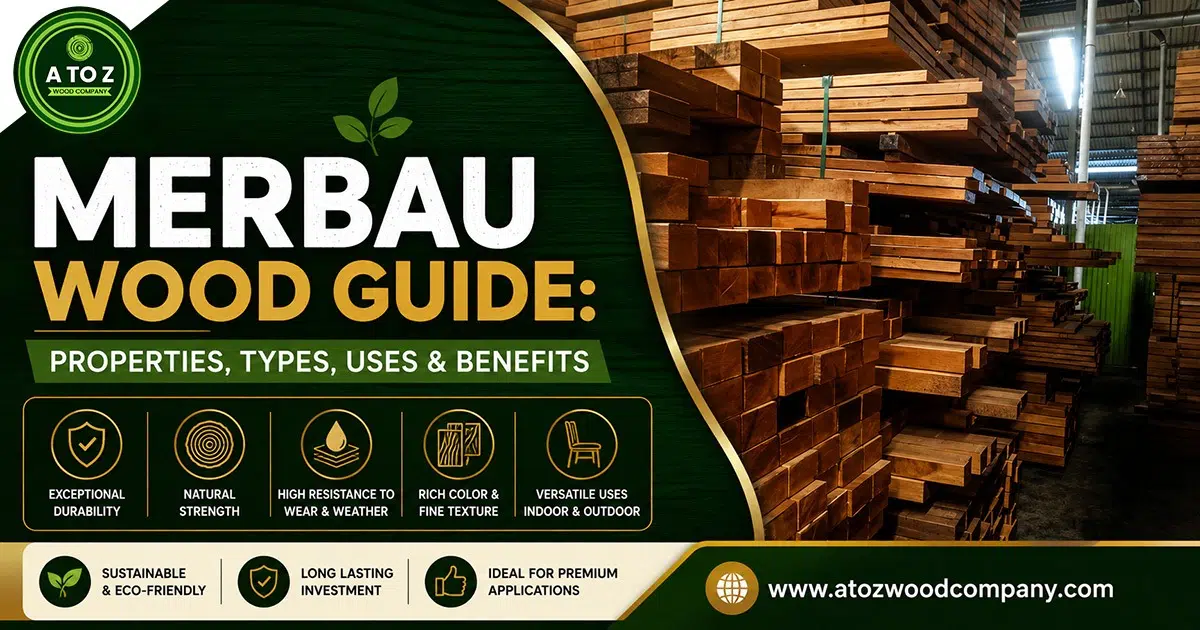
Merbau is a premium, highly durable, strikingly beautiful tropical hardwood found in many parts of the world, mainly in New Guinea. Also known as Kwila, Ipil, among other regional names, it is valued for its striking orangish-brown color, which ages to a darker reddish-brown, exceptional dimensional stability, and natural durability against rot, decay, and termites. Often widely available and moderately priced, it is mainly used for outdoor construction, decking, structural building, and indoor premium flooring due to natural resistance to wear and tear. AtoZ Wood Company is a premier supplier and global exporter of forest-harvested, 100% sustainable Merbau timber available in varied dimensions.
What is Merbau Wood?
Merbau (Scientific Name: Intsia spp.) is a hardwood species found in East Africa, Southeast Asia, Australia, and New Guinea. Its heartwood color ranges from orangish-brown to reddish-brown (aged). It is a very durable, strong and dense wood with good natural resistance to decay and insects. Known for its excellent stability, merbau is considered ideal for use as wood flooring and other heavy-duty applications. Its coarse texture can sometimes dull cutters. Here’s all you need to know about Merbau wood properties, physical characteristics, types (species) and uses.
Merbau Wood Properties
Color & Appearance: Freshly cut Merbau is yellowish to orange-brown and darkens with age into a rich, dark reddish-brown tone. The grain is straight but can also be interlocking. The texture is coarse. Merbau is easily distinguishable from similar species due to the presence of small yellow mineral deposits throughout its surface, giving it a unique, attractive appearance.
Density & Hardness: The 1,840 lbf (7,620 N) Janka rating of Merbau makes it incredibly strong and dense. The average dried weight of Merbau is around 815 kg/m3. It is stronger than Red Oak and heavier than Teak, yet more stable than both.
Durability: Merbau is rated as Class 1 durable (the highest durability rating). Its natural oils and tannins make it incredibly resistant to both moisture and insect (termite) attacks. Merbau construction can easily last decades with basic care. Even when used outdoors, it delivers outstanding weather resistance.
Workability & Considerations: The high density and hardness of Merbau can dull saw blades quickly. Sharp blades and pre-drilling are recommended. The mineral deposits and tannins in fresh merbau often cause color bleeding until the timber is fully seasoned or dried. It leaves a distinct smell while being processed, which can lead to irritation or sneezing.
Types of Merbau
The commercially sold Merbau generally comes in two main varieties, depending on its origin, whether in Southeast Asia or Oceania:
- Intsia bijuga: Also known as Pacific teak, ipil, or Borneo teak, it is widely distributed across the tropical Indo-Pacific region and is celebrated for its high density and deep, dark color tone.
- Intsia palembanica: Predominantly found in the Indo-Malayan region and tropical rainforests of Southeast Asia, this is the most common form of Merbau sold and used commercially. It shares the reddish-brown color and high durability of I. bijuga but is more readily available.
Common Uses of Merbau Wood
Because of its impressive strength, natural durability, weather resistance, and extraordinary strength-to-weight ratio, Merbau is used across multiple industries:
- Outdoor Applications: As a naturally durable hardwood with excellent resistance to moisture, decay, rot and insects, merbau is commonly used for outdoor decking, fencing, walkways, pergolas, gates, flooring and boardwalks. It withstands weather amazingly well.
- Flooring: The high density and wear resistance of merbau make it an excellent choice for heavy-traffic luxury indoor flooring in both commercial and residential environments.
- Furniture & Joinery: Merbau is widely used for building fine, durable indoor and outdoor furniture, cabinetry, solid doors, and window frames. Merbau furniture lasts very long and requires minimal care.
- Musical Instruments: Merbau’s warm tonal qualities, excellent clarity, and pronounced overtones make it a favorite for musical instruments like ukuleles, acoustic guitars (fretboards, bridges), and drum shells.
- Heavy Construction: As a structurally sound and stable wood, merbau is a wonderful choice for the construction of frames, beams, staircases, and heavy-duty industrial work.
- Turned objects and other specialty wood items.
Conclusion
Merbau is a strong, durable hardwood prized for its stunning reddish-brown color that gets more beautiful with age. Its high natural durability makes merbau products last decades and provides excellent resistance against everyday wear, weathering, decay, and insect attack. Merbau is fairly easy to work with, though it can be challenging to cut due to coarse grain. It’s widely available across Africa, Asia and Australia, making it a sustainable hardwood choice with a moderate price.
As a prominent global manufacturer and exporter of premium Merbau timber in more than 70 countries, AtoZ Wood Company welcomes you to order top-quality, 100% original, FSC-certified Merbau timber online from our website atozwoodcompany.com. Order online or via call within minutes and get on-time delivery to your nearest port anywhere in the world.