+237 681 25 6934
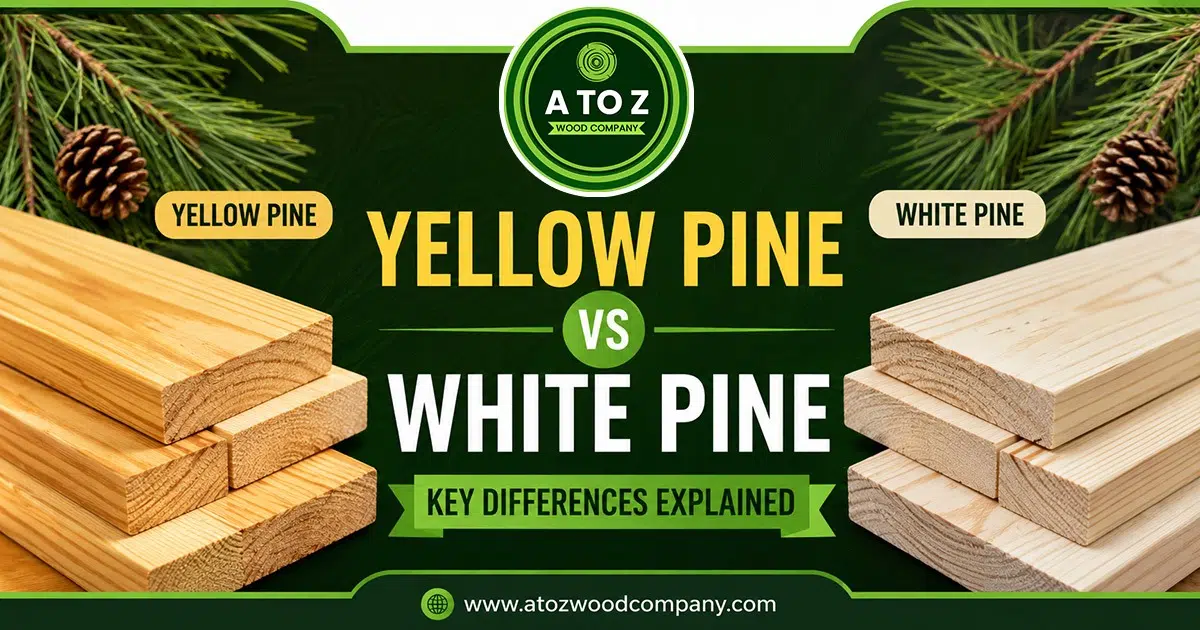
Pine is one of the most popular timber species in the world. Known for its appealing aesthetics, easy workability, good strength, and competitive pricing, pine comes in many species, with yellow pine and white pine being the most common.
Whether buying timber for construction, furniture making, cabinetry, or interior projects, pine remains an excellent choice. However, choosing the right pine species can be challenging, since all of them share similar characteristics.
In this article, we’ll discuss the major difference between Yellow Pine and White Pine, based on their distinct characteristics, advantages, and applications.
What Is Yellow Pine?
Southern Yellow Pine isn’t a single species but a group of pine species, which includes longleaf, shortleaf, loblolly, and slash pine. Most of these are found in the southeastern United States.
The wood is a yellowish to golden-brown in color with visible grain patterns. Known for its strength and durability, it is widely used in structural applications where strength and stability matter.
Key Characteristics
- Dense and heavy
- High strength and load-bearing capacity
- Attractive Yellowish or golden-brown hue
- Distinct grain patterns
- Good to excellent durability
- Resistant to wear and tear
- Decent workability; stains and finishes well
Best Uses
- Structural framing
- Heavy construction
- Floor joists
- Decking
- Bridges
- Beams
- Poles
- Flooring
- Plywood
- Roof trusses
- Staircases
- Industrial applications
What Is White Pine?
It is a group of lighter and softer pine species commonly found in North America and Canada. The light brown heartwood is moderately strong and durable and is extensively used in furniture making and home construction. Its easy workability makes it a favorite among woodworkers and craftsmen.
Key Characteristics
- Lightweight and easy to handle
- Moderately durable
- Light brown color that darkens with age
- Straight, uniform grain
- Smooth surface
- Outstanding workability
- Minimal shrinkage and warping
Best Uses
- Furniture making
- Interior trim
- Crates & boxes
- Construction lumber
- Carving
- Plywood
- Boatbuilding
Yellow Pine vs White Pine
Let’s find out the difference between two of the most popular pine species based on appearance, workability, durability and other factors.
1. Appearance
One of the easiest ways to identify Yellow Pine from White Pine is by their appearance.
While Yellow Pine features a rich golden-yellow color with dark grain patterns, White Pine has a lighter cream-colored heartwood with subtle grain lines.
Yellow Pine is ideal for premium applications where bold grain patterns make an immediate impact. White Pine is better suited for a cleaner, softer appearance.
2. Strength and Durability
Yellow Pine stands out for its unmatched strength and hardness, making it one of the strongest softwood species. It’s significantly denser and more durable than White Pine with exceptional load-bearing capabilities. White Pine, on the other hand, is softer and less dense with minimal durability.
3. Workability
Workability refers to the ease of work with hand and machine tools.
White Pine is the clear winner here. Its soft structure and low density make it easier to cut, shape, sand, and nail. It causes less blunting effects on tools.
Yellow Pine’s high density makes it slightly more challenging to cut or saw. It may require sharper tools and more effort.
4. Weight
Weight is a crucial factor when choosing the right timber. Lighter white pine is easy to transport, handle, install, and work with. Yellow Pine, which is considerably heavier, can be more difficult to handle and transport.
5. Resistance to Wear
Due to its high strength and durability, Yellow Pine shows excellent resistance to wear, dents, and scratches, making it perfect for high-traffic areas and heavy-use applications.
White Pine is software and often more prone to dents and everyday wear.
6. Cost
Budget plays a major role in selecting the right timber for a project.
White Pine is typically more affordable due to its easy widespread availability, moderate demand, and easier handling and processing requirements. It’s the perfect wood for interior projects and decorative woodworking.
Yellow Pine typically costs more than white pine, especially for patterned pieces and premium grades. However, its durability and structural stability justify the higher cost.
7. Staining and Finishing
Both woods are generally easy to stain and paint, but the results are often quite different.
Yellow Pine’s darker hue with a solid grain pattern creates a beautiful and instantly appealing stained impression, particularly when colored with darker stains and rustic finishes.
White Pine needs to be conditioned properly in order to achieve even staining. It paints really well and is often the better choice for painted furniture and interior trim work.
Yellow vs White Pine Pros and Cons
| Factor | Yellow Pine | White Pine |
|---|---|---|
| Strength | High | Moderate |
| Workability | Moderate | Easy |
| Weight | Heavy | Lightweight |
| Wear Resistance | Excellent | Low |
| Cost | Higher | Affordable |
| Staining | Natural, Rich Results | Needs Conditioner |
| Painting | Resin May Bleed | Smooth, Even Coverage |
| Outdoor Use | Good (Treated) | Limited |
| Best For | Structural & Heavy-Use | Interior & Decorative Work |
Conclusion
Choosing between Yellow and White Pine is all about your specific project requirements and goals.
Choose Yellow Pine if you need higher strength and durability, better structural integrity and wear resistance, and good outdoor performance (with decay resistance).
Go for White Pine if you seek cost-effective, lightweight timber with easy workability, smooth finishing, and attractive hue for interior woodworking.
At AtoZ Wood Company, we sell all major species of pine, including both yellow pine and white pine. Contact us today to purchase premium-quality pine lumber at wholesale prices with worldwide delivery.
Whether you’re building an exquisite piece of furniture or need reliable wood for a construction project, choosing the right pine species is important. If you’re confused and need help, feel free to contact our support team to talk to a specialist today.