+237 681 25 6934
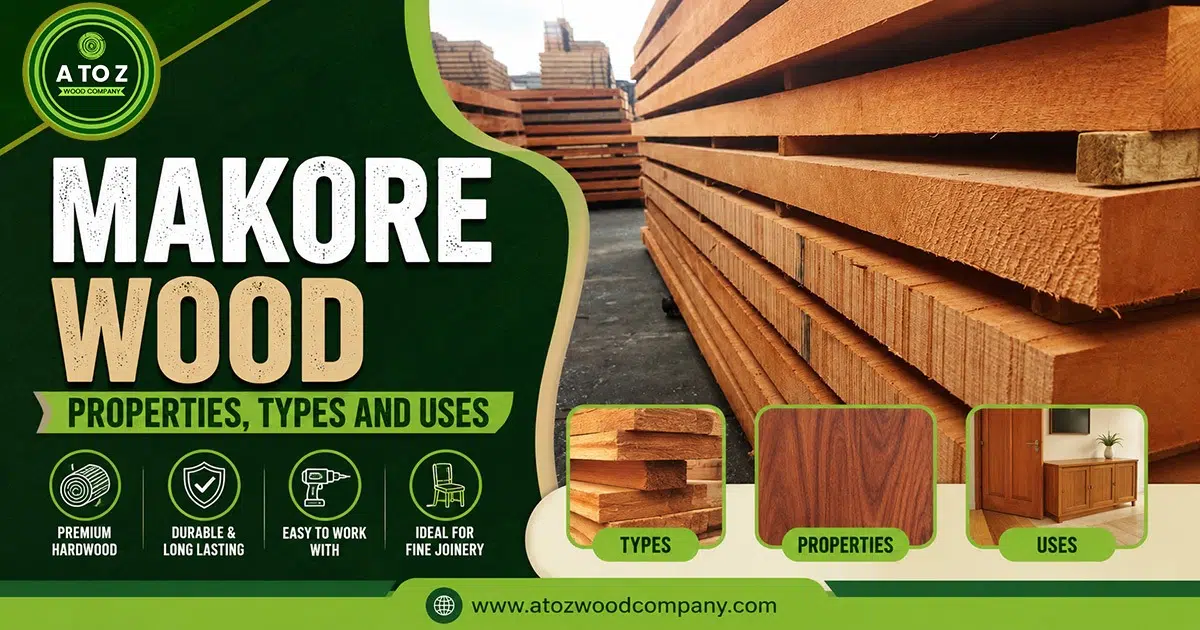
Makore is a fine, highly sought-after African hardwood found in Western and Middle Africa. Prized for its unique appearance, natural durability, and excellent workability, Makore is also sometimes referred to as cherry mahogany due to its similarity to African mahogany. It features an elegant pink or reddish-brown heartwood, often with figured grain patterns. Makore is widely used for making premium furniture, veneers, plywood, cabinetry, flooring, and outdoor projects such as boats.
In this article, we take a deep dive into the physical properties, types, and common uses of Makore hardwood timber.
What is Makore Wood?
Makore (Scientific Name: Tieghemella heckelii or T. africana) is a hardwood timber obtained from trees in the Tieghemella genus within the Sapotaceae family. Native to the tropical rainforests of West and Central Africa, Makore trees are about 180–200 ft (55–60 m) tall with a 4–6 ft (1.2–1.8 m) trunk diameter.
The timber is moderately heavy and looks similar to mahogany. Its unique figured pattern makes it popular for special decorative and artistic applications.
Physical Properties of Makore Wood
Makore wood is known for its excellent combination of beauty and durability.
Color and Appearance
The heartwood ranges from pinkish-brown to reddish-brown or dark red-brown and often darkens with age. The sapwood is light yellowish and clearly separated from the heartwood. Quarter-sawn boards often feature attractive mottled, ribbon, flame, or curly figures that increase the timber’s value for decorative applications.
Grain and Texture
Makore typically has a straight grain, but interlocked grain is not uncommon. The texture is fine to medium with a natural luster (shine).
Density
Makore is moderately heavy. The average dried weight is around 42.9 lbs/ft3, making it easier to handle and work with than many other hardwoods.
Durability
The presence of natural oils makes makore highly durable against decay and insects. The heartwood is naturally resistant to decay by fungi and termite attack, making it suitable for both interior and outdoor applications.
Workability
Generally easy to work with due to its fine texture and straight grain. Direct contact with iron can cause the wood to become discolored and stained. Its high silicon content can cause cutters to blunt. It is generally easy to saw, cut, glue, polish, paint, and finish.
Mechanical Properties
- Good bending and turning
- Good dimensional stability after drying
- High compression strength
- Moderate hardness
- Moderate weight
- Excellent wear resistance
- Good shock resistance
- Suitable for heavy-duty construction projects
What are the types (Species) of Makore Wood?
Makore has two major, closely related species.
1. Tieghemella heckelii
This is the most commonly available and traded Makore species. It features a rich reddish-brown color, fine texture, and attractive grain pattern. It is frequently used for premium furniture, veneers, cabinetry, and decorative applications.
2. Tieghemella africana
Often marketed under the same name as Makore (or Douka), this species is almost identical to T. heckelii and is often sold and used interchangeably.
What are the uses of Makore Wood?
Thanks to its attractive appearance, natural durability, and ease of workability, Makore is a popular choice for a wide range of woodworking applications.
Premium Furniture
Makore is extensively used for manufacturing luxury furniture, including dining tables, chairs, cabinets, wardrobes, beds, and office desks. Its rich color tone and visible grain create a sophisticated appearance.
Decorative Veneers
Figured Makore logs are used for making beautiful veneers to be used on furniture panels, tables, doors, wall cladding, and luxury interiors.
Interior Joinery
Makore is widely used for making strong and durable:
- Doors
- Window frames
- Staircases
- Handrails
- Moldings
- Wall paneling
Flooring
Due to its natural durability, structural stability, and wear resistance, Makore is an ideal choice for hardwood flooring in homes, hotels, offices, and commercial buildings.
Cabinetry
Makore’s beautiful, dark brownish tone and excellent response to finish and paint make it highly sought-after for kitchen cabinets, wardrobes, shelves, display units, and storage systems.
Turned and Carved Products
Makore machines cleanly and responds superbly to turning and bending, making it suitable for decorative and ornamental applications, sculptures, and components for musical instruments.
Marine and Exterior Applications
Its natural durability, including resistance to decay and fungi, also makes Makore suitable for boatbuilding, ship interiors, and protected exterior furniture and joinery.
Why use Makore?
- Beautiful reddish-brown appearance
- Attractive, unique grain patterns
- Fine, smooth texture
- Good workability and machining
- Good dimensional stability
- Excellent durability
- Natural resistance to termites and decay
- Easy finishing and polishing
Conclusion
Makore is one of the most versatile hardwoods, featuring a perfect combination of beauty, strength, and durability, making it one of the most valuable and sought-after hardwoods in the world. This African exotic wood is prized for its mahogany-like appearance, figured grain patterns, and excellent finishing qualities, making it a favorite for premium furniture, veneers, decorative interior, cabinetry, flooring, and architectural joinery.
If you’re looking for premium, authentic, 100% sustainable Makore hardwood timber, contact AtoZ Wood Company for competitive pricing with assured on-time worldwide delivery. We are a top, globally-recognized African timber wholesaler and exporter, delivering premium hardwoods, softwoods and timber products in 30+ countries. Let’s talk today!