+237 681 25 6934
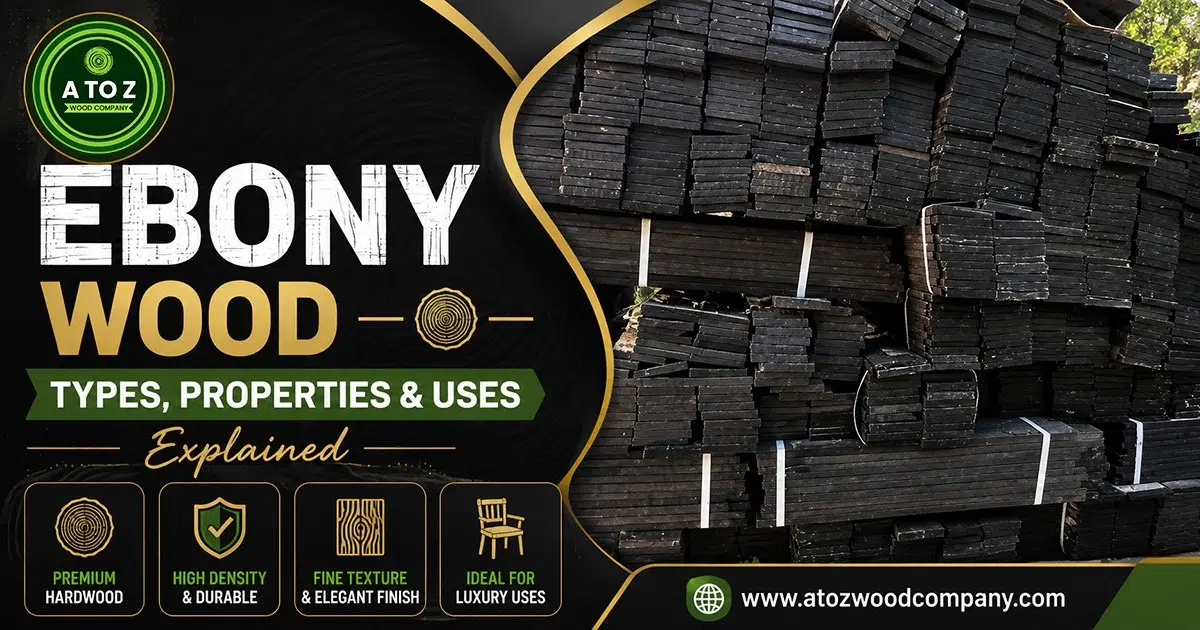
Ebony is one of the most popular and sought-after hardwoods in the world. Known for its exceptional strength, deep black color, stunning grain patterns, and versatile applications, ebony is particularly liked for premium projects, including fine furniture, musical instruments, decorative carvings, and luxury crafts.
The term “ebony” is commonly used to refer to multiple species in the genus Diospyros, tropical hardwood trees found primarily in Africa and Asia. The most famous examples include Gaboon Ebony and Black and White Ebony. This article takes a deep dive into the types, properties and uses of ebony wood.
What Is Ebony Wood?
Ebony is a dense, almost black hardwood derived from trees in the Diospyros genus. While many people associate ebony with Gaboon Ebony, which is a solid black timber, ebony has many species, not all of which are completely black. Some varieties are dark brown, chocolate, or blackish with distinct striped patterns that set them apart from each other.
The dark heartwood located at the center of mature ebony trees is the most prized and sought-after because of its exceptional strength, fine texture, and unmatched durability.
Common Types of Ebony Wood
1. Gaboon Ebony (African Ebony)
Also called African Ebony, Nigerian Ebony, and Cameroon Ebony, Gaboon ebony (Diospyros crassiflora) is one of the hardest woods in the world and the most popular ebony species. Native to Equatorial West Africa, it is famous for its uniform jet-black color and no visible grain.
Key characteristics include:
- Deep black heartwood
- Fine even texture
- Extremely dense and heavy
- Excellent durability
Gaboon ebony is often very expensive and commonly used for luxury furniture, piano keys, musical instrument fingerboards, tool handles, craft, and decorative inlays.
2. Ceylon Ebony
Ceylon ebony (Diospyros ebenum), also known as East Indian Ebony, is native to Sri Lanka and southern India. It features a dark black heartwood, sometimes with grey or dark brown streaks. Known for its exceptional hardness and a refined texture, Ceylon ebony is highly durable and has superior finishing properties. It is frequently used in high-end furniture, cabinetry, ornamental woodwork, carving, chess pieces, premium musical instruments, and turned objects.
3. Macassar Ebony
Macassar ebony (Diospyros celebica), also known as Striped Ebony or Amara Ebony, is found in Southeast Asia, particularly Indonesia. Unlike other ebonies, it features dark black stripes on top of dark brown to blackish heartwood. Known for its distinctive decorative grain, it is harder than Gaboon ebony, very durable, and extremely attractive. Common uses include luxury furniture, veneers, cabinetry, architectural millwork, billiard cues, musical instruments, and custom woodworking projects.
4. Coromandel Ebony
Coromandel ebony (Diospyros melanoxylon) is primarily found in India and Sri Lanka. It is known for its dark heartwood, exceptional hardness, and attractive grain patterns.
Key features include:
- Dense and durable hardwood
- Rich dark brownish-black tones
- Decorative grain figure
- High wear resistance
It is commonly used for fine furniture, carvings, crafting, and specialty woodworking applications.
Other less common ebony species include Mun Ebony (Vietnamese Ebony) and Persimmon (White Ebony).
Standard Properties of Ebony Wood
Almost all major species of ebony share the following physical characteristics:
Exceptional Strength
Ebony is a solid and strong hardwood. Many species are so dense and heavy that they can sink in water. This makes it resistant to wear.
Extreme Hardness
As one of the hardest woods in the world, ebony is resistant to dents, scratches, and everyday wear, making it a great choice for high-traffic use.
Fine Texture
Ebony’s texture is usually fine and uniform with a straight or interlocked grain. This makes it super easy to polish.
High Durability
Ebony heartwood is prized for its excellent durability, including natural resistance to decay and rot. With routine care, ebony products can last for generations.
Stability & Workability
Ebony shows good dimensional stability when properly dried. Its hardness can make it challenging to machine and requires sharp tools.
Distinctive Appearance
Most ebony species have solid black heartwood, sometimes with striking striped patterns that enhance their market value.
Uses of Ebony Wood
Though ebony is a versatile hardwood with many potential applications, its high price restricts its uses across premium, high-end projects, including.
- Musical Instruments and parts such as guitar fingerboards, violin fittings, piano components, clarinet and woodwind instrument parts.
- Fine Luxury Furniture, cabinetry, decorative accents, veneers, tabletops, and custom designs.
- Decorative Veneers: widely used to make any piece beautiful while maximizing resource efficiency.
- Wood Carvings and Sculptures, statues, and ornamental objects.
- Turned Objects: Chess pieces, pens, luxury tool handles, bowls, gift items.
- Specialty Items: Walking sticks, jewelry boxes, and other specialty products.
AtoZ Wood Company: Premium Ebony Timber at Wholesale Rates
Ebony is one of the world’s most prized hardwoods. Its exceptional strength, beauty, density, hardness, and natural durability make it the go-to choice for fine woodworking and luxury applications. However, the scarce availability and high pricing of ebony make it inaccessible for most.
We at AtoZ Wood Company are committed to making exotic woods like ebony accessible to everyone in the world. Buy authentic, sustainable ebony timber online at atozwoodcompany.com and enjoy worldwide delivery.