+237 681 25 6934
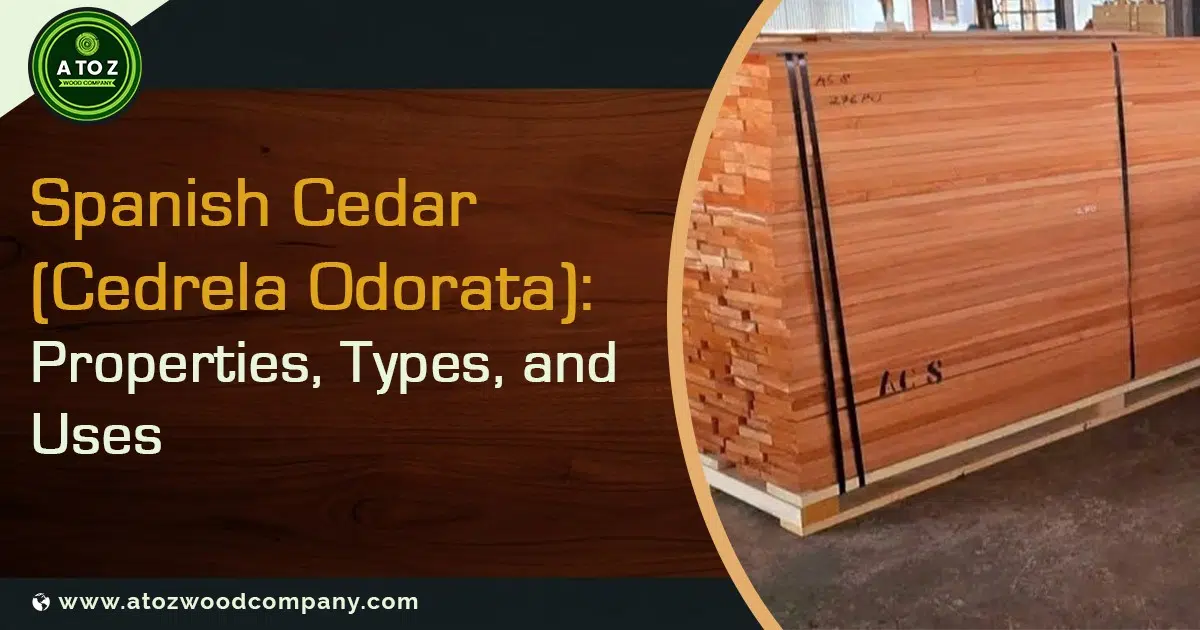
Spanish Cedar (Cedrela odorata) is a very common and highly valued tropical hardwood sourced primarily from the tropical forests of Central and South America and the Caribbean. Despite its name, it is not a true cedar and instead belongs to the same family as mahogany (Meliaceae).
It is prized for its attractive appearance, natural durability, pleasant aroma, dimensional stability, and versatile usability. In this article, you can read all about the physical properties, varieties (species), and common applications of Spanish Cedar.
What Is Spanish Cedar?
It is a strong and durable hardwood with two major sources:
- Well-drained tropical and subtropical forests across America
- Plantations across the world
Wood procured from plantations is often paler and less durable than that from natural, old forest trees, which sometimes reach heights of over 30 meters. Despite being lightweight and moderately hard, Spanish cedar offers excellent durability and decay resistance. Its high demand has led to safety and sustainability concerns, and countries like Brazil have heavily regulated the export of this prized hardwood.
Physical Properties of Spanish Cedar
- Appearance
The heartwood is usually pale pinkish-brown or reddish-brown with no notable grain patterns. It is known to darken with age and exposure to light. The grain is generally straight, but interlocked grain is also not uncommon. The texture is medium to coarse with a natural, subtle luster.
- Lightweight and Strong
Compared to many hardwoods, Spanish Cedar is relatively soft and light, making it easier to handle, transport, machine, and use. At the same time, it’s strong enough for construction and durable furniture making.
- Excellent Workability
One of the Spanish Cedar’s greatest advantages is its ease of working. It machines, cuts, planes, shapes, sands, and glues well and doesn’t usually require specialized woodworking tools or methods. It accepts stains, paints, and finishes extremely well.
- Natural Resistance to Insects and Decay
It’s natural oils and aromatic compounds help repel termites and other wood-boring insects. It is also resistant to fungal decay, making it suitable for both interior applications and selected exterior uses.
- Pleasant Aroma
It has a unique cedar-like scent, which is one of the primary reasons why it’s preferred for making humidors and cigar boxes. The pleasant smell enhances the flavors of tobacco and keeps insects away.
- Dimensional Stability
It is known to maintain excellent dimensional stability throughout its processing and life. That means it’s less prone to warping, cracking, twisting, or checking.
Types (Species) of Spanish Cedar
While the genuine Spanish Cedar (Cedrela odorata) is a single species, many closely related Cedrela species share similar characteristics and are often sold and used interchangeably.
Genuine Spanish Cedar (Cedrela odorata)
This is the main and the most widely traded commercial species, known as Cedrela odorata. It combines pinkish-yellow color tone, light weight, aromatic scent, natural durability, and dimensional stability that Spanish Cedar is prized for.
Cedrela Species
Multiple species in the genus Cedrela are harvested across different countries. Some of these share features similar to genuine Cedrela odorata, including color, density, grain pattern, texture, and workability. Popular examples include Cedrela fissilis, Cedrela huberi, Cedrela oaxacensis, Cedrela montana, Cedrela salvadorensis, and Cedrela tonduzii.
Common Uses
It is an attractive, durable, and versatile wood used widely worldwide. Some of its top applications include:
Furniture Manufacturing
Its attractive, clean appearance, light weight, ease of machining, and resistance to insects makes it a favorite for high-quality, durable furniture, including wardrobes, cabinets, tables, beds, and decorative items.
Cabinetry and Interior Joinery
It’s excellent response to paint and finish and its natural resistance to insects make it a favorite for kitchen cabinets, decorative moldings, doors, window frames, and joinery work.
Cigar Humidors and Cigar Boxes
Spanish Cedar is extensively used for making premium cigar humidors. The wood’s distinct aroma and resistance to moisture and insects help keep cigars fresh and usable for a long time.
Musical Instruments
It is commonly used for guitar necks and other musical instrument components. Its exceptional strength-to-weight ratio, stability, and ease of working make it an industry favorite.
Veneers and Plywood
Since Spanish Cedar’s supply is limited and often expensive, its decorative veneers and high-quality plywood are commonly used in everyday furniture, interior paneling, and structural applications.
Boat Interiors
Although it cannot withstand prolonged water exposure, Spanish Cedar’s stability, workability, and decay resistance make it a good choice for marine interiors.
Closets and Storage Chests
Its natural aroma and insect resistance make this wood ideal for closets, storage chests, and wardrobes, particularly for storing clothing and expensive textiles.
Conclusion
Spanish Cedar (Cedrela odorata) is one of the world’s most popular tropical hardwoods, known for its unique combination of light weight, beautiful appearance, pleasing aroma, dimensional stability, and natural resistance to insects. It is a favorite for premium furniture, cabinetry, cigar humidors, musical instruments, and veneers
If you’re looking to buy high-quality, sustainable Spanish Cedar timber at wholesale rates, contact AtoZ Wood Company, a leading global timber manufacturer and exporter based in Cameroon.