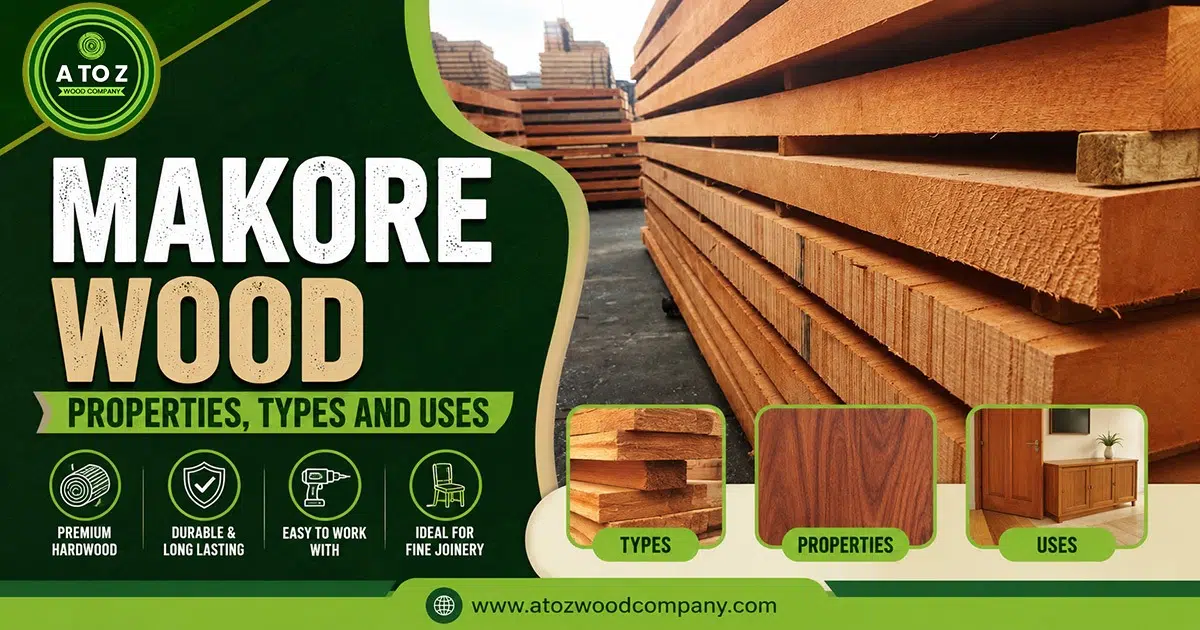
Makore Wood Properties, Types And Uses

Makore wood properites, types and uses

Makore is a fine, highly sought-after African hardwood found in Western and Middle Africa. Prized for its unique appearance, natural durability, and excellent workability, Makore is also sometimes referred to as cherry mahogany due to its similarity to African mahogany. It features an elegant pink or reddish-brown heartwood, often with figured grain patterns. Makore is widely used for making premium furniture, veneers, plywood, cabinetry, flooring, and outdoor projects such as boats.

In this article, we take a deep dive into the physical properties, types, and common uses of Makore hardwood timber.

What is Makore Wood?

Makore (Scientific Name: Tieghemella heckelii or T. africana) is a hardwood timber obtained from trees in the Tieghemella genus within the Sapotaceae family. Native to the tropical rainforests of West and Central Africa, Makore trees are about 180–200 ft (55–60 m) tall with a 4–6 ft (1.2–1.8 m) trunk diameter.

The timber is moderately heavy and looks similar to mahogany. Its unique figured pattern makes it popular for special decorative and artistic applications.

Physical Properties of Makore Wood

Makore wood is known for its excellent combination of beauty and durability.

Color and Appearance

The heartwood ranges from pinkish-brown to reddish-brown or dark red-brown and often darkens with age. The sapwood is light yellowish and clearly separated from the heartwood. Quarter-sawn boards often feature attractive mottled, ribbon, flame, or curly figures that increase the timber’s value for decorative applications.

Grain and Texture

Makore typically has a straight grain, but interlocked grain is not uncommon. The texture is fine to medium with a natural luster (shine).

Density

Makore is moderately heavy. The average dried weight is around 42.9 lbs/ft3, making it easier to handle and work with than many other hardwoods.

Durability

The presence of natural oils makes makore highly durable against decay and insects. The heartwood is naturally resistant to decay by fungi and termite attack, making it suitable for both interior and outdoor applications.

Workability

Generally easy to work with due to its fine texture and straight grain. Direct contact with iron can cause the wood to become discolored and stained. Its high silicon content can cause cutters to blunt. It is generally easy to saw, cut, glue, polish, paint, and finish.

Mechanical Properties

  • Good bending and turning
  • Good dimensional stability after drying
  • High compression strength
  • Moderate hardness
  • Moderate weight
  • Excellent wear resistance
  • Good shock resistance
  • Suitable for heavy-duty construction projects

What are the types (Species) of Makore Wood?

Makore has two major, closely related species.

1. Tieghemella heckelii

This is the most commonly available and traded Makore species. It features a rich reddish-brown color, fine texture, and attractive grain pattern. It is frequently used for premium furniture, veneers, cabinetry, and decorative applications.

2. Tieghemella africana

Often marketed under the same name as Makore (or Douka), this species is almost identical to T. heckelii and is often sold and used interchangeably.

What are the uses of Makore Wood?

Thanks to its attractive appearance, natural durability, and ease of workability, Makore is a popular choice for a wide range of woodworking applications.

Premium Furniture

Makore is extensively used for manufacturing luxury furniture, including dining tables, chairs, cabinets, wardrobes, beds, and office desks. Its rich color tone and visible grain create a sophisticated appearance.

Decorative Veneers

Figured Makore logs are used for making beautiful veneers to be used on furniture panels, tables, doors, wall cladding, and luxury interiors.

Interior Joinery

Makore is widely used for making strong and durable:

  • Doors
  • Window frames
  • Staircases
  • Handrails
  • Moldings
  • Wall paneling

Flooring

Due to its natural durability, structural stability, and wear resistance, Makore is an ideal choice for hardwood flooring in homes, hotels, offices, and commercial buildings.

Cabinetry

Makore’s beautiful, dark brownish tone and excellent response to finish and paint make it highly sought-after for kitchen cabinets, wardrobes, shelves, display units, and storage systems.

Turned and Carved Products

Makore machines cleanly and responds superbly to turning and bending, making it suitable for decorative and ornamental applications, sculptures, and components for musical instruments.

Marine and Exterior Applications

Its natural durability, including resistance to decay and fungi, also makes Makore suitable for boatbuilding, ship interiors, and protected exterior furniture and joinery.

Why use Makore?

  • Beautiful reddish-brown appearance
  • Attractive, unique grain patterns
  • Fine, smooth texture
  • Good workability and machining
  • Good dimensional stability
  • Excellent durability
  • Natural resistance to termites and decay
  • Easy finishing and polishing

Conclusion

Makore is one of the most versatile hardwoods, featuring a perfect combination of beauty, strength, and durability, making it one of the most valuable and sought-after hardwoods in the world. This African exotic wood is prized for its mahogany-like appearance, figured grain patterns, and excellent finishing qualities, making it a favorite for premium furniture, veneers, decorative interior, cabinetry, flooring, and architectural joinery.

If you’re looking for premium, authentic, 100% sustainable Makore hardwood timber, contact AtoZ Wood Company for competitive pricing with assured on-time worldwide delivery. We are a top, globally-recognized African timber wholesaler and exporter, delivering premium hardwoods, softwoods and timber products in 30+ countries. Let’s talk today!
Yellow Pine vs White Pine: Key Differences Explained

yellow pine vs white pine

Pine is one of the most popular timber species in the world. Known for its appealing aesthetics, easy workability, good strength, and competitive pricing, pine comes in many species, with yellow pine and white pine being the most common.

Whether buying timber for construction, furniture making, cabinetry, or interior projects, pine remains an excellent choice. However, choosing the right pine species can be challenging, since all of them share similar characteristics.

In this article, we’ll discuss the major difference between Yellow Pine and White Pine, based on their distinct characteristics, advantages, and applications.

What Is Yellow Pine?

Southern Yellow Pine isn’t a single species but a group of pine species, which includes longleaf, shortleaf, loblolly, and slash pine. Most of these are found in the southeastern United States.

The wood is a yellowish to golden-brown in color with visible grain patterns. Known for its strength and durability, it is widely used in structural applications where strength and stability matter.

Key Characteristics

  • Dense and heavy
  • High strength and load-bearing capacity
  • Attractive Yellowish or golden-brown hue
  • Distinct grain patterns
  • Good to excellent durability
  • Resistant to wear and tear
  • Decent workability; stains and finishes well

Best Uses

  • Structural framing
  • Heavy construction
  • Floor joists
  • Decking
  • Bridges
  • Beams
  • Poles
  • Flooring
  • Plywood
  • Roof trusses
  • Staircases
  • Industrial applications

What Is White Pine?

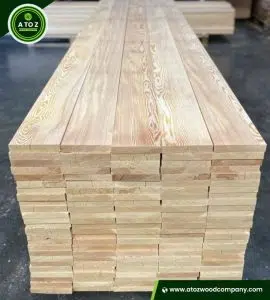
It is a group of lighter and softer pine species commonly found in North America and Canada. The light brown heartwood is moderately strong and durable and is extensively used in furniture making and home construction. Its easy workability makes it a favorite among woodworkers and craftsmen.

Key Characteristics 

  • Lightweight and easy to handle
  • Moderately durable
  • Light brown color that darkens with age
  • Straight, uniform grain
  • Smooth surface
  • Outstanding workability
  • Minimal shrinkage and warping

Best Uses

  • Furniture making
  • Interior trim
  • Crates & boxes
  • Construction lumber
  • Carving
  • Plywood
  • Boatbuilding

Yellow Pine vs White Pine

Let’s find out the difference between two of the most popular pine species based on appearance, workability, durability and other factors.

1. Appearance

One of the easiest ways to identify Yellow Pine from White Pine is by their appearance.

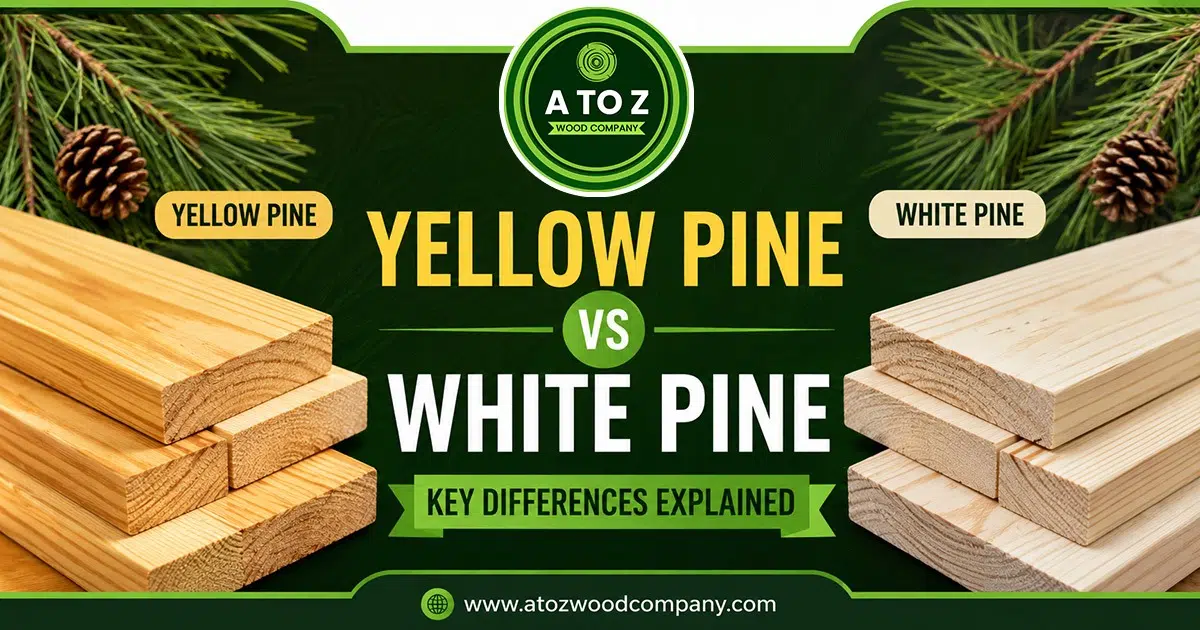
While Yellow Pine features a rich golden-yellow color with dark grain patterns, White Pine has a lighter cream-colored heartwood with subtle grain lines.

Yellow Pine is ideal for premium applications where bold grain patterns make an immediate impact. White Pine is better suited for a cleaner, softer appearance.

2. Strength and Durability

Yellow Pine stands out for its unmatched strength and hardness, making it one of the strongest softwood species. It’s significantly denser and more durable than White Pine with exceptional load-bearing capabilities. White Pine, on the other hand, is softer and less dense with minimal durability.

3. Workability

Workability refers to the ease of work with hand and machine tools.

White Pine is the clear winner here. Its soft structure and low density make it easier to cut, shape, sand, and nail. It causes less blunting effects on tools.

Yellow Pine’s high density makes it slightly more challenging to cut or saw. It may require sharper tools and more effort.

4. Weight

Weight is a crucial factor when choosing the right timber. Lighter white pine is easy to transport, handle, install, and work with. Yellow Pine, which is considerably heavier, can be more difficult to handle and transport.

5. Resistance to Wear

Due to its high strength and durability, Yellow Pine shows excellent resistance to wear, dents, and scratches, making it perfect for high-traffic areas and heavy-use applications.

White Pine is software and often more prone to dents and everyday wear.

6. Cost

Budget plays a major role in selecting the right timber for a project.

White Pine is typically more affordable due to its easy widespread availability, moderate demand, and easier handling and processing requirements. It’s the perfect wood for interior projects and decorative woodworking.

Yellow Pine typically costs more than white pine, especially for patterned pieces and premium grades. However, its durability and structural stability justify the higher cost.

7. Staining and Finishing

Both woods are generally easy to stain and paint, but the results are often quite different.

Yellow Pine’s darker hue with a solid grain pattern creates a beautiful and instantly appealing stained impression, particularly when colored with darker stains and rustic finishes.

White Pine needs to be conditioned properly in order to achieve even staining. It paints really well and is often the better choice for painted furniture and interior trim work.

Yellow vs White Pine Pros and Cons

Factor Yellow Pine White Pine
Strength High Moderate
Workability Moderate Easy
Weight Heavy Lightweight
Wear Resistance Excellent Low
Cost Higher Affordable
Staining Natural, Rich Results Needs Conditioner
Painting Resin May Bleed Smooth, Even Coverage
Outdoor Use Good (Treated) Limited
Best For Structural & Heavy-Use Interior & Decorative Work

Conclusion

Choosing between Yellow and White Pine is all about your specific project requirements and goals.

Choose Yellow Pine if you need higher strength and durability, better structural integrity and wear resistance, and good outdoor performance (with decay resistance).

Go for White Pine if you seek cost-effective, lightweight timber with easy workability, smooth finishing, and attractive hue for interior woodworking.

At AtoZ Wood Company, we sell all major species of pine, including both yellow pine and white pine. Contact us today to purchase premium-quality pine lumber at wholesale prices with worldwide delivery.

Whether you’re building an exquisite piece of furniture or need reliable wood for a construction project, choosing the right pine species is important. If you’re confused and need help, feel free to contact our support team to talk to a specialist today.

AtoZ Wood Company to Exhibit at Dubai WoodShow 2026

Dubai WoodShow 2026 (June 22–24, 2026 at the Dubai World Trade Centre) will bring together the global wood and woodworking industry. The three-day event features 400+ exhibitors and 600+ brands from over 45 countries, creating a key international platform for timber and furniture professionals. Organizers note the show attracts architects, interior designers, manufacturers, suppliers and contractors seeking wood and machinery solutions. AtoZ Wood Company – a Cameroon-based sustainable timber exporter – is proud to join this lineup of exhibitors. We look forward to meeting industry partners and customers at the exhibition.

atoz shop dubai wood show

About AtoZ Wood Company

AtoZ Wood Company is a legally registered, certified timber manufacturer and exporter based in Douala, Cameroon. Founded in 2019 by industry veteran José L. Rodríguez, the company leverages decades of experience in sustainable forestry and wood processing. We own FSC-certified forests and a modern sawmill/kiln-drying facility in Cameroon, producing over 400,000 m³ of high-grade logs each year. AtoZ follows strict responsible harvesting practices (no more than 2 trees per hectare per year, 30-year rotation) under FSC/EUTR/PEFC certification. This ensures our hardwood products (logs, lumber, slabs and by-products) are legal, eco-friendly and support long-term forest health.

  • Certified Sustainable Exporter: Our timber is FSC-, EUTR- and PEFC-certified, reflecting eco-friendly forestry practices.
  • Premium Product Range: We supply bulk and custom orders of African hardwood species, from fresh round logs (e.g. Iroko, Padauk, Teak, Okoume) to precision-cut, kiln-dried sawn lumber.
  • Exotic Species on Offer: Key species include Okoume, Sapele, Iroko, Bubinga, Ebony, Azobe, Padauk, Tali and more, suited for furniture, flooring, decking, cabinetry and architectural projects.
  • Additional Products: We also provide live-edge wood slabs (for luxury tables and countertops) and by-products (chips, sawdust, plywood, MDF, etc.) in custom sizes.
  • Global Reach: AtoZ exports worldwide – serving clients across Asia, the Middle East, Europe, North America and Australia. Our high-capacity operation and in-house kiln-drying allow fast turnaround on both large and small orders.

Dubai WoodShow 2026 Highlights

Scheduled for June 22–24, 2026 (10am–6pm) at the Dubai World Trade Centre, the Dubai WoodShow is the region’s premier woodworking and timber expo. The show spans Halls 6–8 and is free for pre-registered professionals. Over its history, WoodShow Dubai has drawn visitors from 140+ countries. The 2026 edition will include international country pavilions and a packed conference agenda on wood innovation and sustainability. Attendees can expect cutting-edge machinery demos and a chance to connect directly with decision-makers in construction, manufacturing, design and wood processing. Overall, WoodShow 2026 is positioned as “the leading international platform for the wood and woodworking machinery industry”, aligning global innovation with Middle East market demand.

AtoZ at Dubai WoodShow 2026

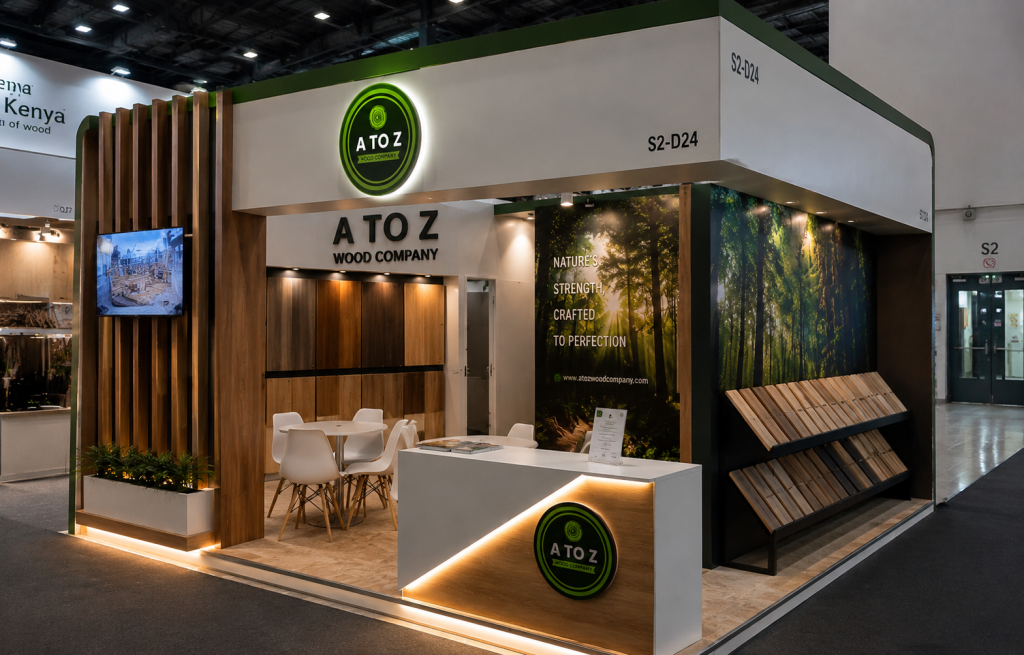
AtoZ Wood Company is honored to join over 400 exhibitors at Dubai WoodShow 2026. Our team will be on-site (Booth C-09B) to showcase premium African hardwoods and discuss how we can support your projects. Visitors to our booth can expect:

  • Premium African hardwoods: View a selection of our timber products – from freshly harvested logs to precision-milled lumber. Key species on display will include Okoumé, Iroko, Bubinga, Padauk, Sapele and more. We’ll have sample pieces of kiln-dried sawn timber (ideal for furniture, flooring and construction) and live-edge slabs (for high-end tables and countertops) to demonstrate grain and quality.
  • Sustainability & Certification: Learn about our responsible sourcing. Our experts will explain how our FSC/EUTR/PEFC-certified supply chain and limited-harvest policy (≤2 trees/ha/year) guarantee legal, eco-friendly timber.
  • Processing & Logistics: Discover our full-service capabilities. We handle everything from precision sawing and kiln-drying to on-site container loading. The team can discuss custom milling, drying schedules, and reliable shipping options for your orders.
  • Meet Our Experts: Speak one-on-one with AtoZ’s technical and sales staff. They will be ready to answer questions, offer project guidance, and provide on-the-spot quotations for both bulk and small-quantity orders. This face-to-face dialogue is a great way to explore tailored wood solutions and build long-term partnerships (a core goal of the WoodShow).

We are excited to connect with new and existing customers at Dubai WoodShow 2026. This exhibition reflects our commitment to expanding in the Middle East and beyond – linking our Cameroonian hardwood resources with markets across Asia, Europe and Africa. AtoZ Wood Company looks forward to welcoming you at Booth C-09B (Dubai World Trade Centre, June 22–24). For more information about our products and services, please visit atozwoodcompany.com or reach out to our team directly.

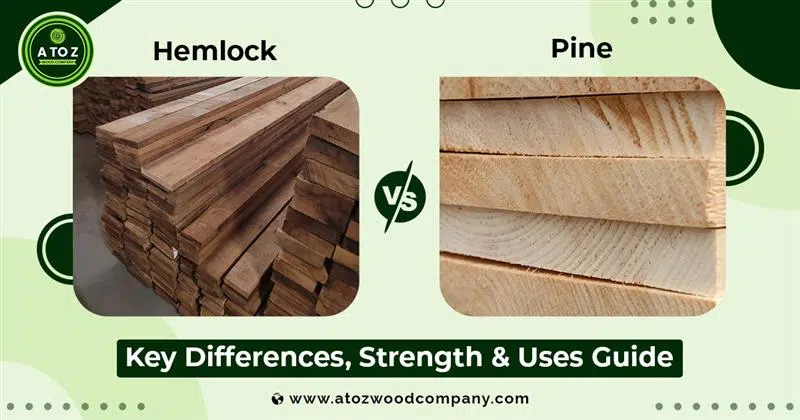
Hemlock vs Pine: Key Differences, Strength & Uses Guide

hemlock vs pine wood

While hemlock and pine wood may appear similar at first glance, these two differ significantly in strength, durability, appearance, workability, and cost.

If you are a builder, contractor, furniture manufacturer, or timber importer looking to make the right choice, this detailed comparison will help you decide which wood suits your project best.

Overview of Hemlock Wood

It is a lightweight softwood primarily sourced from North America and parts of Asia. Western Hemlock is the most commercially used species. It is widely valued in structural framing and industrial applications.

Key Characteristics

  • Color: Light brown with a slight reddish hue

  • Grain Pattern: Straight and uniform

  • Texture: Medium to coarse

  • Density: Moderate (approx. 450 kg/m³)

  • Strength: Good strength-to-weight ratio

  • Resin Content: Low

Advantages

  • Excellent structural performance

  • Stable with minimal warping

  • Takes stain and paint well

  • Good for framing and load-bearing applications

  • Smooth finish when properly planed

Disadvantages

  • Not naturally resistant to decay

  • Low resistance to insects

  • Requires treatment for outdoor use

Hemlock is commonly used in:

  • Structural framing

  • Roof trusses

  • Doors and windows

  • Interior paneling

  • Mouldings

  • Industrial timber components

Overview of Pine Wood

It is one of the most widely used softwoods globally. It grows quickly, making it affordable and easily available. There are many species, including Eastern White Pine, Southern Yellow Pine, and Radiata Pine.

Key Characteristics

  • Color: Pale yellow to creamy white

  • Grain Pattern: Straight but with visible knots

  • Texture: Fine and even

  • Density: Varies by species (400–600 kg/m³)

  • Resin Content: Moderate to high

Advantages

  • Affordable and budget-friendly

  • Lightweight and easy to handle

  • Easy to cut, nail, and glue

  • Good for indoor furniture

  • Widely available

Disadvantages

  • Softer (prone to dents and scratches)

  • Knots may affect structural consistency

  • Needs treatment for outdoor durability

Pine is commonly used in:

  • Furniture manufacturing

  • Interior décor

  • Flooring (treated varieties)

  • Shelving

  • Packaging

  • Construction framing

Hemlock vs Pine: Detailed Comparison

Let’s compare both woods across important decision-making factors.

1. Strength & Structural Performance

When it comes to structural framing, Hemlock generally performs better than standard Pine varieties. It has a more uniform grain structure and fewer knots, which increases its reliability in load-bearing applications.

Southern Yellow Pine, however, is stronger than Hemlock in certain heavy-duty applications due to its higher density.

2. Durability & Outdoor Use

Neither Hemlock nor Pine is naturally highly rot-resistant. Both require pressure treatment for outdoor exposure.

However, treated Pine (especially pressure-treated Pine) is more commonly used for:

  • Decking

  • Fencing

  • Outdoor furniture

Hemlock is less commonly used outdoors unless properly sealed and maintained.

3. Appearance & Grain Pattern

Hemlock has:

  • A cleaner, straighter grain

  • Fewer visible knots

  • More uniform appearance

Pine often contains:

  • Visible knots

  • Rustic aesthetic

  • Color variations

4. Workability & Machining

Pine is easier to machine due to its softness. It cuts, nails, and screws effortlessly. Hemlock, being slightly denser, requires sharper tools but still works well.

For beginners and large-scale furniture production, Pine is often preferred.

5. Cost Comparison

Pine is generally more affordable because:

  • It grows faster

  • It is widely cultivated

  • It has large global supply

Hemlock tends to be slightly more expensive, especially higher grades used in structural applications.

6. Resistance to Warping & Stability

Hemlock is known for dimensional stability. It tends to warp less than lower-grade Pine varieties.

This makes Hemlock a reliable option for:

  • Doors

  • Windows

  • Trim

  • Framing

Choose Pine If You Need:

  • Budget-friendly furniture wood

  • Rustic interior décor

  • Easy-to-work material

  • Outdoor treated lumber

  • Mass production woodworking

Hemlock vs Pine for Furniture

For indoor furniture:

  • Pine is more common due to affordability and ease of machining.

  • Hemlock offers a cleaner look and fewer imperfections.

For premium furniture requiring smooth grain and structural reliability, Hemlock may offer better results. However, Pine remains a top choice for cost-effective furniture production.

Environmental Considerations

Both are softwoods sourced from managed forests. Sustainably harvested timber ensures minimal environmental impact.

When sourcing timber, always choose suppliers that follow:

  • Responsible harvesting practices

  • Sustainable forest management

  • Ethical labor policies

  • Proper kiln drying and treatment

Sustainable sourcing improves durability, reduces waste, and supports eco-friendly construction.

Hemlock vs Pine – Which Is Better?

There is no single “best” wood — it depends entirely on your project requirements.

Factor Hemlock Pine
Strength Good Moderate to High (species dependent)
Cost Moderate Low
Workability Good Excellent
Appearance Clean & uniform Knotty & rustic
Outdoor Use Needs treatment Commonly pressure-treated
Stability Very stable Moderate

Conclusion

Understanding the difference between hemlock and pine helps you select the right timber for strength, budget, durability, and appearance. Both woods serve different purposes in construction and furniture manufacturing.

If you are sourcing timber for bulk supply, commercial projects, or international export, choosing high-quality graded wood from a trusted supplier ensures performance, durability, and long-term value.

Selecting the right wood is not just about cost — it’s about matching the material to the application for maximum efficiency and lifespan.

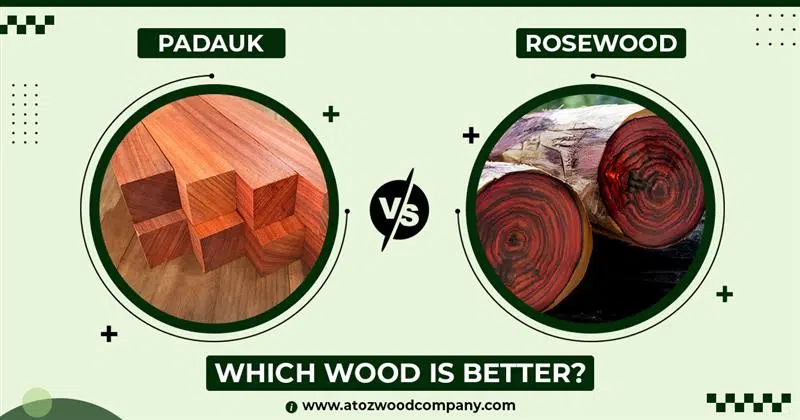
Padauk vs Rosewood – Which Wood Is Better?

padauk vs rosewood

Two premium hardwoods often compared for strength, beauty, and longevity are Padauk and Rosewood. While both are highly valued in the global timber market, they differ significantly in appearance, durability, workability, applications, and price.

In this detailed comparison, we break down Padauk vs Rosewood to help architects, manufacturers, woodworkers, and bulk timber buyers make the right choice.

What Is Padauk Wood?

It is a tropical hardwood primarily sourced from Africa (African Padauk) and parts of Southeast Asia. It is best known for its vibrant reddish-orange color, which deepens into a rich reddish-brown over time.

Key Characteristics of Padauk

  • Color: Bright red to orange-red (darkens with age)

  • Grain: Straight to interlocked

  • Texture: Medium to coarse

  • Density: High

  • Natural oils: Moderate

  • Durability: Very high

It is widely used in flooring, outdoor furniture, decking, staircases, and heavy-duty construction due to its strength and resistance to environmental stress.

What Is Rosewood?

It refers to several species under the Dalbergia genus, sourced mainly from India, Brazil, and parts of Africa. It is famous for its deep brown to purplish tones with dark veining and luxurious appearance.

Key Characteristics of Rosewood

  • Color: Dark brown, purple, or reddish with black streaks

  • Grain: Straight to wavy

  • Texture: Fine and smooth

  • Density: Very high

  • Natural oils: High

  • Durability: Excellent (indoor-focused)

It has long been associated with luxury furniture, musical instruments, decorative veneers, and high-end interiors.

Padauk vs Rosewood: Quick Comparison Table

Feature Padauk Rosewood
Wood Type Tropical hardwood Tropical hardwood
Color Bright red/orange Dark brown to purple
Grain Pattern Straight to interlocked Wavy with dark streaks
Durability Extremely durable Highly durable
Moisture Resistance Very high High
Outdoor Use Excellent Limited
Workability Moderate Difficult (oily)
Sustainability More available Restricted species
Price Mid to high Very high

Durability & Strength Comparison

When it comes to hardness and longevity, both woods perform exceptionally well.

  • Padauk is highly resistant to rot, termites, fungi, and moisture, making it ideal for outdoor and structural use.

  • Rosewood is extremely dense and strong but is best suited for indoor applications, as constant outdoor exposure can affect its appearance.

Appearance & Aesthetic Appeal

  • Padauk stands out due to its bold, vibrant color, making it a popular choice for modern and statement designs.

  • Rosewood offers a classic, elegant look, often associated with premium craftsmanship and traditional furniture.

If visual impact is your priority:

  • Choose Padauk for bold and contemporary designs

  • Choose Rosewood for rich, timeless luxury

Workability & Finishing

  • Padauk machines well but can be abrasive on tools due to its density.

  • Rosewood, because of its high oil content, can be difficult to glue and finish, requiring experienced handling.

Common Uses of Padauk vs Rosewood

Padauk Wood Uses

  • Outdoor furniture

  • Decking & pergolas

  • Flooring

  • Staircases

  • Heavy-duty furniture

  • Exterior cladding

Rosewood Uses

  • Luxury furniture

  • Musical instruments

  • Decorative panels

  • Veneers

  • Handcrafted items

  • Premium interior décor

Price & Availability

  • Padauk wood price is generally more affordable and stable in the international market.

  • Rosewood price is significantly higher due to limited availability, export restrictions, and conservation laws.

For bulk timber supply, Padauk is easier to source and ship legally compared to many Rosewood species.

Sustainability & Legal Considerations

Rosewood species are often protected under CITES regulations, making international trade complex and heavily regulated.

Padauk, when sourced from sustainably managed forests, offers a more reliable and eco-friendly option for global buyers.

Which Wood Should You Choose?

Choose Padauk if you need:

  • Strong outdoor performance

  • Moisture and insect resistance

  • Cost-effective bulk supply

  • Bold, modern aesthetics

Choose Rosewood if you need:

  • Luxury indoor furniture

  • Rich, decorative appearance

  • Premium craftsmanship material

  • Exclusive, high-value projects

Conclusion

Both woods are exceptional hardwoods, but they serve different purposes. Padauk excels in durability, versatility, and outdoor use, while Rosewood dominates in luxury, elegance, and fine detailing.

Understanding your project requirements, budget, and legal considerations will help you make the right choice between the two.

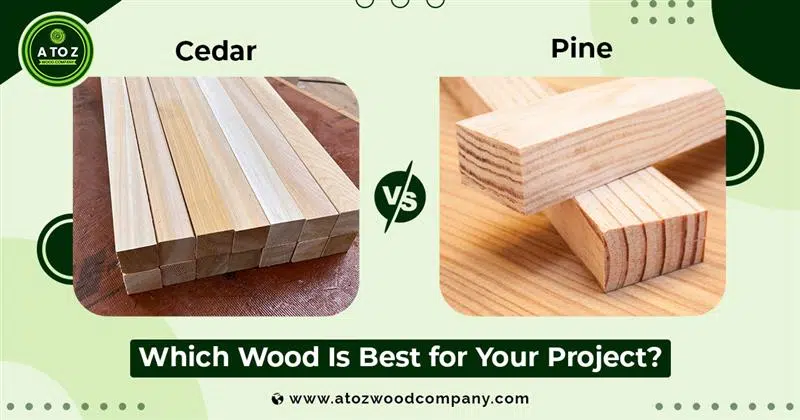
Cedar vs Pine: Which Wood Is Best for Your Project?

difference between cedar and pine wood

When selecting timber for construction, furniture manufacturing, or outdoor applications, choosing the right wood species is critical. Two of the most commonly compared softwoods in the global timber market are Cedar and Pine. While both are versatile and widely used, they differ significantly in durability, strength, appearance, cost, and ideal applications.

At AtoZ Wood Company, we supply high-quality Cedar and Pine timber to buyers across Asia, the Middle East, Europe, Australia, and North America. This detailed comparison will help you decide which timber best suits your project requirements.

What Is Cedar Wood?

It is a premium softwood known for its natural oils, resistance to decay, and long outdoor lifespan. It performs exceptionally well in harsh weather conditions without chemical treatment, making it a preferred choice for exterior applications.

Key Features 

  • Naturally resistant to rot, fungi, and termites

  • Excellent moisture resistance

  • Lightweight and dimensionally stable

  • Distinctive aroma and smooth grain

  • Low maintenance over time

Popular Cedar Types Supplied Globally

  • Western Red Cedar

  • Eastern White Cedar

  • Yellow Cedar

What Is Pine Wood?

pine

It is one of the most widely used and commercially important softwoods worldwide. Known for its strength, affordability, and ease of processing, Pine is extensively used in construction and furniture manufacturing.

Key Features

  • High strength-to-weight ratio

  • Easy to cut, machine, and finish

  • Accepts paint and stains well

  • Cost-effective for bulk supply

  • Widely available from sustainable plantations

Common Pine Varieties

  • Radiata Pine

  • White Pine

  • Yellow Pine

Cedar vs Pine: Side-by-Side Comparison

1. Durability & Resistance

Property Cedar Pine
Rot Resistance Excellent (natural oils) Low (unless treated)
Termite Resistance High Moderate
Moisture Resistance Very high Low

2. Strength & Structural Performance

Factor Cedar Pine
Density Low–Medium Medium–High
Load Bearing Moderate High

3. Appearance & Finish

Cedar

  • Rich reddish-brown to honey tones

  • Straight, fine grain

  • Naturally elegant finish

Pine

  • Light yellow to pale brown

  • Prominent knots (rustic appeal)

  • Can be stained to resemble hardwood

4. Workability & Maintenance

Aspect Cedar Pine
Machining Easy Very easy
Maintenance Low Moderate
Outdoor Treatment Not required Required

5. Cost & Market Availability

Factor Cedar Pine
Price Higher Affordable
Bulk Availability Moderate High

Best Uses of Cedar and Pine

Cedar Wood Applications

  • Outdoor decking

  • Garden and patio furniture

  • Fencing and cladding

  • Sauna interiors

  • Boat building

  • Exterior architectural elements

Pine Wood Applications

  • Structural framing

  • Furniture manufacturing

  • Doors and windows

  • Flooring (treated)

  • Pallets and packaging

  • Interior joinery

Sustainability & Responsible Sourcing at AtoZ Wood Company

At AtoZ Wood Company, sustainability is at the core of our operations.

  • Pine is sourced from fast-growing, managed plantations, ensuring high renewability.

  • Cedar is harvested under strict sustainable forestry guidelines to preserve biodiversity.

  • Our operations follow eco-friendly harvesting, processing, and exporting standards.

We ensure ethical labor practices, minimal environmental impact, and long-term forest management—so our clients receive timber that meets both quality and sustainability expectations.

Cedar vs Pine: Which Should You Choose?

Choose Cedar if you need:

  • Long-lasting outdoor timber

  • Natural resistance without chemicals

  • Premium appearance and minimal upkeep

Choose Pine if you need:

  • Strong, structural wood

  • Cost-effective bulk supply

  • Versatile material for interiors and manufacturing

Conclusion

Both are excellent softwoods, but they serve different purposes. Cedar excels in outdoor durability and premium applications, while Pine dominates in affordability, strength, and large-scale use.

For global buyers, builders, furniture manufacturers, and importers, the right choice depends on project requirements, climate conditions, and budget.

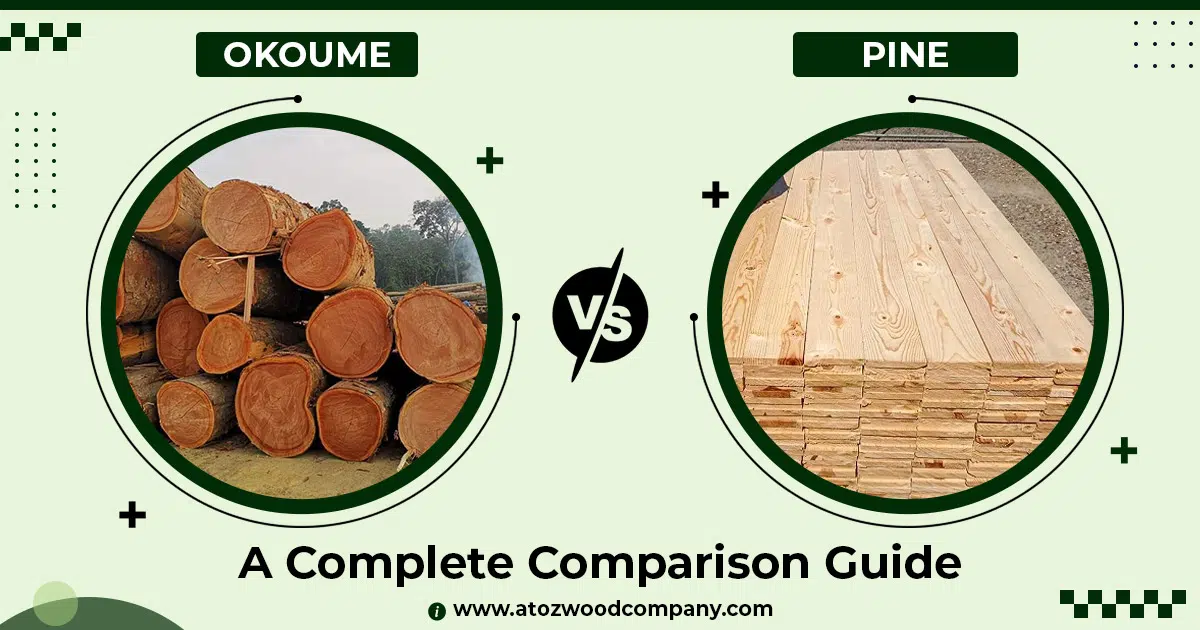
Okoume vs Pine: A Complete Comparison Guide

okoume vs pine wood

Choosing the right wood can make or break a construction, furniture, or interior project. Two commonly compared woods—Okoume and Pine—serve very different purposes despite both being widely used in the global timber trade. Understanding their differences in strength, durability, appearance, cost, and applications is essential for buyers, manufacturers, and contractors.

In this detailed guide, we compare Okoume vs Pine to help you determine which wood is best suited for your specific project needs.

What Is Okoume Wood?

It is a lightweight hardwood species native to Central and West Africa, particularly Gabon, Cameroon, and Equatorial Guinea. It is most commonly used in the production of plywood, veneers, marine panels, and interior applications.

Although classified as a hardwood, Okoume is relatively soft compared to traditional hardwoods. Its fine, uniform grain and smooth texture make it highly desirable for decorative and engineered wood products.

Key Characteristics:

  • Light pinkish-brown to pale reddish color
  • Straight to slightly wavy grain
  • Smooth surface finish
  • Lightweight and easy to handle
  • Excellent peeling properties for plywood

What Is Pine Wood?

It is a softwood obtained from various species of the Pinus genus. It is widely available across North America, Europe, Asia, and Oceania, making it one of the most commercially important woods in the world.

Pine is valued for its strength-to-weight ratio, affordability, and versatility, and is commonly used in construction, furniture, packaging, and joinery.

Key Characteristics:

  • Light yellow to pale brown color
  • Prominent grain with visible knots
  • Medium density
  • Easy to cut, nail, and shape
  • Widely available and cost-effective

Okoume vs Pine: Side-by-Side Comparison

Feature Okoume Pine
Wood Type Hardwood Softwood
Density Low Medium
Strength Moderate Good
Weight Very lightweight Light to medium
Grain Fine and uniform Pronounced, knotty
Workability Excellent Excellent
Durability Low (unless treated) Moderate (treated improves lifespan)
Moisture Resistance Moderate Low to moderate
Cost Moderate to high Low
Availability Regional (Africa) Global

Strength and Durability Comparison

When comparing Okoume vs Pine in terms of strength, Pine generally performs better. It has higher structural strength and load-bearing capacity, making it suitable for framing and construction.

Okoume, while stable and lightweight, is not ideal for heavy structural use. It performs best in non-load-bearing applications or when engineered into plywood panels.

In terms of durability, both woods require treatment for long-term outdoor use. Pine responds well to pressure treatment, while Okoume is more commonly protected through coatings and marine-grade finishes.

Appearance and Aesthetic Appeal

Okoume offers a more refined and uniform appearance compared to Pine. Its smooth texture and subtle grain make it a popular choice for veneers, decorative panels, and painted surfaces.

Pine has a more rustic and natural look, with visible knots and strong grain patterns. This makes it ideal for country-style furniture, ceilings, and interior designs where character is desired.

Workability and Machining

Both Okoume and Pine are easy to work with, even using basic tools. Okoume machines exceptionally well, peels easily for veneers, and sands to a smooth finish.

Pine is also highly workable but can present challenges due to knots and resin pockets, which may affect finishing and cutting precision.

Moisture Resistance and Marine Use

One of Okoume’s strongest advantages is its widespread use in marine plywood. When manufactured to marine-grade standards, Okoume plywood offers excellent dimensional stability and moisture resistance.

Solid Pine, unless treated, is not suitable for marine or high-moisture environments. Treated Pine can be used outdoors but still does not match marine-grade Okoume plywood performance.

Cost and Availability

Pine is significantly more affordable and readily available worldwide, making it a top choice for budget-conscious projects and large-scale construction.

Okoume is more expensive due to limited geographic sourcing, export costs, and its specialized use in plywood and veneer production.

Common Applications of Okoume

  • Marine plywood and boat building
  • Interior wall panels
  • Furniture components
  • Veneers and laminated boards
  • Lightweight cabinetry
  • Decorative plywood

Common Applications of Pine

  • Construction framing
  • Furniture and shelving
  • Doors and windows
  • Flooring (engineered)
  • Packaging and pallets
  • Interior cladding

Sustainability and Environmental Impact

Both woods can be sustainably sourced when harvested responsibly.

  • Okoume is increasingly sourced from certified African forests with regulated harvesting.
  • Pine plantations are widely managed and renewable, making Pine one of the most sustainable commercial woods when sourced from certified suppliers.

Choosing certified suppliers ensures environmental responsibility regardless of wood type.

Which Wood Should You Choose?

Choose Okoume if you need:

  • Lightweight panels
  • Marine or moisture-resistant plywood
  • Smooth, paint-ready surfaces
  • Decorative interior applications

Choose Pine if you need:

  • Structural strength
  • Cost-effective material
  • Wide availability
  • Construction or rustic furniture use

Conclusion

The choice between both lumber ultimately depends on your project requirements. Okoume excels in lightweight, decorative, and marine-grade applications, while Pine dominates in structural, affordable, and general-purpose uses.

Understanding the strengths and limitations of each wood helps buyers, manufacturers, and importers make informed decisions that balance performance, cost, and aesthetics.

If you are sourcing Okoume plywood or Pine timber in bulk, always work with a trusted timber supplier that ensures quality, sustainability, and consistent supply.

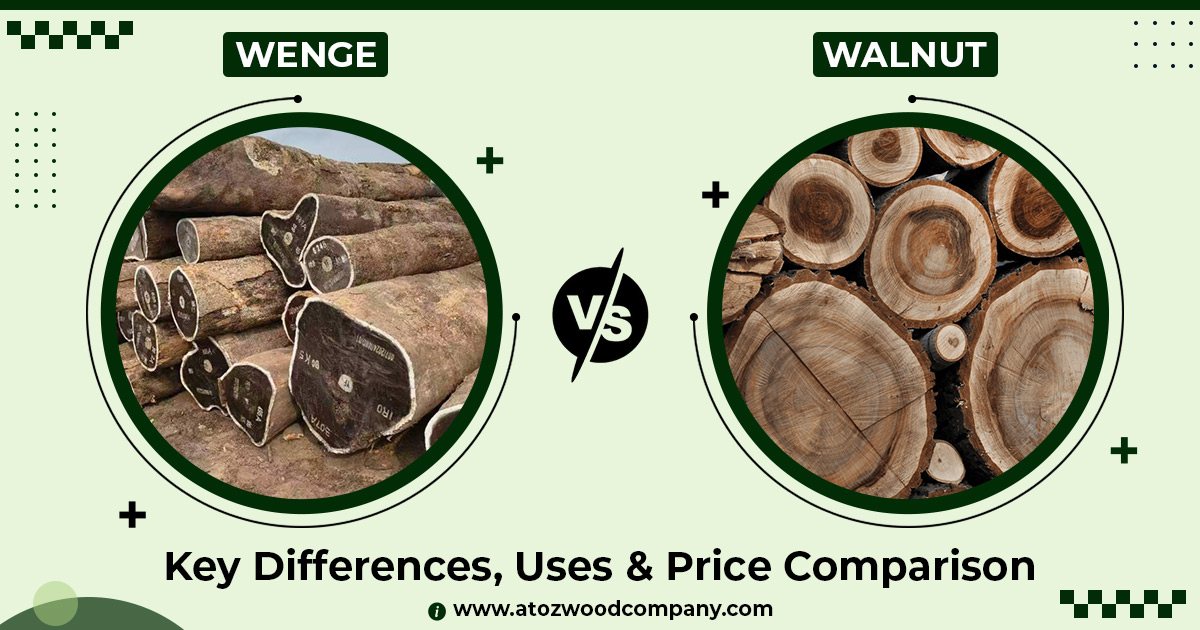
Wenge vs Walnut: Key Differences, Uses & Price Comparison

Wenge vs Walnut wood

Wenge and Walnut are two premium hardwood species often compared for their beauty, durability, and performance. While both are highly valued, they differ significantly in appearance, hardness, workability, cost, and ideal applications. This detailed comparison of Wenge vs Walnut wood will help buyers, designers, and timber importers make an informed decision based on technical performance and end-use requirements.

Overview of Wenge and Walnut Wood

What Is Wenge Wood?

wenge wood

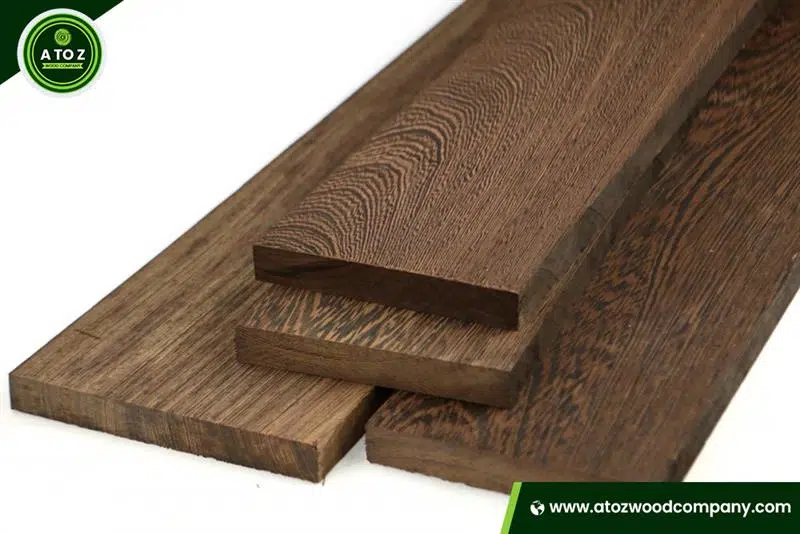
Wenge wood (Millettia laurentii) is a dense African hardwood native to Central Africa, particularly Cameroon, Congo, and Gabon. It is known for its very dark brown to nearly black color with fine, light streaks.

It is commonly used in:

  • Luxury furniture
  • Flooring
  • Decorative veneers
  • Musical instruments
  • High-end architectural joinery

What Is Walnut Wood?

Walnut wood (Juglans spp.), especially American Black Walnut, is a premium hardwood sourced mainly from North America and parts of Europe. It is famous for its rich chocolate-brown color, smooth grain, and excellent workability.

It is widely used in:

  • Furniture and cabinetry
  • Interior paneling
  • Veneers
  • Doors
  • Decorative woodwork

Appearance & Aesthetic Differences

Feature Wenge Wood Walnut Wood
Color Very dark brown to black Light to dark chocolate brown
Grain Pattern Straight with dramatic streaks Straight to wavy, smooth
Texture Coarse Fine to medium
Aging Darkens further over time Lightens slightly with age

Density, Hardness & Strength Comparison

Mechanical Properties

Property Wenge Walnut
Density (12% MC) ~870–900 kg/m³ ~610–650 kg/m³
Janka Hardness ~1,930 lbf ~1,010 lbf
Strength Very high Medium
Wear Resistance Excellent Moderate

Wenge is almost twice as hard as Walnut, making it better suited for heavy-duty applications such as flooring and staircases.

Durability & Resistance

Wenge Wood

  • Naturally resistant to termites and insects

  • Highly durable in dry conditions

  • Moderate resistance to moisture

  • Suitable for indoor and semi-exterior use

Walnut Wood

  • Moderately durable

  • Not naturally termite-resistant

  • Requires treatment for humid or exterior environments

  • Best suited for interior applications

Winner: Wenge for durability and resistance.

Workability & Machining

Factor Wenge Walnut
Cutting & Shaping Difficult Easy
Tool Wear High Low
Finishing Challenging Excellent
Gluing & Polishing Moderate Very good
  • Wenge is tough on tools and can splinter if not handled carefully.

  • Walnut is one of the easiest hardwoods to work with, making it a favorite for furniture manufacturers.

Common Uses

Best Uses for Wenge Wood

  • Luxury flooring

  • Staircases

  • High-end furniture

  • Decorative panels

  • Guitar fingerboards

  • Statement architectural elements

Best Uses for Walnut Wood

  • Premium furniture

  • Cabinets and wardrobes

  • Doors and wall paneling

  • Veneers and plywood

  • Home décor and carvings

Sustainability & Availability

  • Wenge is less available and subject to stricter export regulations due to overharvesting in the past. Responsible sourcing from certified suppliers is essential.

  • Walnut is more readily available and widely cultivated, especially American Black Walnut, making it easier to source sustainably.

Price Comparison

Aspect Wenge Wood Price Walnut Wood Price
Availability Limited Widely available
Price Range Higher Medium to high
Import Cost High (African origin) Moderate
Value for Money High durability High workability

Wenge is generally more expensive due to scarcity, density, and premium positioning. Walnut offers a balance between cost, beauty, and ease of use.

Which Wood Should You Choose?

Choose Wenge If:

  • You need extreme hardness and durability

  • You want a dark, bold luxury appearance

  • The project involves flooring or heavy wear

  • You source from a certified, sustainable supplier

Choose Walnut If:

  • You prioritize easy machining and finishing

  • You want warm, elegant interiors

  • The application is furniture or cabinetry

  • You need consistent availability and lower tooling cost

Which one Should You Choose?

Both are premium hardwoods, but they serve different purposes:

  • Wenge excels in strength, durability, and dramatic aesthetics.

  • Walnut stands out for workability, versatility, and timeless appeal.

The right choice depends on budget, application, availability, and design intent.

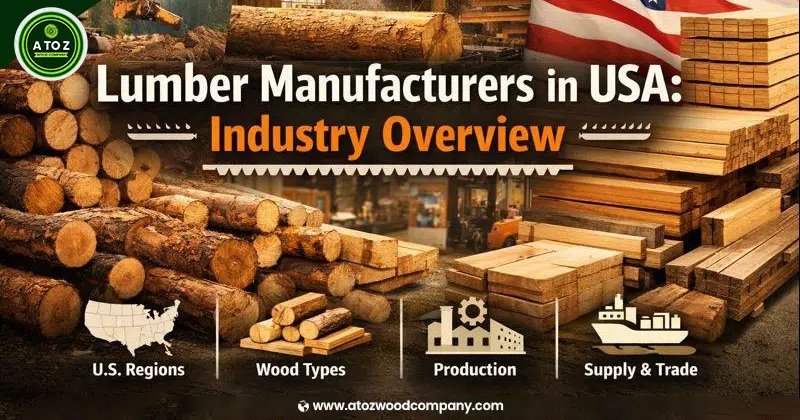
Lumber Manufacturers in USA: Industry Overview

USA lumber manufacturers

The United States is one of the world’s largest consumers of lumber, driven by strong demand from construction, furniture manufacturing, flooring, packaging, and infrastructure projects. With thousands of lumber manufacturers operating across the country, buyers often face one critical challenge: finding reliable, scalable, and sustainable lumber suppliers at competitive prices.

In this guide, we explore the U.S. lumber manufacturing landscape, key lumber-producing regions, popular wood types, current market challenges, and why many American buyers now partner with international timber suppliers like AtoZ Wood Company to secure consistent, high-quality lumber supply.

Overview of the Lumber Manufacturing Industry in the USA

Lumber manufacturing in the USA is a highly developed industry supported by advanced sawmilling technology, strict quality standards, and extensive forest resources. U.S. lumber manufacturers primarily process softwoods for construction and hardwoods for furniture, cabinetry, and interior applications.

Key Industry Facts:

  • The USA is among the top global lumber consumers
  • Strong demand from housing, remodeling, and commercial construction
  • Increasing focus on sustainable and certified wood
  • Rising lumber prices due to supply constraints and regulations

While domestic manufacturers remain vital, many U.S. buyers supplement their sourcing with imported lumber to manage costs, availability, and species diversity.

Major Lumber Manufacturing Regions in the USA

1. Pacific Northwest (Oregon & Washington)

This region is known for:

  • Douglas Fir
  • Western Hemlock
  • Cedar

These species are widely used in construction, structural beams, and outdoor applications due to their strength and durability.

2. Southern United States

States like Georgia, Alabama, and Mississippi dominate softwood production, especially:

  • Southern Yellow Pine
  • Loblolly Pine
  • Slash Pine

Southern mills benefit from fast-growing plantations but face increasing demand pressure.

3. Midwest & Great Lakes Region

Traditionally known for hardwood production, including:

  • Oak
  • Maple
  • Ash
  • Cherry

These hardwoods are popular for furniture, flooring, and cabinetry.

4. Appalachian Region

This region produces premium hardwoods and supplies many domestic furniture and millwork manufacturers.

Popular Wood Types Used by U.S. Lumber Manufacturers

Softwoods:

  • Pine
  • Fir
  • Spruce
  • Cedar

Used mainly for:

  • Framing
  • Roofing
  • Decking
  • Pallets

Hardwoods:

  • Oak
  • Walnut
  • Maple
  • Hickory
  • Cherry

Used for:

  • Furniture manufacturing
  • Flooring
  • Interior finishing
  • High-end woodworking

However, many tropical and exotic hardwoods are not locally available, creating demand for imported lumber.

Challenges Facing Lumber Manufacturers in the USA

Despite a strong industry, U.S. wood manufacturers face several ongoing challenges:

1. Rising Raw Material Costs

Forest management regulations, land costs, and labor expenses have increased production costs.

2. Supply Limitations

Domestic forests cannot meet total demand, especially for:

  • Exotic hardwoods
  • Large-dimension timber
  • Specialty wood species

3. Environmental Regulations

Stricter harvesting rules limit output and increase lead times.

4. Price Volatility

Seasonal demand and global trade fluctuations impact lumber pricing.

As a result, many manufacturers, wholesalers, and construction companies look beyond domestic markets.

Why U.S. Buyers Import Lumber?

Importing lumber has become a strategic move rather than a last resort. Key benefits include:

  • Access to diverse wood species
  • Competitive lumber prices
  • Bulk availability for large projects
  • Stable long-term supply contracts
  • Sustainable forestry options

This is where AtoZ Wood Company plays a crucial role.

AtoZ Wood Company: A Trusted Lumber Supplier for the USA Market

While the USA has strong domestic wood manufacturers, AtoZ Wood Company complements U.S. supply chains by providing high-quality imported lumber tailored to American standards.

What Sets AtoZ Wood Company Apart?

1. Wide Range of Lumber Products

AtoZ supplies:

  • Hardwood logs
  • Sawn timber
  • Wood slabs
  • Custom-cut lumber
  • Treated and kiln-dried wood

Popular species supplied to U.S. buyers include:

  • African Mahogany
  • Teak alternatives
  • Iroko
  • Okoume
  • Sapele
  • Afromosia

Tropical hardwoods for furniture and decking

2. Sustainable & Certified Sourcing

AtoZ follows strict sustainable forestry practices:

  • Controlled harvesting (limited trees per hectare)
  • Long regeneration cycles
  • Eco-friendly processing methods

Ethical labor and community development

This aligns with the growing sustainability requirements of U.S. lumber buyers.

3. Bulk & Project-Based Supply

Whether you are a:

  • Lumber wholesaler
  • Construction company
  • Furniture manufacturer
  • Flooring supplier

AtoZ offers bulk shipment capacity with consistent quality and specifications.

4. Competitive Lumber Pricing

By sourcing directly from managed forests and processing facilities, AtoZ helps U.S. buyers:

  • Reduce procurement costs
  • Minimize middlemen
  • Lock in stable pricing

5. Worldwide Shipping to the USA

AtoZ exports lumber to major U.S. ports with:

  • Proper documentation
  • Export compliance
  • Secure packaging
  • Reliable lead times

Lumber Manufacturers in USA vs International Timber Suppliers

Factor U.S. Manufacturers AtoZ Wood Company
Species Variety Limited to local species Wide global selection
Price Stability Affected by domestic demand More competitive pricing
Bulk Availability Often limited High-volume supply
Sustainability Region-based Managed forests & eco policies
Custom Orders Limited flexibility Tailored specifications

For many U.S. buyers, the ideal strategy is a hybrid sourcing model—combining domestic lumber manufacturers with reliable international suppliers like AtoZ.

How to Choose the Right Lumber Supplier in the USA Market

When sourcing lumber, buyers should consider:

  • Wood species suitability

  • Moisture content & grading

  • Sustainability certifications

  • Shipping reliability

  • Long-term supply capability

  • Transparent pricing

AtoZ Wood Company meets these criteria while offering added flexibility for large-scale buyers.

Conclusion

The U.S. lumber manufacturing industry remains strong, but growing demand, supply constraints, and sustainability requirements have reshaped how buyers source wood. While domestic lumber manufacturers are essential, imported lumber plays a vital role in maintaining supply chain stability.

AtoZ Wood Company stands as a reliable partner for U.S. businesses, delivering sustainably sourced, high-quality lumber at competitive prices—supporting construction, furniture, and manufacturing projects across the United States.

If you are looking beyond traditional lumber manufacturers in the USA and want a trusted global timber supplier, AtoZ Wood Company is your ideal partner.

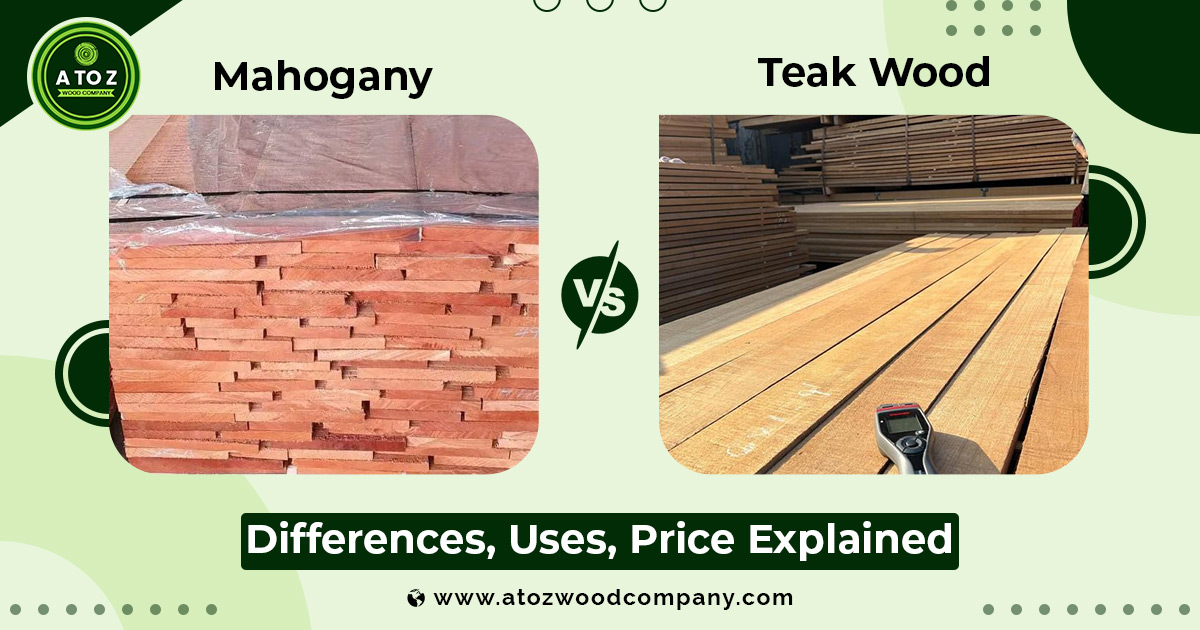
Mahogany vs Teak Wood | Differences, Uses, Price Explained

mahogany vs teak

When choosing premium hardwood for furniture, flooring, decking, or large construction projects, Mahogany and Teak are two of the most searched and trusted wood species worldwide. Both are valued for durability, appearance, and long service life—but they serve very different purposes depending on climate, budget, and application.

This detailed comparison of Mahogany vs Teak will help buyers, architects, and importers make the right wood selection based on strength, durability, cost, and use case.

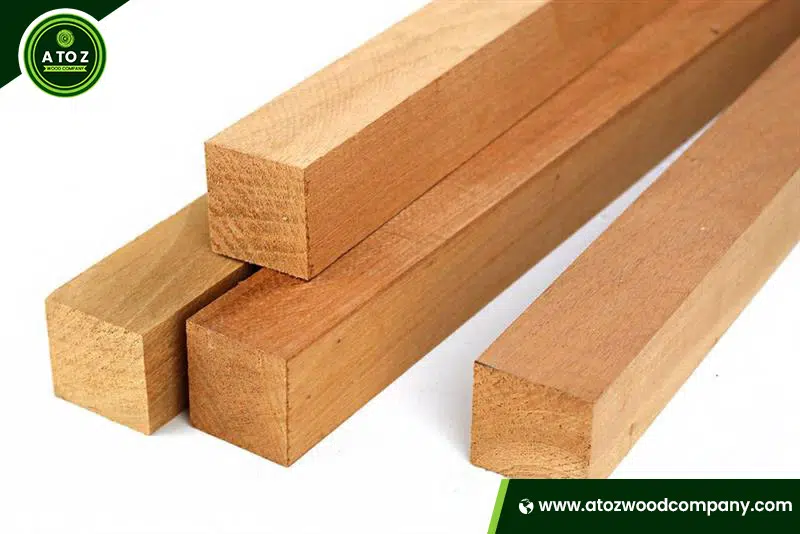
What Is Mahogany Wood?

mahogany timber

It refers to a group of hardwood species known for their rich reddish-brown color, straight grain, and excellent workability. The most commonly traded types include:

  • African Mahogany (Khaya species)

  • Genuine Mahogany (Swietenia macrophylla)

Mahogany is widely used in interior furniture, doors, veneers, paneling, and decorative woodwork due to its smooth texture and stability.

Key Properties of Mahogany

  • Medium to high density

  • Straight grain with fine texture

  • Easy to machine and finish

  • Moderate natural durability

  • Excellent dimensional stability

Mahogany is especially popular in large-scale furniture manufacturing and interior architectural projects.

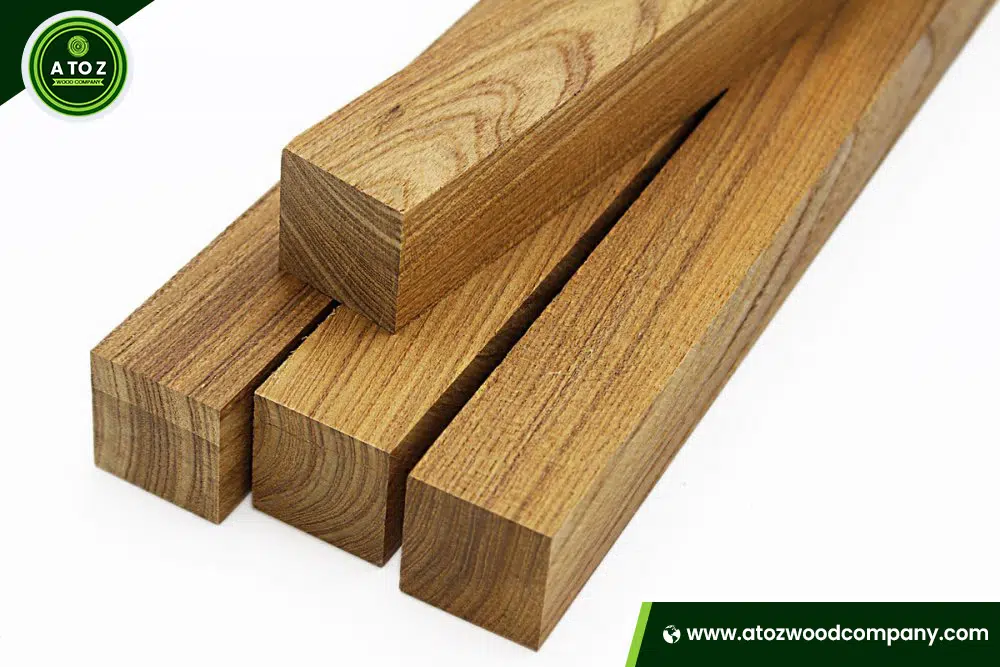
What Is Teak Wood?

different color teak wood

It is considered one of the most durable hardwoods in the world, particularly for outdoor and marine applications. It contains natural oils and silica that protect it from moisture, insects, and decay.

Teak is commonly sourced from:

  • Natural forests (regulated)

  • Sustainable plantations

Key Properties of Teak

  • High density and strength

  • Naturally oily surface

  • Exceptional resistance to water, termites, and rot

  • Long outdoor lifespan

  • Minimal maintenance required

Teak is widely used for outdoor furniture, decking, boat building, and luxury construction.

Side-by-Side Comparison

Feature Mahogany Wood Teak Wood
Color Reddish to deep brown Golden to dark brown
Grain Straight, uniform Straight to wavy
Density Medium to high High
Natural Oils Low Very high
Durability Moderate to good Excellent
Moisture Resistance Moderate Very high
Termite Resistance Moderate Excellent
Workability Excellent Moderate
Outdoor Use Limited Ideal
Indoor Use Excellent Very good
Maintenance Low Very low

Durability & Weather Resistance

Teak clearly outperforms mahogany in harsh environments.

  • Teak can last 40–60+ years outdoors with minimal treatment.

  • Mahogany performs best indoors or in protected exterior areas.

For tropical climates, coastal regions, and high-humidity environments, teak is the superior choice.

Appearance & Aesthetic Appeal

  • Mahogany offers a classic, elegant look with deep reddish tones that darken beautifully with age—ideal for luxury furniture and interiors.

  • Teak has a warm golden appearance that weathers into a silver-gray patina outdoors, often preferred in modern exterior designs.

Choice here depends on design intent rather than performance.

Workability & Manufacturing

Mahogany is preferred by manufacturers because it:

  • Cuts cleanly

  • Glues well

  • Accepts polish, stains, and finishes evenly

Teak is harder to process due to:

  • High oil content

  • Silica that dulls cutting tools

For mass production and custom furniture, mahogany is more efficient and cost-effective.

Price Comparison

Aspect Mahogany Teak
Availability Widely available Limited
Supply Multiple species Restricted
Price Range Moderate High
Bulk Purchase More economical Expensive
ROI for Interiors High Medium

Teak is significantly more expensive due to slow growth rates, limited supply, and strict regulations.
Mahogany offers better scalability for bulk buyers and large commercial projects.

Best Uses for Mahogany

  • Indoor furniture

  • Doors and frames

  • Veneers and paneling

  • Staircases

  • Musical instruments

  • Office interiors

  • Decorative architectural elements

Best Uses for Teak

  • Outdoor furniture

  • Decking and flooring

  • Marine construction

  • Boat building

  • Luxury outdoor projects

  • Poolside furniture

Sustainability Considerations

Sustainability is a major factor in modern timber trade.

  • Responsibly sourced African Mahogany from managed forests offers a more sustainable option for large-scale use.

  • Teak plantations support sustainability but require long growth cycles, increasing cost.

Choosing certified suppliers ensures ethical sourcing, legal harvesting, and environmental protection.

Which One Should You Choose?

Choose Mahogany if you need:

  • Cost-effective premium hardwood

  • Excellent indoor performance

  • Smooth finishing and easy processing

  • Bulk timber supply

Choose Teak if you need:

  • Maximum outdoor durability

  • High moisture resistance

  • Long service life in harsh conditions

  • Premium exterior aesthetics

Final Verdict

Both Mahogany and Teak are exceptional hardwoods, but they serve different purposes.

  • Mahogany is the ideal choice for interiors, furniture manufacturing, and large-volume projects.

  • Teak remains unmatched for outdoor and marine environments, where durability is critical.

Understanding your project requirements, climate conditions, and budget is key to making the right decision.