+237 681 25 6934
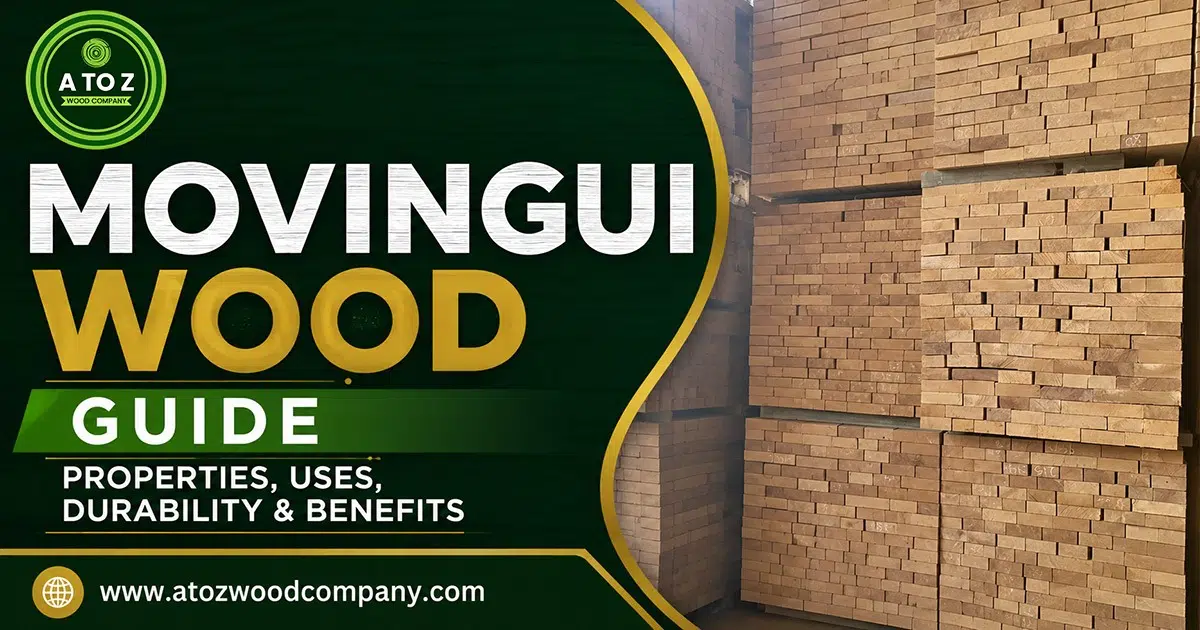
Movingui (Distemonanthus benthamianus) is a durable West African hardwood prized for its bright lemon-yellow, slightly goldenish color and natural satiny finish. The wood is extensively used to make exquisite veneer for plywood, furniture, cabinets and other visual-centric applications. With a Janka hardness rating of around 1,280 lbf and average dried density of 720 kg/m3, Movingui is considered a moderately hard, heavy and strong wood with good natural durability and outstanding stability. It is also commonly used in flooring and turned applications.
AtoZ Wood Company is a leading supplier and global exporter of sustainably sourced, commercial-grade Movingui timber, supplying wood products in over 40 countries across Europe, Asia, the Americas, and more.
What is Movingui Wood?
Movingui, also called ayan or Nigerian satinwood (because of its natural shine), comes from the tree Distemonanthus benthamianus, a tropical hardwood native to West and Central Africa, primarily Nigeria, Ghana, Cameroon, and Gabon. The wood has been used in Nigeria and surrounding regions for decades, hence the name Nigerian satinwood.
Despite the name, it is not related to satinwood species. It is a dense, durable hardwood that is easy to work despite its hardness.
Movingui Wood Properties
Appearance and Grain
One of Movingui’s greatest advantages is its stunning appearance. The heartwood ranges from bright golden yellow to light brown, gradually darkening with age and exposure to light. The sapwood is typically lighter in color and clearly distinguishable from the heartwood.
The grain is usually straight but can also be interlocked or wavy. Quarter-sawn surfaces often exhibit stylish figured patterns such as:
- Mottle
- Curl
- Ribbon stripe
Figured pieces of Movingui are extremely popular and somewhat expensive. Its fine-to-medium texture and natural luster make it a favored choice for decorative applications and high-quality veneers.
Physical and Mechanical Properties
Movingui offers a perfect combination of strength, stability, and workability.
- Average dried density: approximately 720 kg/m³
- Janka hardness: around 1,280 lbf (5,680 N)
- Modulus of Rupture: approximately 129 MPa
- Elastic Modulus: about 12.2 GPa
- Crushing strength: approximately 61 MPa
Despite being harder than many popular furniture woods, Movingui is easier to machine.
Durability and Stability
Movingui is regarded as moderately durable wood with good natural resistance to termites, making it suitable for interior and insect-prone applications. Other features include:
- Good dimensional stability
- Moderate resistance to decay
- Suitable for interior environments
- Low shrinkage
Outdoor use is restricted and requires proper finishing or treatment.
Workability
Movingui is generally easy to work with, especially with machines and tools.
It generally cuts, sands, glues, stains and finishes easily
However, silica content in Movingui can sometimes dull cutting tools, cause tear-outs, or break blades. Carbide tools are highly recommended for commercial machining.
Types of Movingui Wood
Unlike many hardwoods, Movingui is not divided into multiple species. However, it is often sold under different names or versions based on appearance, grade, and form.
1. Plain-Sawn Movingui
This is the most widely available and used form of Movingui and can be identified by its relatively straight grain with consistent bright yellow color. It is commonly used for furniture, cabinetry, and interior joinery.
2. Quarter-Sawn Movingui
Quarter-sawn pieces of Movingui are prized for their decorative figured patterns, including mottel, ribbon stripe, curl, and others. These boards are highly valued for specific architectural and decorative applications and are often more expensive than regular Movingui pieces.
3. Movingui Veneer
Thin veneer sheets of Movingui are extensively used in furniture making. They leverage the wood’s attractive appearance without consuming too much material. Decorative Movingui veneers are used on furniture, wall panels, doors, and custom millwork.
Common Uses of Movingui Wood
Thanks to its unique combination of attractive appearance, strength and stability, Movingui is suitable for numerous interior applications, including:
Furniture Manufacturing
Its warm golden-yellow color and smooth finish with figured patterns make Movingui suitable for high-quality decorative furniture, including:
- Dining tables
- Centre tables
- Cabinets
- Display units
- Shelving
- Office furniture
Decorative Veneers
One of Movingui’s most popular commercial applications is veneer production. Its naturally bright yellow color and attractive grain pattern make it the perfect choice for elegant veneers for luxury interiors, cabinets, doors and premium furniture.
Interior Joinery
Movingui’s excellent machining properties and stability make it ideal for joinery applications such as wall paneling, interior doors, moldings, stairs, and trim work.
Flooring
The wood’s moderate hardness, durability, excellent stability and attractive appearance make it suitable for both commercial and residential flooring. However, untreated Movingui is unsuitable for exterior flooring.
Cabinetry
Movingui is commonly used for kitchen cabinets, wardrobes, shelves, display cabinets, and custom storage units. Its beautiful finish and dimensional stability make it a favorite.
Musical Instruments
Movingui is sometimes used in musical instrument components because of its strength and attractive grain pattern.
Conclusion
Movingui is a high-value, strong African tropical hardwood that stands out for its distinct visual appeal with long-lasting performance (in interior environments). Its combination of shiny golden color, figured grain, moderate durability, and excellent machining characteristics makes it a favorite for making stunning furniture, veneers, cabinetry, flooring, and specialty items.
If you’re searching for a trusted exporter of Movingui timber or wood logs with worldwide delivery, contact AtoZ Wood Company today! We are a leading supplier of 100% authentic, commercial-grade Movingui wood directly from Cameroon.