+237 681 25 6934
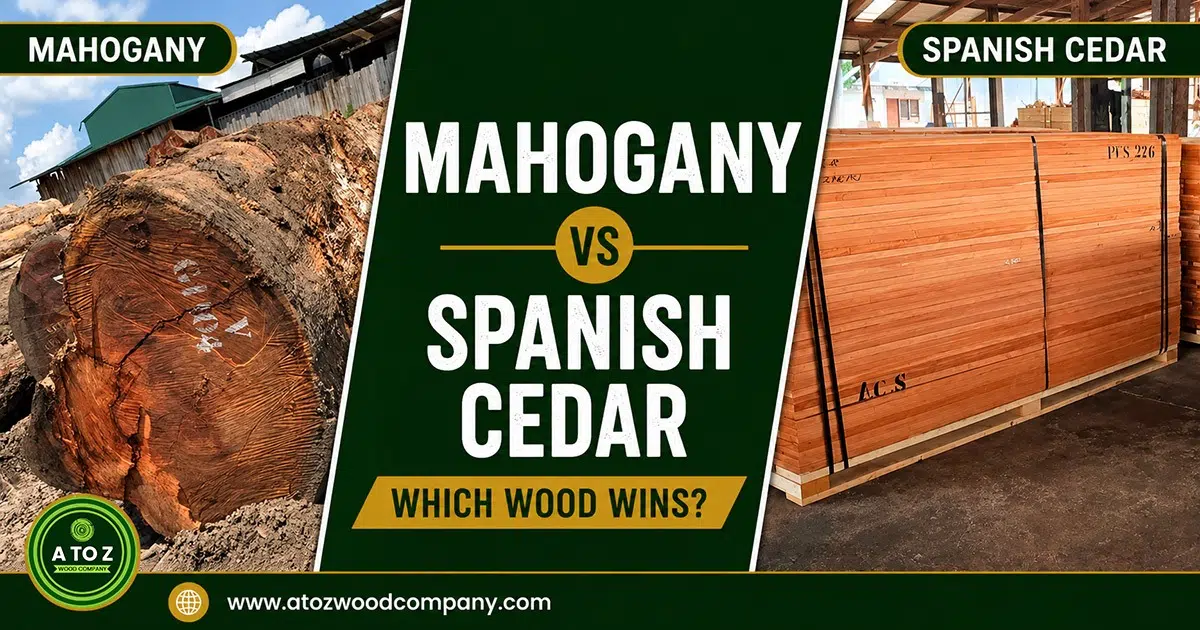
When it comes to premium hardwoods for furniture, cabinetry, boat building, and outdoor structures, two names come up again and again: Mahogany and Spanish Cedar. Both are prized for their rich color, pleasant grain, and resistance to decay — and both are often mistaken for one another. But they are not the same wood, and choosing the wrong one for your project can affect everything from cost to long-term performance.
In this guide, we break down the real differences between Mahogany and Spanish Cedar so you can make an informed decision for your next build.
Quick Overview
| Feature | Mahogany | Spanish Cedar |
|---|---|---|
| Botanical Family | Swietenia / Khaya species | Cedrela odorata |
| Color | Reddish-brown, deepens with age | Pinkish to reddish-brown, lighter tone |
| Weight/Density | Heavier, denser | Lighter, softer |
| Aroma | Mild, neutral | Strong, cedar-like scent |
| Workability | Excellent, smooth finish | Very easy, but slightly fibrous |
| Rot & Insect Resistance | Very good | Excellent (natural insect repellent) |
| Common Uses | Fine furniture, cabinetry, boat interiors | Cigar boxes, closets, boat building, humidors |
| Price Range | Higher | Moderate |
What Is Mahogany?
Mahogany is a tropical hardwood known for its fine, straight grain and warm reddish-brown tone that deepens beautifully with age and exposure to light. It has long been the wood of choice for high-end furniture, musical instruments, and boat interiors because of its stability, strength, and ability to take a flawless finish.
Key characteristics:
- Dense and heavy, giving it excellent structural strength
- Naturally resistant to warping, shrinking, and swelling
- Takes stain, paint, and polish exceptionally well
- Minimal grain figure disruption, making it ideal for detailed carving and joinery
What Is Spanish Cedar?
Despite the name, Spanish Cedar is not a true cedar — it belongs to the mahogany family (Meliaceae) but is a distinct species. It’s softer and lighter than true Mahogany, with a distinctive aromatic scent that naturally repels moths and other pests. This is why Spanish Cedar is the traditional choice for cigar boxes, humidors, and clothing chests.
Key characteristics:
- Lightweight and easy to mill, cut, and shape
- Naturally aromatic, offering built-in pest resistance
- Excellent stability with minimal warping over time
- Slightly more porous, requiring careful sanding for a smooth finish
Mahogany vs Spanish Cedar: Detailed Comparison
1. Strength and Durability
Mahogany is the denser, harder wood of the two, making it better suited for load-bearing furniture, structural components, and pieces that need to withstand daily wear. Spanish Cedar, while durable, is softer and more prone to surface dents, though it holds up well in humid or insect-prone environments.
2. Workability
Both woods are considered a joy to work with, but for different reasons. Mahogany’s tight, straight grain makes it ideal for detailed carving, veneering, and a glass-smooth finish. Spanish Cedar cuts and shapes even more easily due to its lighter density, though its slightly fibrous texture may need extra sanding passes.
3. Appearance and Finish
Mahogany has a richer, deeper tone and a more refined grain pattern, which is why it remains the gold standard for luxury furniture and cabinetry. Spanish Cedar has a lighter, more rustic reddish hue and is often left unfinished to preserve its natural aroma, especially in humidors and cigar boxes.
4. Resistance to Pests and Moisture
This is where Spanish Cedar has a clear edge. Its natural oils and strong aroma make it highly resistant to moths, termites, and other wood-boring insects — a reason it’s the preferred lining for closets and storage chests. Mahogany also resists decay well but doesn’t offer the same built-in pest-repelling properties.
5. Cost
Genuine Mahogany, particularly older-growth or Honduran varieties, tends to be more expensive due to limited supply and high demand. Spanish Cedar is generally more affordable while still offering excellent performance, making it a popular choice for budget-conscious builders who don’t want to compromise on quality.
Which Wood Should You Choose?
- Choose Mahogany if: You’re building fine furniture, cabinetry, musical instruments, or boat interiors where strength, a premium finish, and long-term value matter most.
- Choose Spanish Cedar if: You’re building humidors, cigar boxes, closets, chests, or boat components where lightweight construction, natural aroma, and pest resistance are priorities.
Conclusion
Both Mahogany and Spanish Cedar are excellent hardwoods with a long track record in fine woodworking — the right choice ultimately depends on your project’s needs, budget, and desired finish. Whether you need the strength and elegance of Mahogany or the aromatic, pest-resistant qualities of Spanish Cedar, sourcing high-quality, sustainably harvested lumber makes all the difference in the final result.
Looking for premium Mahogany or Spanish Cedar for your next project? Explore our hand-selected hardwood inventory at A to Z Wood Company and get expert guidance on choosing the right wood for your build.