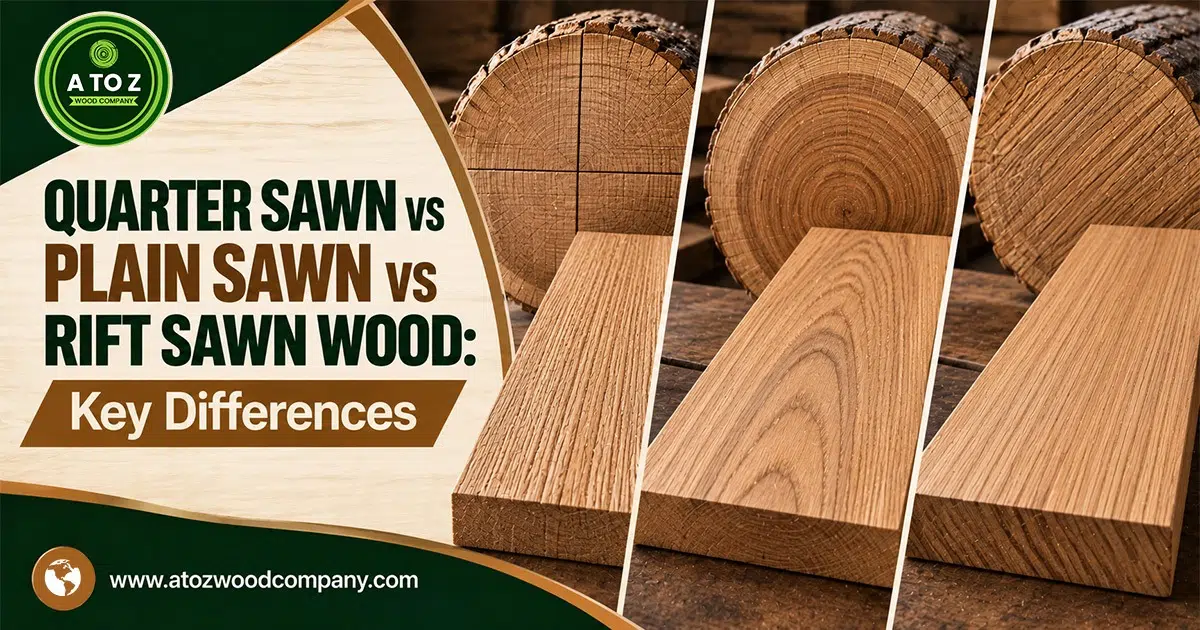
Quarter Sawn vs Plain Sawn vs Rift Sawn Wood: Key Differences

Quarter sawn vs plain sawn

When timber is cut from a log, the direction of the cut has a major effect on the appearance, stability, grain pattern, yield, and cost of the resulting boards. This is why understanding quarter sawn vs plain sawn vs rift sawn wood is important when selecting timber for furniture, flooring, cabinetry, doors, architectural millwork, and other woodworking applications.

The three methods are not simply different ways of cutting a log. Each produces a different relationship between the growth rings and the face of the board. That relationship affects how the timber responds to changes in moisture and how its grain appears after machining and finishing.

For timber buyers, manufacturers, architects, and woodworkers, choosing between plain sawn, quarter sawn, and rift sawn timber depends on the intended application, desired appearance, dimensional stability, available timber yield, and budget.

What Is Plain Sawn Wood?

Plain sawn wood, also called flat sawn or through-and-through sawn timber, is produced by making a series of relatively parallel cuts through the log. It is one of the most common and efficient methods of converting a log into boards.

The growth rings generally meet the broad face of a plain sawn board at a relatively shallow angle, often producing the characteristic cathedral or flame-shaped grain pattern associated with flat sawn timber.

How Plain Sawing Works

The log is positioned and boards are cut along its length in a way that produces relatively wide boards from a large portion of the log.

Because the cutting process makes efficient use of the log, plain sawing can provide good board yield compared with more specialized sawing methods.

Characteristics of Plain Sawn Timber

Plain sawn timber commonly features:

  • Cathedral-shaped grain patterns
  • Broad, attractive faces
  • Efficient log utilization
  • Good availability
  • Generally lower production cost than specialized cuts
  • Greater tangential movement than quarter or rift sawn boards

The exact appearance depends on the species, log characteristics, cutting pattern, moisture content, and grade.

Advantages of Plain Sawn Wood

The major advantage is efficiency.

Plain sawing can produce relatively wide boards while making good use of the log. This makes it practical for many commercial timber applications.

Other advantages include:

  • Attractive natural grain
  • Availability in wider boards
  • Efficient production
  • Generally lower cost
  • Suitable for many furniture applications
  • Suitable for general construction and joinery

Disadvantages of Plain Sawn Wood

The main consideration is dimensional movement.

Because of the orientation of the growth rings, plain sawn boards generally experience more tangential movement than quarter sawn boards when their moisture content changes.

This does not make plain sawn timber unsuitable. Proper drying, grading, machining, installation, and moisture control remain important.

Common Applications

Plain sawn timber is widely used for:

  • Furniture
  • Tables
  • General joinery
  • Doors
  • Wall paneling
  • Flooring
  • Cabinets
  • Construction
  • Interior woodworking
  • Decorative boards

What Is Quarter Sawn Wood?

Quarter sawn wood is produced by first dividing the log into quarters and then sawing boards from the resulting sections. The growth rings are positioned at a much steeper angle to the board face than in typical plain sawn timber.

Quarter sawing is particularly valued when dimensional stability and a distinctive grain appearance are important.

https://images.openai.com/static-rsc-4/k2OCq5T3XqrIilXZASvTI0924TJWgGJCUBGYEcM9J4GU0uWVMFzdLNlCQDn4-O5OeN9_HA4qxsglpvN1PFxPTCSq4tXuZbm6wCQ5aPy_sYXEP63NXqSAkJqiauYb0TdR62nXB-E6AJtK2FEN2_QGWqShZgTCFbPUO2YJ-fuONKOwt_Km_mVlMryMJlYXcpgo?purpose=fullsize
https://images.openai.com/static-rsc-4/SWCZIhNCPTEQ7v5AqgpKAVJtYYtj6x0ItIWHkSG3iq4iChKG_jthsYx2fGc5EMhmeoerXrxalwe1h0JgDt6q27okarNx-ZZaMid72LmZ3xz_4gbZYv3PrAKE40-qfVqOvrked1mU640b4GNstBl-CX5_MUT_7xHWlpGt1M52AQeBRknOL9UZusOI8HX3hXYS?purpose=fullsize
https://images.openai.com/static-rsc-4/nqwN4SBJ35xYfVwm3fTK0I7ZY0yehU0XweH5sojNPKSej1RQmCtwMrNQ3M0WwaZsJSH3eqDDK6ZXNwslVr12joOV06mbh_ERqnamHXG_1RjC-mDaw5kU12bg08ORq639Ojaeze0qdC_rscM-N5ZFXB9mbcuAV_B1Whj6vhNqhjlZ5df9ckj9su6-AXu2zfil?purpose=fullsize

How Quarter Sawing Works

The log is divided into quarters, generally with the cuts arranged so that boards are sawn with the growth rings oriented approximately perpendicular to the broad face.

The precise cutting pattern can vary depending on the sawmill and desired product.

In some species, quarter sawing also exposes prominent ray fleck or medullary ray patterns, particularly in species such as oak.

Characteristics of Quarter Sawn Timber

Quarter sawn boards are generally known for:

  • More vertical or steeply oriented growth rings
  • Greater dimensional stability across the board width
  • Reduced cupping tendency compared with typical flat sawn boards
  • Straight-looking grain
  • Potentially prominent ray patterns in certain species
  • Lower yield compared with highly efficient plain sawing
  • Higher production cost in many situations

Advantages of Quarter Sawn Wood

One of the principal reasons to choose quarter sawn timber is dimensional stability.

The orientation of the growth rings can reduce certain forms of movement across the board’s width. This can be valuable for applications where maintaining a relatively stable shape is important.

Quarter sawn timber can also produce an attractive, relatively straight grain appearance.

Disadvantages of Quarter Sawn Wood

The main disadvantages are production efficiency and cost.

Quarter sawing generally requires a more deliberate cutting process and can produce narrower boards and more waste than an efficient plain sawing pattern.

As a result, quarter sawn timber can command a higher price, depending on species, grade, dimensions, availability, and market conditions.

Common Applications

Quarter sawn timber is often selected for:

  • Premium furniture
  • Flooring
  • Cabinetry
  • Doors
  • Architectural millwork
  • Fine joinery
  • Musical instruments
  • Decorative paneling
  • High-end interior applications

What Is Rift Sawn Wood?

Rift sawn wood is produced by cutting timber so that the growth rings are positioned at a relatively consistent steep angle to the board face, commonly close to 90 degrees.

The objective is to obtain boards with a very straight and consistent grain appearance while minimizing certain forms of grain variation across the face.

https://images.openai.com/static-rsc-4/4vt3yqKDQURkY_9xD2-pSaadauVT7FT9R0sUGGN2_72YhmjQjL-9boiYm1peeduF09jVJJtgrCx8GaKm_V_LZLoFEFOCHtH5muP57NxryBHkwANLysUHTJXN_vDmcEuZUSbR5peoql8fIDxYlSyUxbIRfHnGNiSw-Z4m9UKyk_yElIia54mz-gvIcQLiUp13?purpose=fullsize
https://images.openai.com/static-rsc-4/qOcIsUkjuuj5ib3zOdXEycDPVYGX_3REEV4xmykSLHnCtkiMqaofTjny8n8N_Dv3MEf0gh7cWDYMjpKoztvHfMG-V2TJWE_6DtypM_ICiz6XGzQcyE0heqanrEWjVaO1BlAOffVoHrEyUKGKAtATVq3oJy80nwbowZFcAp7W8-J-CcI7t66fBl13t67Gk-tM?purpose=fullsize
https://images.openai.com/static-rsc-4/7gmuhi5ZLqNeZNAAbru0B3uEOEsaP46QcTun1I7HHYlDx61N5JvR31bgPqO6FDX85pYAmy7Vyc6DS_oqvlHzcMHnj8VszOcFHAQpl2NZwQZCuuoGz4DDJn7s8cAM0Jy1Wv5wBcTqHB9l_wYApDo9OUWlmqV7GL2nW5Z7nziWSy5WfMpTbunE0kXpu5q3K6i2?purpose=fullsize

How Rift Sawing Works

Rift sawing involves cutting through the log in a pattern designed to produce boards with growth rings at a steep angle to the board face.

The cutting arrangement can result in relatively straight grain and narrow boards.

Compared with plain sawing, this method generally sacrifices some log yield and efficiency in exchange for particular grain characteristics.

Characteristics of Rift Sawn Timber

Rift sawn boards are generally associated with:

  • Very straight grain
  • Consistent appearance
  • Steep growth-ring orientation
  • Good dimensional stability
  • Reduced tendency toward certain types of warping
  • Lower yield than efficient plain sawing
  • Higher production costs

Advantages of Rift Sawn Wood

The straight grain is one of the major reasons manufacturers select rift sawn timber.

For modern furniture, cabinetry, architectural interiors, and projects where consistent grain direction is important, rift sawn boards can provide a clean and uniform appearance.

Disadvantages of Rift Sawn Wood

Rift sawing is less efficient in terms of timber recovery than plain sawing.

The process can also produce narrower boards and more offcuts. Consequently, rift sawn timber is often more expensive.

The exact price difference depends on species, dimensions, grade, availability, and market conditions.

Common Applications

Rift sawn timber can be suitable for:

  • High-end furniture
  • Cabinet doors
  • Modern cabinetry
  • Architectural millwork
  • Fine joinery
  • Flooring
  • Decorative wall panels
  • Furniture components requiring consistent grain

Quarter Sawn vs Plain Sawn vs Rift Sawn: Key Differences

The most important difference between these three methods is the orientation of the growth rings relative to the board face.

Feature Plain Sawn Quarter Sawn Rift Sawn
Typical grain appearance Cathedral/flame patterns Straighter grain, possible ray fleck Very straight, uniform grain
Growth-ring orientation More tangential Steeper/radial Steep, relatively consistent
Dimensional stability Moderate High High
Tangential movement Relatively higher Relatively lower Relatively lower
Board width Often wider Often narrower Often narrower
Log yield Generally high Generally lower Generally lower
Production efficiency High Moderate/lower Lower
Typical cost Lower Higher Higher
Appearance Varied and decorative Straight with species-dependent features Very consistent and straight
Common uses General furniture, flooring, joinery Furniture, flooring, cabinetry Fine furniture, cabinetry, millwork

These are general characteristics rather than universal rules. Species, moisture content, board dimensions, drying quality, grading, and processing can significantly affect actual performance.

Quarter Sawn vs Plain Sawn Wood

The difference between quarter sawn vs plain sawn wood is particularly important when dimensional stability and appearance are priorities.

Plain sawn boards generally provide better log utilization and wider boards. They can also show distinctive cathedral grain patterns that many furniture manufacturers intentionally use as a design feature.

Quarter sawn timber, by comparison, generally provides a steeper growth-ring orientation and can offer greater dimensional stability across the board width.

Plain Sawn

Choose plain sawn timber when priorities include:

  • Wider boards
  • Efficient timber utilization
  • Attractive cathedral grain
  • General-purpose woodworking
  • Cost efficiency

Quarter Sawn

Quarter sawn timber can be considered when priorities include:

  • Greater dimensional stability
  • Straighter grain
  • Reduced cupping tendency
  • Premium furniture
  • Fine joinery
  • Particular decorative grain characteristics

Neither method is universally superior. The appropriate choice depends on the project.

Quarter Sawn vs Rift Sawn Wood

The difference between quarter sawn vs rift sawn wood can be less obvious visually because both can produce relatively straight grain.

The major distinction is in the sawing pattern and the resulting relationship between the growth rings and board face.

Quarter sawn timber can expose distinctive medullary ray patterns in species where those rays are prominent. Rift sawn timber is generally selected when a more uniform straight-grained appearance is desired.

For high-end cabinetry, rift sawn boards can be particularly attractive when consistency between adjacent components is important.

Quarter sawn boards may be preferred where both stability and characteristic species-specific grain features are desired.

Plain Sawn vs Rift Sawn Wood

Plain sawn vs rift sawn wood represents a more noticeable difference in both appearance and production approach.

Plain sawn timber usually offers greater board width and better recovery from the log. Its grain can feature prominent cathedral patterns.

Rift sawn timber sacrifices some efficiency to produce boards with a more consistent straight-grain appearance.

This makes the two methods suitable for different design objectives.

If the goal is efficient production and a traditional natural grain appearance, plain sawn timber may be appropriate.

If consistent straight grain is a major design requirement, rift sawn timber may be considered.

How Sawing Method Affects Wood Grain

The sawing method determines how the growth rings appear on the finished board.

In plain sawn boards, the growth rings intersect the face at a shallower angle, often creating cathedral-shaped patterns.

In quarter sawn boards, the growth rings are oriented more steeply, resulting in a straighter appearance. In suitable species, prominent ray patterns can become visible.

Rift sawn boards are generally characterized by particularly consistent straight grain.

The difference becomes especially noticeable after planing, sanding, staining, and finishing.

For decorative applications, grain direction can therefore be as important as the basic timber species.

How Sawing Method Affects Timber Stability

Wood is a hygroscopic material. It gains and loses moisture as environmental conditions change.

As its moisture content changes, wood can shrink or swell. However, this movement is not identical in every direction.

The orientation of the growth rings therefore matters.

Plain sawn boards typically experience greater tangential movement than radial movement. This can contribute to changes in board shape, including cupping, when moisture conditions fluctuate.

Quarter sawn and rift sawn boards generally have growth-ring orientations that reduce certain types of dimensional movement across the board face.

However, sawing method is only one part of timber stability.

Proper kiln drying, moisture conditioning, storage, machining, installation, and environmental control are also important.

Which Sawing Method Produces the Most Stable Wood?

Quarter sawn and rift sawn timber are generally associated with greater dimensional stability than typical plain sawn timber because of their growth-ring orientation.

However, “stability” should not be treated as a single property.

A timber board’s actual behavior depends on:

  • Wood species
  • Moisture content
  • Drying quality
  • Board thickness
  • Board width
  • Grain characteristics
  • Defects
  • Installation conditions
  • Indoor or outdoor environment

A properly dried plain sawn board can perform very well, while poorly dried quarter sawn timber can still experience problems.

Which Sawing Method Is Best for Furniture?

The appropriate sawing method for furniture depends on the furniture design and the desired appearance.

Plain sawn timber is commonly suitable for tables, general furniture components, and applications where broad boards and distinctive grain patterns are desirable.

Quarter sawn timber can be useful for furniture requiring greater dimensional stability and particular grain characteristics.

Rift sawn timber is often attractive for modern furniture and cabinetry where straight, consistent grain is a major design objective.

For large furniture components, manufacturers should also consider board width, thickness, moisture content, grade, and expected environmental conditions.

Which Sawing Method Is Best for Flooring?

All three sawing methods can be used for flooring, depending on the species and product specification.

Plain sawn flooring can provide attractive cathedral grain and broad visual patterns.

Quarter sawn flooring can offer greater dimensional stability and a relatively straight grain appearance.

Rift sawn flooring provides a particularly consistent grain direction and can create a clean contemporary appearance.

The choice should also consider installation method, moisture conditions, wear requirements, timber species, finish, and board dimensions.

Which Sawing Method Is Best for Cabinets and Joinery?

For cabinetry and fine joinery, grain consistency and dimensional stability can be particularly important.

Quarter sawn timber can be useful where stability and distinctive grain features are desired.

Rift sawn timber is often selected for cabinet doors and visible components where straight and consistent grain is part of the design.

Plain sawn timber remains suitable for many cabinet components and can offer attractive grain at a potentially lower cost.

Which Sawing Method Is Best for Decorative Timber?

The answer depends on the desired visual effect.

If the goal is a prominent cathedral grain, plain sawn timber can be an excellent choice.

If the project calls for straighter grain combined with species-specific ray patterns, quarter sawn timber may be appropriate.

If the design requires a very consistent straight grain, rift sawn timber can be considered.

The species itself also has a major influence on the final appearance.

How Sawing Method Affects Timber Price

The sawing method can influence timber price because different cutting patterns produce different levels of recovery, labor requirements, board dimensions, and usable material.

Plain sawing is generally efficient and can produce wider boards from the log.

Quarter sawing requires a more specialized cutting arrangement and can reduce recovery.

Rift sawing can require even greater selectivity to obtain its characteristic grain orientation.

Therefore, quarter sawn and rift sawn timber can cost more than comparable plain sawn material.

However, pricing is not determined by sawing method alone. Species, grade, dimensions, moisture content, certification, availability, order quantity, processing, and destination can all influence the final price.

Why Is Quarter Sawn Timber More Expensive?

Quarter sawn timber can be more expensive because the cutting process can reduce recovery compared with efficient plain sawing.

The production process may also require additional handling and sorting.

The premium can be justified for projects where dimensional stability, appearance, or particular grain characteristics are important.

For a buyer, the right question is therefore not simply “Which timber costs less?” but “Which sawing pattern provides the characteristics required for the application?”

Why Is Rift Sawn Timber More Expensive?

Rift sawing generally prioritizes grain orientation and consistency rather than maximum timber recovery.

The process can result in narrower boards and more material that does not become the desired finished product.

This can increase production costs.

Rift sawn timber is therefore often specified for applications where its straight and consistent grain justifies the additional cost.

How to Choose Between Plain Sawn, Quarter Sawn and Rift Sawn Timber

Before ordering timber, consider the following factors.

1. Start With the End Use

Determine whether the timber will be used for:

  • Furniture
  • Flooring
  • Cabinets
  • Doors
  • Windows
  • Wall panels
  • Architectural millwork
  • Structural applications
  • Decorative components

2. Consider Grain Appearance

Decide whether you want:

  • Cathedral grain
  • Straight grain
  • Uniform grain
  • Ray patterns
  • A particular species-specific appearance

3. Consider Dimensional Stability

If the timber will experience significant moisture fluctuations, the orientation of the grain should be considered alongside proper drying and moisture management.

4. Consider Board Dimensions

Plain sawing can be advantageous when wider boards are required.

Quarter and rift sawn timber may produce narrower boards depending on the log and cutting pattern.

5. Consider Budget

Specialized sawing methods can increase the cost of timber.

Compare the additional cost against the performance and appearance benefits required for the project.

6. Specify Moisture Content

Sawing method does not replace proper timber drying.

For interior applications, buyers should specify an appropriate moisture-content range based on the intended environment and product requirements.

7. Discuss Specifications With the Supplier

When purchasing commercial quantities, provide the supplier with:

  • Species
  • Dimensions
  • Quantity
  • Grade
  • Moisture requirement
  • Sawing method
  • Surface finish
  • End use
  • Destination

This allows the supplier to quote material that actually matches the project requirements.

Conclusion: Quarter Sawn vs Plain Sawn vs Rift Sawn Wood

Understanding quarter sawn vs plain sawn vs rift sawn wood helps buyers make better timber specifications.

Plain sawn timber is efficient, versatile, and often provides attractive cathedral grain. Quarter sawn timber offers a steeper growth-ring orientation and is valued for dimensional stability and distinctive grain characteristics. Rift sawn timber focuses on consistent, straight grain and is often selected for high-end furniture, cabinetry, and architectural applications.

The right choice ultimately depends on the combination of species, end use, appearance, dimensions, moisture conditions, stability requirements, availability, and budget.

For commercial timber orders, it is useful to specify the required sawing method along with the species, dimensions, grade, moisture content, quantity, and intended application. This gives the supplier a clearer understanding of the material required and helps ensure that the timber is suitable for its final use.
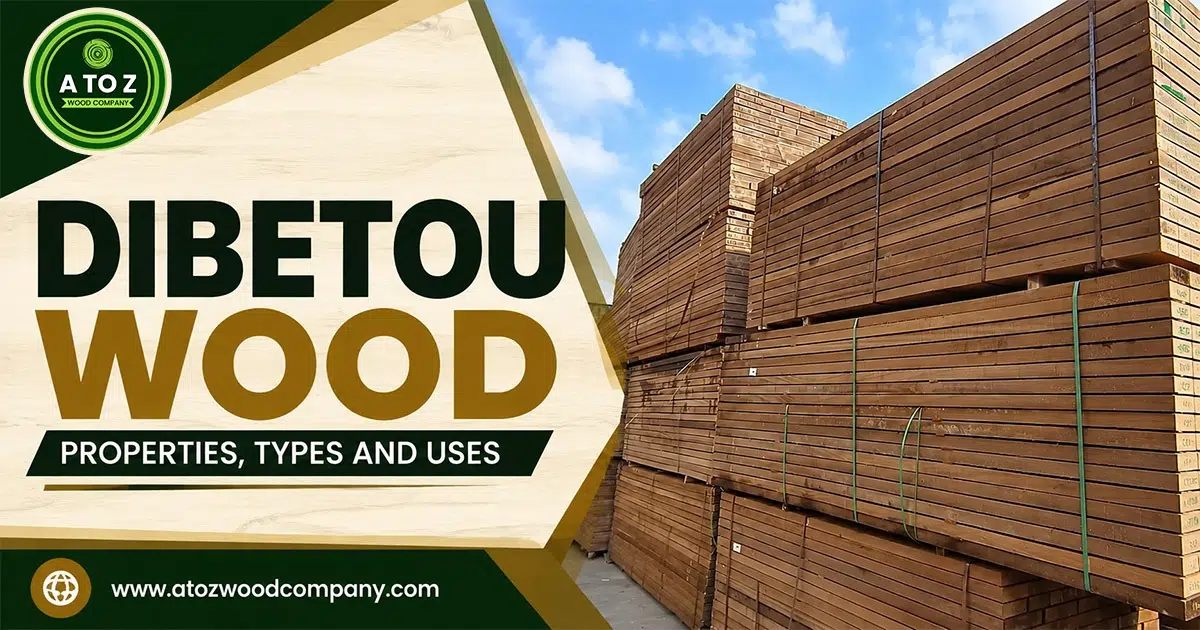
Dibetou (African Walnut) wood properties, types and uses

Dibetou wood (scientific name Lovoa trichilioides), commonly known as African Walnut, is a tropical hardwood native to the rainforests of West and Central Africa. It features a golden to reddish-brown heartwood with dark black ribbon-like stripes. The wood color gets darker with age. It has a fine-to-medium texture, an interlocked grain, and a distinct cedar-like scent. Dibetou is moderately durable and typically easy to work with. It is commonly used for veneer, furniture, plywood, flooring, cabinetry, and turned objects.

Searching for a reliable global timber partner for consistent supply of authentic African walnut? Contact AtoZ Wood Company today!

About Dibetou

Widely sold and used under the name African Walnut, Dibetou (Lovoa trichilioides) is an exotic tropical hardwood native to the rainforests of West and Central Africa. Despite its common name, it has no relation to the true walnut family. In fact, it is a member of the Meliaceae (mahogany). It is a versatile wood with many applications.

Key Properties of Dibetou

Dibetou is a medium-density hardwood prized for its excellent dimensional stability and attractive appearance.

  • Average Dried Weight: Approximately 540 kg/m³ (34 lbs/ft³)
  • Color: The heartwood ranges from golden yellow to deep reddish-brown, often featuring prominent black or dark grey streaks from natural gum deposits. The color darkens upon light exposure.
  • Sapwood: Light gray and easily distinguished from the darker heartwood.
  • Grain & Figure: The grain is typically interlocked, producing a ribbon-stripe figure in quartersawn pieces. The texture is medium and uniform, with a high level of natural luster.
  • Odor: Freshly cut or machined wood has a cedar-like scent.
  • Janka Hardness: 940 lbf (4,180 N) for dry wood.
  • Drying, Shrinkage & Stability: It dries fairly well and rapidly with minimal defects. It has extremely low movement in service (very stable).
  • Fungal Resistance: Moderately to poorly resistant to decay from fungi.
  • Insect Resistance: Highly resistant to dry-wood borers but susceptible to termites.
  • Workability: Typically easy to work with. Responds well to turning, glues, and finishes.

Main Types/Variants of Dibetou

West African Dibetou: Primarily sourced from western forests across Sierra Leone, Liberia, Ivory Coast, Ghana, and Nigeria. This wood has slightly lower density ranges.

Central African Dibetou: Sourced from central regions including Cameroon, Gabon, Republic of the Congo, and the Democratic Republic of the Congo. The wood is heavier and has a clearer finish.

African Walnut / Congowood: Used in place of dark European walnut for visual similarity.

Tigerwood / Tiger-Walnut: Dibetou logs from old, mature trees that boast exceptionally dense, sharp black streaks on a golden yellowish heartwood.

Bibolo: Local trade name for Dibetou in French-influenced African timber markets.

Quarter-Sawn / Ribbon-Stripe Grade: The most premium and expensive type of Dibetou timber pieces, specifically designed to highlight the striking interlocked grain as alternating light and dark bands.

Flat-Sawn / Flame Grade: This type is produced by cutting a Dibetou log across the growth rings, yielding a wider grain pattern that showcases rich dark veins.

Common Uses of African Walnut

As a strong, versatile hardwood, Dibetou finds applications across a wide range of interior projects, from veneering and plywood construction to flooring, exotic furniture, cabinetry, and specialty objects.

High-End Cabinetry & Furniture

Dibetou is an excellent choice for luxury furniture making and is commonly used to manufacture dining tables, premium desks, chairs, coffee tables, and custom bedroom furniture. Because of its unique combination of strength and stability, it produces sturdy pieces that are easy to handle. It is also used to make gorgeous, rich-colored cabinets for kitchens and living areas.

Architectural Veneers & Millwork

Because Dibetou is widely available in the form of straight, defect-free, cylindrical log boles, it is highly valued for producing sliced and rotary-cut veneers for decorative applications. Dibetou veneer sheets are extensively used for architectural wall paneling, plywood, furniture, cabinets, high-end corporate interiors, and luxury flush doors.

Precision Machining & Turnery

Dibetou machines fairly and responds well to turning, making it a favorite for custom wood turning projects, including decorative moldings, tool handles, architectural columns, bowls, and picture frames.

Speciality Projects

African walnut’s attractive dark yellowish color, ribbon-like grain patterns, and structural stability make it suitable for many speciality applications, such as:

  • Musical Instruments: Its natural acoustic properties make Dibetou popular as a tonewood for guitar backs, sides, and turning blanks. It is also often used in other musical devices.
  • Gunstocks and tool handles: Its shock resistance, low density, and stability in changing climates make it a practical choice for sporting gunstocks and tool handles. Often used as an alternative to American Black Walnut.
  • Flooring: Often sold and used as pre-cut, engineered, or solid premium flooring strips, particularly in North American and European markets.

Conclusion

Dibetou wood is an African tropical hardwood prized for its golden or rich brown color, structural stability, and excellent machining properties, which make it a favorite for interior projects and decorative applications. The wood bends easily and has a pleasant, cedar-like fragrance when freshly cut. It finds applications across furniture making, cabinetry, veneering, and speciality woodworking.

AtoZ Wood Company is the #1 leading global exporter of FSC-certified, 100% authentic, African Walnut (Dibetou) timber and fresh wood logs. We ship to over 70 countries and offer wholesale pricing on all products. Check out more at atozwoodcompany.com.

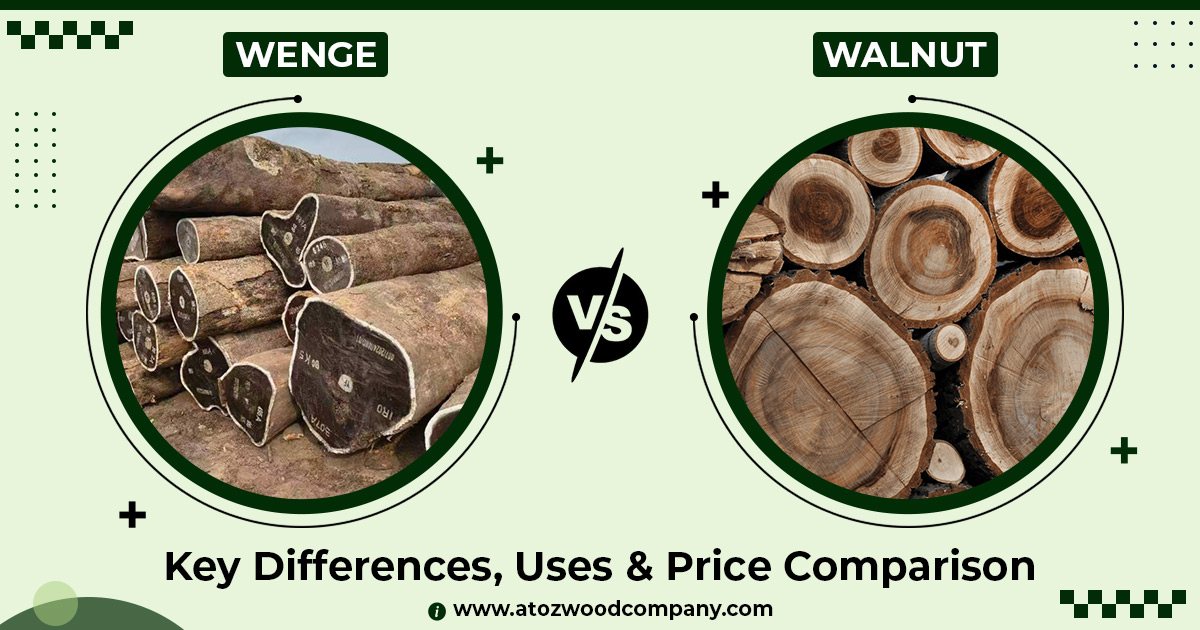
Wenge vs Walnut: Key Differences, Uses & Price Comparison

Wenge vs Walnut wood

Wenge and Walnut are two premium hardwood species often compared for their beauty, durability, and performance. While both are highly valued, they differ significantly in appearance, hardness, workability, cost, and ideal applications. This detailed comparison of Wenge vs Walnut wood will help buyers, designers, and timber importers make an informed decision based on technical performance and end-use requirements.

Overview of Wenge and Walnut Wood

What Is Wenge Wood?

wenge wood

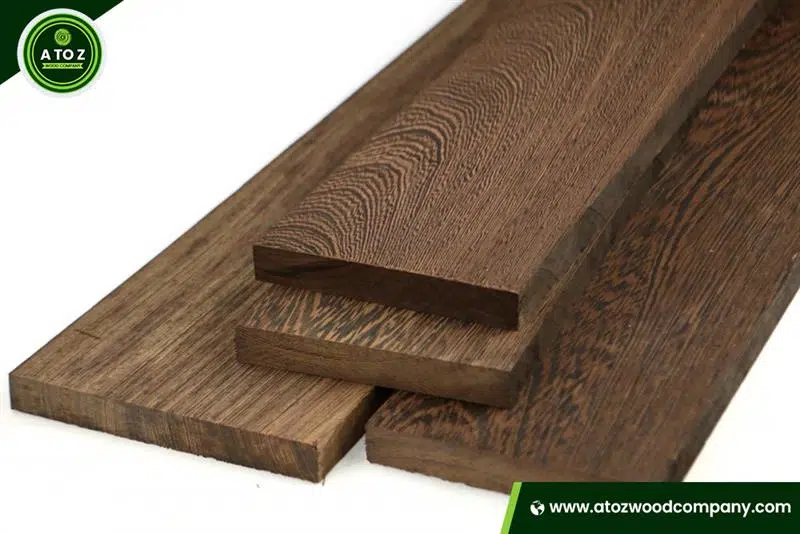
Wenge wood (Millettia laurentii) is a dense African hardwood native to Central Africa, particularly Cameroon, Congo, and Gabon. It is known for its very dark brown to nearly black color with fine, light streaks.

It is commonly used in:

  • Luxury furniture
  • Flooring
  • Decorative veneers
  • Musical instruments
  • High-end architectural joinery

What Is Walnut Wood?

Walnut wood (Juglans spp.), especially American Black Walnut, is a premium hardwood sourced mainly from North America and parts of Europe. It is famous for its rich chocolate-brown color, smooth grain, and excellent workability.

It is widely used in:

  • Furniture and cabinetry
  • Interior paneling
  • Veneers
  • Doors
  • Decorative woodwork

Appearance & Aesthetic Differences

Feature Wenge Wood Walnut Wood
Color Very dark brown to black Light to dark chocolate brown
Grain Pattern Straight with dramatic streaks Straight to wavy, smooth
Texture Coarse Fine to medium
Aging Darkens further over time Lightens slightly with age

Density, Hardness & Strength Comparison

Mechanical Properties

Property Wenge Walnut
Density (12% MC) ~870–900 kg/m³ ~610–650 kg/m³
Janka Hardness ~1,930 lbf ~1,010 lbf
Strength Very high Medium
Wear Resistance Excellent Moderate

Wenge is almost twice as hard as Walnut, making it better suited for heavy-duty applications such as flooring and staircases.

Durability & Resistance

Wenge Wood

  • Naturally resistant to termites and insects

  • Highly durable in dry conditions

  • Moderate resistance to moisture

  • Suitable for indoor and semi-exterior use

Walnut Wood

  • Moderately durable

  • Not naturally termite-resistant

  • Requires treatment for humid or exterior environments

  • Best suited for interior applications

Winner: Wenge for durability and resistance.

Workability & Machining

Factor Wenge Walnut
Cutting & Shaping Difficult Easy
Tool Wear High Low
Finishing Challenging Excellent
Gluing & Polishing Moderate Very good
  • Wenge is tough on tools and can splinter if not handled carefully.

  • Walnut is one of the easiest hardwoods to work with, making it a favorite for furniture manufacturers.

Common Uses

Best Uses for Wenge Wood

  • Luxury flooring

  • Staircases

  • High-end furniture

  • Decorative panels

  • Guitar fingerboards

  • Statement architectural elements

Best Uses for Walnut Wood

  • Premium furniture

  • Cabinets and wardrobes

  • Doors and wall paneling

  • Veneers and plywood

  • Home décor and carvings

Sustainability & Availability

  • Wenge is less available and subject to stricter export regulations due to overharvesting in the past. Responsible sourcing from certified suppliers is essential.

  • Walnut is more readily available and widely cultivated, especially American Black Walnut, making it easier to source sustainably.

Price Comparison

Aspect Wenge Wood Price Walnut Wood Price
Availability Limited Widely available
Price Range Higher Medium to high
Import Cost High (African origin) Moderate
Value for Money High durability High workability

Wenge is generally more expensive due to scarcity, density, and premium positioning. Walnut offers a balance between cost, beauty, and ease of use.

Which Wood Should You Choose?

Choose Wenge If:

  • You need extreme hardness and durability

  • You want a dark, bold luxury appearance

  • The project involves flooring or heavy wear

  • You source from a certified, sustainable supplier

Choose Walnut If:

  • You prioritize easy machining and finishing

  • You want warm, elegant interiors

  • The application is furniture or cabinetry

  • You need consistent availability and lower tooling cost

Which one Should You Choose?

Both are premium hardwoods, but they serve different purposes:

  • Wenge excels in strength, durability, and dramatic aesthetics.

  • Walnut stands out for workability, versatility, and timeless appeal.

The right choice depends on budget, application, availability, and design intent.

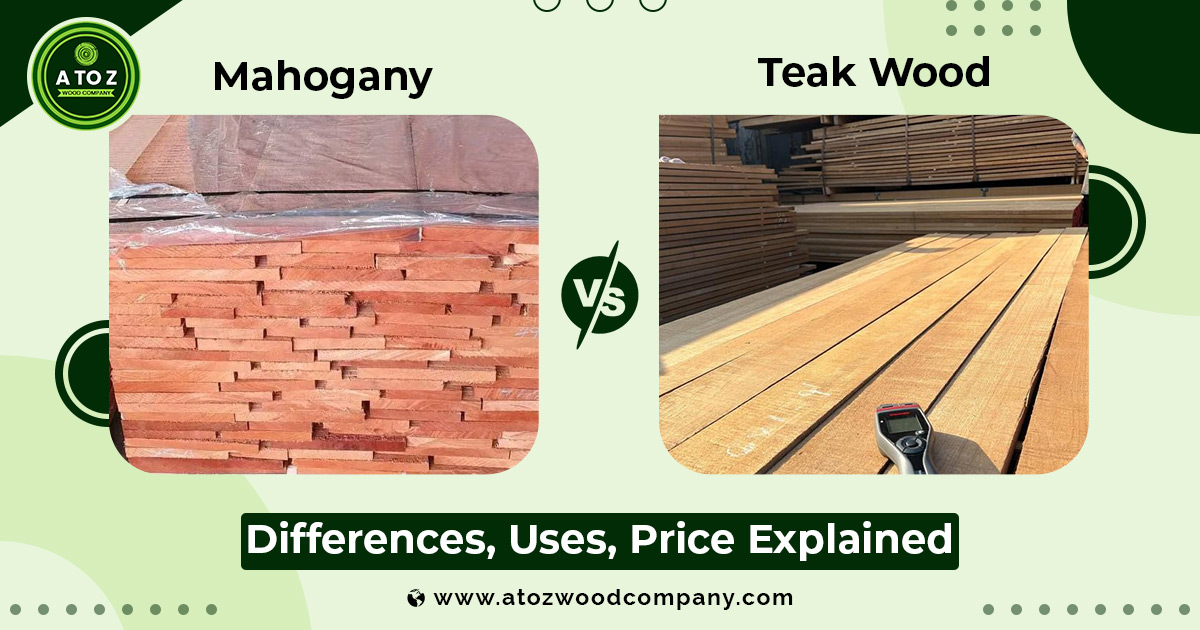
Mahogany vs Teak Wood | Differences, Uses, Price Explained

mahogany vs teak

When choosing premium hardwood for furniture, flooring, decking, or large construction projects, Mahogany and Teak are two of the most searched and trusted wood species worldwide. Both are valued for durability, appearance, and long service life—but they serve very different purposes depending on climate, budget, and application.

This detailed comparison of Mahogany vs Teak will help buyers, architects, and importers make the right wood selection based on strength, durability, cost, and use case.

What Is Mahogany Wood?

mahogany timber

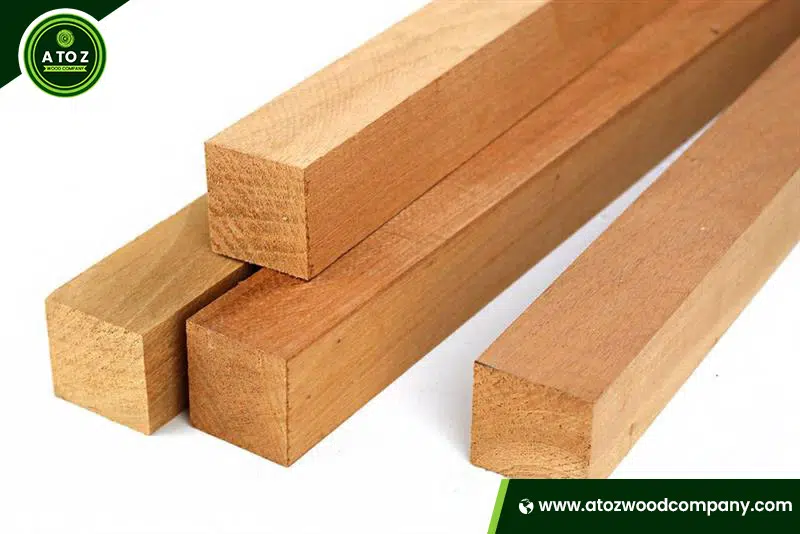
It refers to a group of hardwood species known for their rich reddish-brown color, straight grain, and excellent workability. The most commonly traded types include:

  • African Mahogany (Khaya species)

  • Genuine Mahogany (Swietenia macrophylla)

Mahogany is widely used in interior furniture, doors, veneers, paneling, and decorative woodwork due to its smooth texture and stability.

Key Properties of Mahogany

  • Medium to high density

  • Straight grain with fine texture

  • Easy to machine and finish

  • Moderate natural durability

  • Excellent dimensional stability

Mahogany is especially popular in large-scale furniture manufacturing and interior architectural projects.

What Is Teak Wood?

different color teak wood

It is considered one of the most durable hardwoods in the world, particularly for outdoor and marine applications. It contains natural oils and silica that protect it from moisture, insects, and decay.

Teak is commonly sourced from:

  • Natural forests (regulated)

  • Sustainable plantations

Key Properties of Teak

  • High density and strength

  • Naturally oily surface

  • Exceptional resistance to water, termites, and rot

  • Long outdoor lifespan

  • Minimal maintenance required

Teak is widely used for outdoor furniture, decking, boat building, and luxury construction.

Side-by-Side Comparison

Feature Mahogany Wood Teak Wood
Color Reddish to deep brown Golden to dark brown
Grain Straight, uniform Straight to wavy
Density Medium to high High
Natural Oils Low Very high
Durability Moderate to good Excellent
Moisture Resistance Moderate Very high
Termite Resistance Moderate Excellent
Workability Excellent Moderate
Outdoor Use Limited Ideal
Indoor Use Excellent Very good
Maintenance Low Very low

Durability & Weather Resistance

Teak clearly outperforms mahogany in harsh environments.

  • Teak can last 40–60+ years outdoors with minimal treatment.

  • Mahogany performs best indoors or in protected exterior areas.

For tropical climates, coastal regions, and high-humidity environments, teak is the superior choice.

Appearance & Aesthetic Appeal

  • Mahogany offers a classic, elegant look with deep reddish tones that darken beautifully with age—ideal for luxury furniture and interiors.

  • Teak has a warm golden appearance that weathers into a silver-gray patina outdoors, often preferred in modern exterior designs.

Choice here depends on design intent rather than performance.

Workability & Manufacturing

Mahogany is preferred by manufacturers because it:

  • Cuts cleanly

  • Glues well

  • Accepts polish, stains, and finishes evenly

Teak is harder to process due to:

  • High oil content

  • Silica that dulls cutting tools

For mass production and custom furniture, mahogany is more efficient and cost-effective.

Price Comparison

Aspect Mahogany Teak
Availability Widely available Limited
Supply Multiple species Restricted
Price Range Moderate High
Bulk Purchase More economical Expensive
ROI for Interiors High Medium

Teak is significantly more expensive due to slow growth rates, limited supply, and strict regulations.
Mahogany offers better scalability for bulk buyers and large commercial projects.

Best Uses for Mahogany

  • Indoor furniture

  • Doors and frames

  • Veneers and paneling

  • Staircases

  • Musical instruments

  • Office interiors

  • Decorative architectural elements

Best Uses for Teak

  • Outdoor furniture

  • Decking and flooring

  • Marine construction

  • Boat building

  • Luxury outdoor projects

  • Poolside furniture

Sustainability Considerations

Sustainability is a major factor in modern timber trade.

  • Responsibly sourced African Mahogany from managed forests offers a more sustainable option for large-scale use.

  • Teak plantations support sustainability but require long growth cycles, increasing cost.

Choosing certified suppliers ensures ethical sourcing, legal harvesting, and environmental protection.

Which One Should You Choose?

Choose Mahogany if you need:

  • Cost-effective premium hardwood

  • Excellent indoor performance

  • Smooth finishing and easy processing

  • Bulk timber supply

Choose Teak if you need:

  • Maximum outdoor durability

  • High moisture resistance

  • Long service life in harsh conditions

  • Premium exterior aesthetics

Final Verdict

Both Mahogany and Teak are exceptional hardwoods, but they serve different purposes.

  • Mahogany is the ideal choice for interiors, furniture manufacturing, and large-volume projects.

  • Teak remains unmatched for outdoor and marine environments, where durability is critical.

Understanding your project requirements, climate conditions, and budget is key to making the right decision.

Wood Manufacturing Process & Methods Explained

wood manufacturing process and methods

Wood has been humanity’s trusted material for centuries—shaping homes, furniture, tools, and countless everyday products. But before it becomes a polished table or structural beam, wood undergoes a series of detailed manufacturing processes and methods.

In this guide, we’ll break down the step-by-step journey of wood manufacturing, explore traditional and modern methods, and highlight sustainable practices that make today’s timber industry more efficient and eco-friendly.

Steps in a Wood Manufacturing Process

1. Harvesting the Logs

The wood manufacturing journey begins in the forest. Sustainable forestry is crucial, as over-harvesting can damage ecosystems.

  • Tree Selection – Only mature trees are harvested, ensuring regrowth and biodiversity preservation.
  • Felling – Using chainsaws or mechanized harvesters, trees are cut and trimmed.
  • Transportation – Logs are transported to sawmills, often via trucks or waterways for large-scale supply.

2. Initial Processing at the Sawmill

Once the logs reach the mill, they are prepared for conversion into usable lumber.

  • Debarking – Outer bark is removed, often reused as mulch or fuel.
  • Log Cutting (Sawing) – Logs are cut into cants, planks, or slabs using band saws, circular saws, or modern computerized saws.
  • Sorting – The rough-cut timber is sorted by size, type, and end use.

Modern sawmills use computerized optimization systems to maximize yield and minimize waste.

3. Seasoning and Drying

Freshly cut timber contains 30–200% moisture content, which must be reduced for stability and durability.

Methods of Drying:

  • Air Drying – Stacked outdoors, allowing natural airflow. Low-cost but slow.
  • Kiln Drying – Uses heat chambers to dry wood quickly and evenly. Produces higher-quality lumber.
  • Solar Drying – Eco-friendly method using greenhouse-style chambers.

👉 Proper drying prevents warping, cracking, and decay. For furniture, lumber is typically dried to 8–12% moisture content.

4. Grading and Classification

After drying, it is inspected and graded based on:

  • Appearance (grain, knots, color)
  • Strength (structural integrity for construction)
  • Defects (cracks, splits, insect damage)

Two major grading types exist:

  • Softwood grading – Based on structural strength.
  • Hardwood grading – Focuses on appearance and quality for furniture and interiors.

5. Machining and Shaping

Wood is processed into finished dimensions using precision tools.

  • Planing – Smooths surfaces to uniform thickness.
  • Trimming & Edging – Removes rough edges and defects.
  • Profiling – Shapes wood into mouldings, panels, or decorative designs.
  • CNC Machining – Computer-controlled routers cut complex shapes with extreme accuracy.

👉 CNC machining and laser cutting have revolutionized furniture and décor production, enabling custom designs at scale.

6. Wood Manufacturing Methods

Depending on the end use, different manufacturing methods are applied:

(a) Traditional Joinery

Mortise and tenon, dovetail, and tongue-and-groove joints.

Favored for furniture and cabinetry due to strength and craftsmanship.

(b) Engineered Wood

Plywood – Thin layers glued at right angles.

MDF (Medium-Density Fiberboard) – Fine fibers compressed with resin.

Glulam & CLT – Laminated beams and cross-laminated panels for construction.

(c) Surface Treatments

Sanding, staining, polishing, and finishing enhance durability and aesthetics.

Low-VOC finishes are now preferred for eco-friendly products.

Advanced & Modern Wood Manufacturing Techniques

The timber industry is increasingly technology-driven:

  • Robotics & Automation – Speed up production and reduce labor costs.
  • 3D Scanning & Quality Control – Detect defects before final processing.
  • Smart Manufacturing – IoT devices monitor drying kilns, saw performance, and waste management.
  • Modified Wood – Chemical or heat treatments (e.g., acetylated wood, thermowood) improve resistance to decay.

Why Sustainability is Important?

With global demand rising, sustainable practices are essential:

  • Recycling & Upcycling – Old timber is repurposed for flooring, panels, or furniture.
  • Carbon Storage – Wood products lock in carbon, reducing greenhouse impact.
  • Waste Utilization – Sawdust and offcuts are used in biomass energy or particleboard.
  • Green Manufacturing – Solar kilns, energy-efficient mills, and digital operations reduce the industry’s footprint.

Conclusion

The manufacturing process and methods reflect a balance between tradition and innovation. From log harvesting to advanced CNC machining, every stage plays a vital role in delivering high-quality, sustainable timber.

Whether for construction, furniture, or decorative applications, modern wood manufacturing is evolving to meet global demands while respecting the environment.

At AtoZ Wood Company, we combine traditional craftsmanship with modern technology to deliver world-class timber solutions. Our commitment to sustainable harvesting, precision processing, and global supply standards makes us a trusted partner for construction firms, furniture manufacturers, and bulk timber buyers worldwide.

10 Rare Exotic Wood Types You Should Know About

types of exotic woods

Exotic woods have captivated woodworkers, designers, and luxury buyers for centuries. Known for their rare origins, striking grain patterns, and exceptional durability, these premium hardwoods are sourced from tropical and subtropical regions across Africa, Asia, and South America.

Whether you’re a furniture maker, architect, flooring specialist, or collector, understanding the different types of exotic woods — and their unique properties — can help you choose the perfect material for your project.

In this guide, we’ll explore the most sought-after exotic wood species, their characteristics, uses, and market value, along with sustainability considerations.

What Makes a Wood “Exotic”?

In the timber industry, “exotic” refers to wood sourced from non-native, tropical, or subtropical species that aren’t commonly found in your local environment. These woods often have:

  • Unique colors and patterns not seen in domestic species.
  • High density and durability for long-lasting performance.
  • Distinct fragrances or natural oils that enhance their appeal.
  • Limited availability, adding to their value.

Most exotic woods come from Africa, South America, and Southeast Asia, but some are plantation-grown in other parts of the world to meet demand sustainably.

Popular Types of Exotic Woods

1. Teak (Tectona grandis)

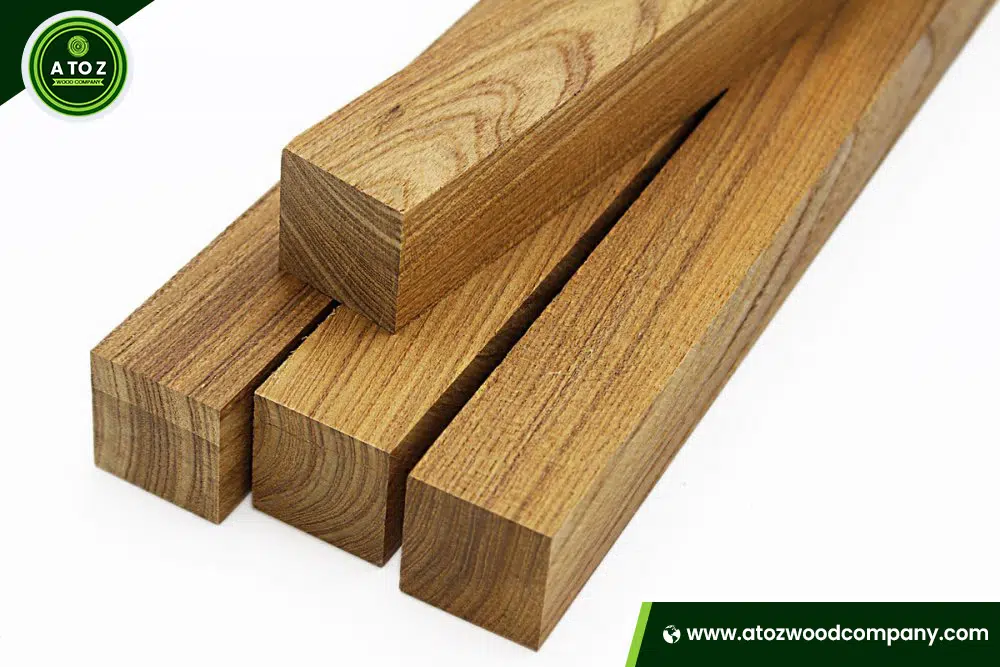
teak sawn timber

  • Origin: Southeast Asia, Africa (plantations)
  • Color: Golden brown, darkening with age
  • Properties: Extremely durable, naturally oily, weatherproof
  • Uses: Luxury furniture, yacht decks, outdoor joinery, flooring
  • Price: Premium due to limited supply

Why It’s Exotic: Teak’s natural oil content gives it unmatched resistance to rot and insects, making it the gold standard for outdoor and marine applications.

2. Iroko (Milicia excelsa, Milicia regia)

iroko timber

  • Origin: West & East Africa
  • Color: Golden yellow to medium brown
  • Properties: Highly durable, termite-resistant, affordable teak alternative
  • Uses: Outdoor furniture, decking, boatbuilding, flooring
  • Price: More affordable than teak

Why It’s Exotic: Known as “African Teak,” Iroko offers similar performance to teak at a lower cost, with a warmer grain character.

3. Bubinga (Guibourtia spp.)

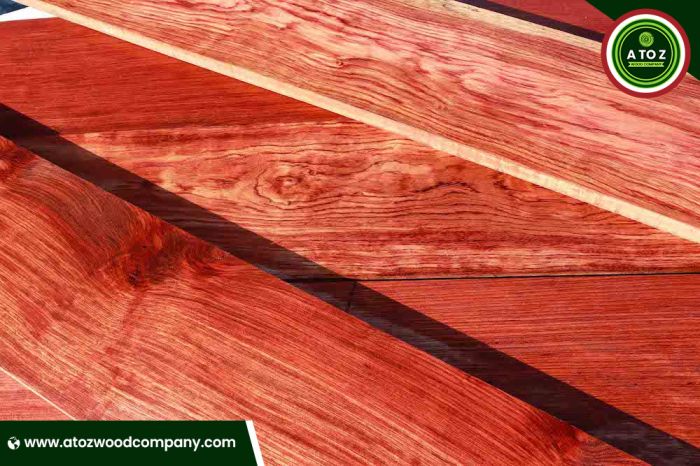
bubinga live edge slab

  • Origin: Central & West Africa
  • Color: Reddish-brown to pinkish-red with darker streaks
  • Properties: Dense, strong, often with striking figure patterns (quilted, pommele)
  • Uses: Luxury furniture, musical instruments, decorative veneers

Why It’s Exotic: Its curly or figured grain and deep coloration make it a statement wood for high-end designs.

4. Wenge (Millettia laurentii)

  • Origin: Central Africa
  • Color: Dark chocolate brown with black streaks
  • Properties: Very dense, hard, and rot-resistant
  • Uses: Flooring, furniture, musical instruments, paneling

Why It’s Exotic: Wenge’s dark, almost black tone is rare in natural woods, making it popular for contemporary interiors and contrast designs.

5. Rosewood (Dalbergia spp.)

rosewood slabs

  • Origin: Africa, Asia, South America
  • Color: Reddish-brown, purple-brown, or dark brown with darker streaks
  • Properties: Dense, fragrant, rich tonal quality
  • Uses: Musical instruments (guitars, pianos), fine furniture, luxury veneers

Why It’s Exotic: Valued for both its visual appeal and acoustic properties, genuine rosewood is highly regulated due to overharvesting.

6. Zebrawood (Microberlinia brazzavillensis)

  • Origin: West Africa
  • Color: Light brown or cream with dark brown to black stripes
  • Properties: Medium-hard, coarse texture, eye-catching pattern
  • Uses: Decorative furniture, paneling, inlays

Why It’s Exotic: Its bold striped pattern resembles a zebra’s coat, making it a favorite for statement pieces.

7. Padauk (Pterocarpus soyauxii)

padauk timber for sale

  • Origin: Central & West Africa
  • Color: Vivid orange-red, darkening to deep reddish-brown
  • Properties: Dense, durable, resistant to insects
  • Uses: Flooring, furniture, turnery, carvings

Why It’s Exotic: Its vibrant natural color stands out without staining, perfect for eye-catching projects.

8. Purpleheart (Peltogyne spp.)

  • Origin: Central & South America
  • Color: Vibrant purple, deepening over time
  • Properties: Extremely hard, dense, rot-resistant
  • Uses: Furniture accents, flooring inlays, decorative work

Why It’s Exotic: Its unique purple hue is natural and unlike any other commercially available hardwood.

9. Mahogany (Khaya spp., Swietenia spp.)

mahogany wooden slabs

  • Origin: Africa, Central & South America
  • Color: Reddish-brown, deepening with age
  • Properties: Stable, easy to work, moderately durable
  • Uses: Furniture, boats, paneling, doors

Why It’s Exotic: Synonymous with luxury furniture and classic interiors.

10. Ebony (Diospyros spp.)

  • Origin: Africa, India, Sri Lanka, Southeast Asia
  • Color: Deep black, sometimes with dark brown streaks
  • Properties: Extremely dense, fine texture, smooth finish
  • Uses: Musical instruments (piano keys, guitar fingerboards), luxury carvings, decorative accents
  • Price: Among the most expensive hardwoods

Why It’s Exotic: Known for its jet-black appearance and rarity, Ebony is one of the most luxurious and sought-after woods in the world.

Why Exotic Woods Are in High Demand?

  • Unique aesthetics – Rare colors and grains elevate design value.
  • Superior performance – High density and natural oils extend lifespan.
  • Prestige factor – Associated with luxury and exclusivity.
  • Investment potential – Certain species appreciate in value due to scarcity.

Where to Buy Different Types of Exotic Woods?

At AtoZ Wood Company, we supply sustainably harvested exotic hardwoods including Teak, Iroko, Bubinga, Wenge, Rosewood, Zebrawood, and more.

We offer:

  • Bulk supply for commercial projects
  • Custom cuts and kiln drying
  • Competitive prices for global buyers
  • Proven export records to over 30 countries

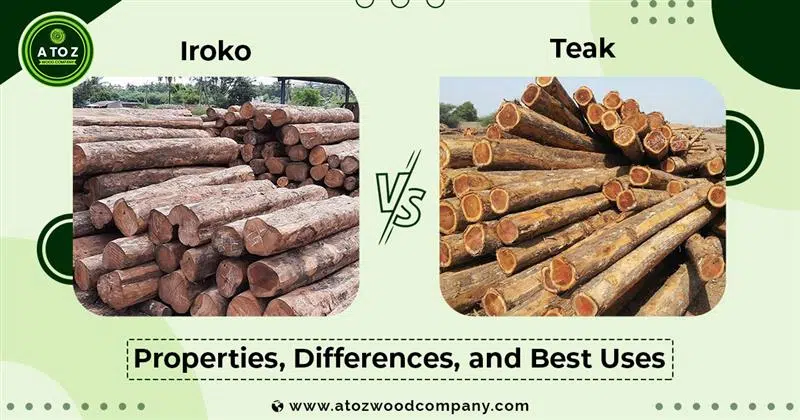
Iroko vs Teak – Properties, Differences, and Best Uses

iroko vs teak

The two premium hardwoods, Iroko and Teak often stand side by side in discussions among woodworkers, furniture makers, boat builders, and homeowners. Both are renowned for their durability, weather resistance, and attractive appearance — but there are distinct differences that can influence which one is the right choice for your project.

In this detailed guide, we’ll compare Iroko vs Teak in terms of origin, properties, appearance, durability, cost, and applications, helping you make an informed decision.

Overview: Iroko and Teak at a Glance

Feature Iroko Teak
Botanical Name Milicia excelsa, Milicia regia Tectona grandis
Origin West & East Africa South & Southeast Asia, Africa (plantations)
Color Golden yellow to medium brown (darkens over time) Honey brown to golden brown (darkens with age)
Grain Interlocked, medium to coarse texture Straight grain, smooth texture
Durability Very durable, termite & rot resistant Extremely durable, naturally oily & weatherproof
Common Uses Outdoor furniture, decking, boatbuilding, flooring Marine applications, luxury furniture, ship decks, outdoor joinery
Price More affordable than teak Higher price due to demand & limited supply

Iroko Wood Detailed Video

Teak Wood Detailed Video

Origin and Availability

  • Iroko is native to tropical Africa, especially countries like Nigeria, Ghana, Cameroon, and Ivory Coast. It is widely available and considered a sustainable alternative to teak because of its abundance and fast growth rate.

  • Teak originates from South and Southeast Asia (Myanmar, Thailand, Indonesia) but is now also grown on plantations in Africa, Central America, and the Caribbean. Genuine Burmese Teak is rare and expensive due to strict harvesting controls.

Appearance and Grain Pattern

  • Iroko: Freshly cut Iroko has a golden-yellow hue that matures to a richer brown with time. Its grain is interlocked, giving it a more textured, rustic appearance.
  • Teak: Teak’s golden to deep brown color and naturally oily feel give it a luxurious look. The grain is typically straight and fine, lending a smoother finish than Iroko.

Durability and Resistance

Both woods are excellent for outdoor and marine use, but there are differences:

  • Iroko: Naturally resistant to rot, decay, and insect attack. Slightly less oily than teak, so it requires occasional sealing for maximum weather resistance.
  • Teak: Extremely durable due to its high natural oil content. This oil acts as a built-in protective barrier against moisture, pests, and fungi, making it the gold standard for marine applications.

Workability and Maintenance

  • Iroko: Works well with both hand and machine tools, but interlocked grain can cause some tear-out. Takes finishes and oils well.
  • Teak: Easy to work with, but its high oil content can affect gluing — requiring proper surface preparation. Minimal maintenance is needed for outdoor use, though some prefer to oil it to preserve its color

Price Comparison: Iroko vs Teak

  • Iroko: Generally 40–50% cheaper than teak, making it an attractive alternative for budget-conscious buyers seeking durability without the premium price.

  • Teak: Commands a higher price due to limited supply, slow growth, and exceptional properties. Genuine Burmese Teak can be several times the cost of Iroko.

Best Uses for Each Wood

Iroko

  • Outdoor furniture

  • Garden decking

  • Flooring

  • Boatbuilding (keel, planking)

  • Window frames and doors

Teak

  • Marine applications (yacht decks, shipbuilding)

  • High-end outdoor furniture

  • Luxury flooring and paneling

  • Bridges and heavy construction

  • Decorative veneers

Sustainability Considerations

  • Iroko: Often harvested from sustainably managed African forests, making it a more eco-friendly choice when sourced responsibly.

  • Teak: Plantation-grown teak can be sustainable, but old-growth teak from Myanmar is restricted due to overharvesting concerns. Always look for FSC-certified timber to ensure ethical sourcing.

Which Should You Choose?

  • Choose Iroko if you want a cost-effective, durable, and attractive hardwood for outdoor or indoor use. It’s ideal for those who want teak-like qualities at a lower cost.

  • Choose Teak if you need maximum weather resistance, minimal maintenance, and a luxurious appearance — and you’re willing to invest in a premium material.

Where to Buy Best Quality Iroko and Teak Wood?

At AtoZ Wood Company, we supply sustainably harvested Iroko and Teak wood in logs, slabs, and sawn timber. Whether you’re a furniture maker, builder, or distributor, we provide:

  • FSC-certified timber
  • Bulk supply and custom sizes
  • Kiln drying and treatment
  • Competitive global shipping rates

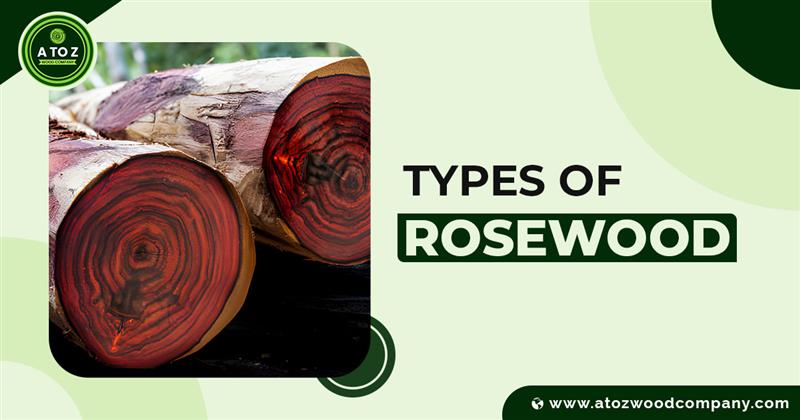
8 Types of Rosewood Wood | Properties, Uses & Prices

rosewood wood types

Rosewood is a premium-quality hardwood highly prized for its strength, beauty, fragrance, and tonal quality. Known for its luxurious appearance and durability, rosewood is widely used in furniture, musical instruments, flooring, and fine cabinetry.

But did you know there are several types of rosewood found across the world — each with unique characteristics?

we’ll break down the most popular rosewood types, their origins, properties, and best uses. If you’re a buyer, supplier, craftsman, or designer, this article will help you choose the right rosewood for your project or business.

What is Rosewood?

Rosewood refers to several richly hued timbers, often reddish or purplish-brown in color, belonging to the Dalbergia genus. The name “rosewood” comes from the sweet, floral scent released when the wood is freshly cut. Rosewood trees grow in tropical regions and are mainly sourced from Africa, Asia, and South America.

Popular Types of Rosewood

Here are the most well-known types of rosewood used globally:

    1. Indian Rosewood (Dalbergia latifolia)

  • Origin: India, Sri Lanka, Indonesia
  • Color: Dark brown to purple-brown with darker streaks
  • Grain: Even and straight
  • Hardness (Janka): ~2,440 lbf
  • Uses: Luxury furniture, musical instruments (guitars, sitars), veneer

Indian Rosewood is highly valued for its stability, durability, and superior tonal quality. It’s one of the most commonly used rosewoods in musical instrument manufacturing.

2. Brazilian Rosewood (Dalbergia nigra)

  • Origin: Brazil
  • Color: Deep chocolate brown to purple-black with black streaks
  • Grain: Interlocked with medium to coarse texture
  • Hardness: ~2,790 lbf
  • Uses: High-end furniture, acoustic guitars, antique restoration

Brazilian Rosewood is rare and protected due to overharvesting. It’s prized for its rich coloration and exceptional acoustic properties.

3. Madagascar Rosewood (Dalbergia maritima)

  • Origin: Madagascar (Africa)
  • Color: Reddish-orange to deep red
  • Grain: Striped, fine texture
  • Hardness: ~2,500–2,700 lbf
  • Uses: Decorative veneers, musical instruments, inlays

Madagascar rosewood has vibrant tones and attractive grain patterns, making it a favorite for luxury interiors and instruments.

4. Honduran Rosewood (Dalbergia stevensonii)

  • Origin: Central America (Belize, Honduras)
  • Color: Purplish brown with darker streaks
  • Grain: Straight to interlocked
  • Hardness: ~2,200 lbf
  • Uses: Marimbas, xylophones, high-end cabinetry

Renowned for its acoustic resonance, Honduran Rosewood is widely used in percussion instruments and exotic hardwood furniture.

5. African Rosewood (Guibourtia coleosperma / Bubinga)

  • Origin: Central and West Africa
  • Color: Reddish-brown to deep pink with purple or black streaks
  • Grain: Often curly or figured
  • Hardness: ~2,410 lbf
  • Uses: Luxury furniture, flooring, turning, musical instruments

Though not a true Dalbergia species, African Rosewood (Bubinga) is often classified under the rosewood trade due to its similar appearance and performance.

6. Amazon Rosewood (Dalbergia spruceana / Dalbergia cearensis)

  • Origin: South America (Brazil, Bolivia)
  • Color: Violet-brown with dark streaks
  • Grain: Fine, smooth texture
  • Hardness: ~2,000–2,400 lbf
  • Uses: Woodturning, musical instruments, fine inlays

Amazon Rosewood is beautiful and dense, often used in small decorative projects and high-end crafts.

7. Southeast Asian Rosewood (Dalbergia oliveri / Dalbergia cochinchinensis)

  • Origin: Vietnam, Laos, Cambodia, Thailand
  • Color: Deep red to dark brown
  • Grain: Interlocked with oily texture
  • Hardness: ~2,800 lbf
  • Uses: Flooring, sculptures, luxury furniture

This type is heavily restricted due to overharvesting but still appreciated for its density and aesthetic quality.

8. Sissoo Rosewood (Dalbergia sissoo)

  • Origin: India, Pakistan, Nepal
  • Color: Golden to dark brown
  • Grain: Medium, straight to interlocked
  • Hardness: ~1,820 lbf
  • Uses: Structural timber, furniture, boats, veneer

Sissoo wood is a sustainable, more accessible alternative to Indian rosewood with similar characteristics and strength.

Where to Buy Authentic Rosewood?

At AtoZ Wood Company, we specialize in sourcing sustainably harvested African rosewood, including Bubinga, Madagascar rosewood, and other exotic hardwoods from Africa. Whether you are a wholesaler, carpenter, or furniture maker, we provide:

  • Origin and legality (CITES compliant)
  • Bulk timber supply
  • Custom cuts and drying
  • Worldwide shipping
  • Competitive wood price

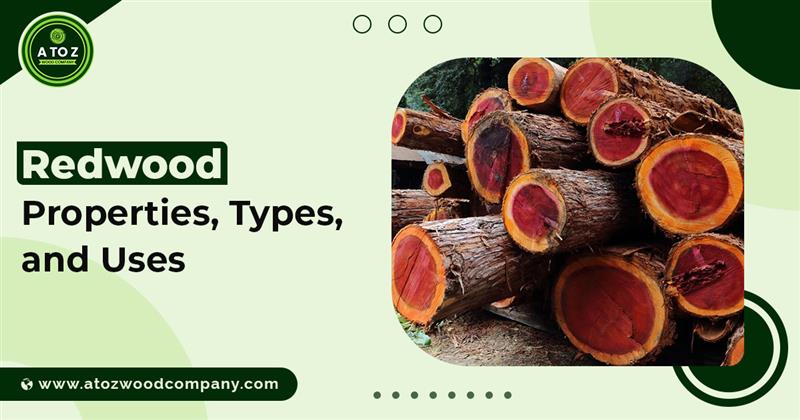
Redwood Properties, Types, and Uses

redwood properties, types and uses

Redwood is one of the most sought-after softwoods in the global timber market due to its remarkable combination of beauty, strength, and durability. Whether you’re building outdoor structures or crafting premium-grade furniture, redwood properties offers unmatched performance and aesthetic appeal. In this guide, we explore the properties, types, and uses of redwood wood, helping buyers, builders, and designers make informed choices.

What is Redwood?

Redwood, scientifically known as Sequoia sempervirens, is a softwood species native to the coastal forests of Northern California and parts of Oregon. It is prized for its tall, straight trunks, reddish-brown heartwood, and high resistance to decay. Despite being classified as softwood, it performs excellently in both structural and decorative applications.

Key Properties of Redwood

1. Durability & Weather Resistance

The heartwood contains natural tannins and oils that make it resistant to rot, fungi, and insects—perfect for long-term outdoor use without chemical treatments.

2. Lightweight Yet Strong

Despite being a softwood, redwood has a favorable strength-to-weight ratio, making it ideal for structures where both stability and ease of handling are important.

3. Thermal Insulation

It has a low thermal conductivity, meaning it helps maintain more stable temperatures in buildings—ideal for siding, paneling, and cabins.

4. Workability

Redwood is easy to saw, nail, glue, and sand. It planes cleanly and finishes beautifully, making it a favorite among woodworkers and builders.

5. Color and Grain

Heartwood: Ranges from light pink to deep reddish-brown.

Sapwood: Pale white or yellowish.

Grain: Typically straight, occasionally wavy or figured. It has a medium to coarse texture.

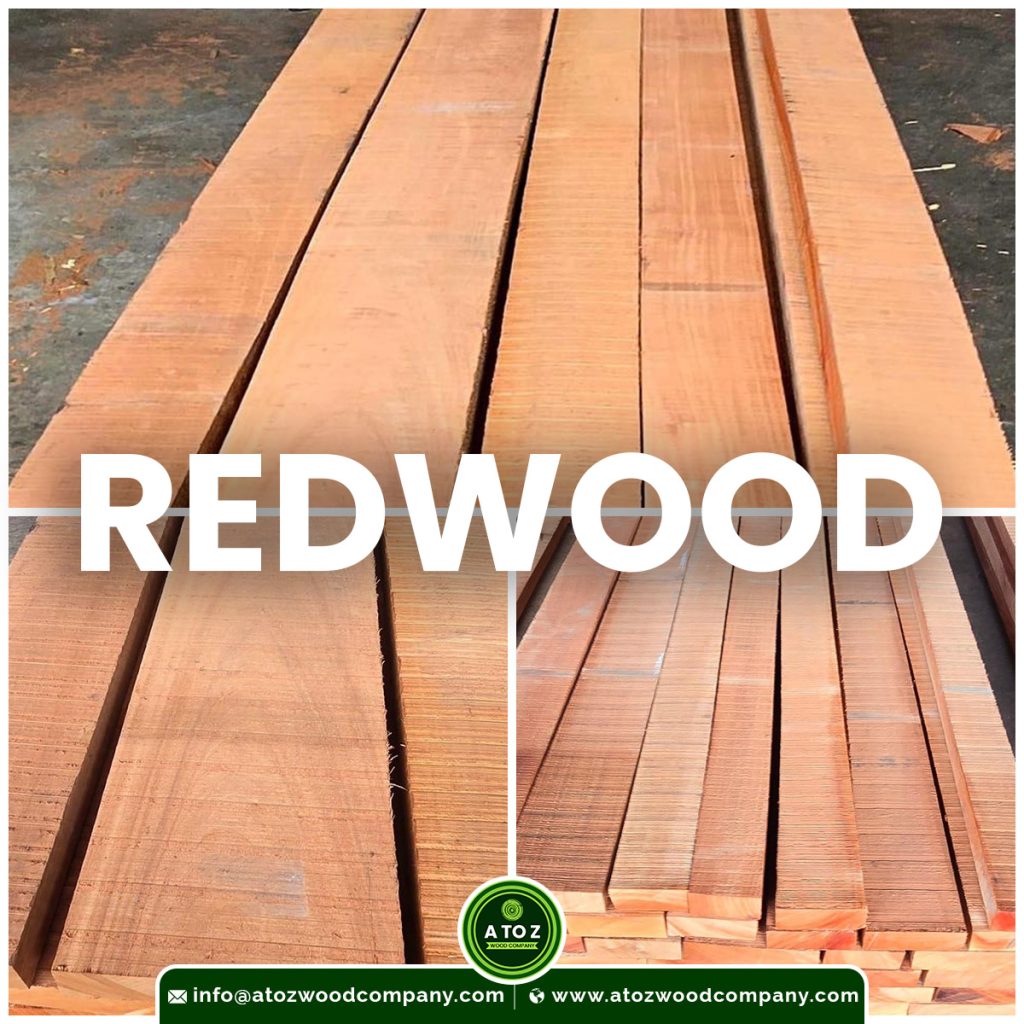
Types of Redwood

redwood

It is categorized based on the species and the part of the tree from which the timber is harvested. Below are the three main types:

1. Coast Redwood (Sequoia sempervirens)

Native to: Northern California and Southern Oregon.

Use: Commonly harvested for commercial lumber.

Traits: Tallest trees on earth; heartwood is rich, reddish, and durable.

Applications: Decking, siding, fencing, and garden structures.

2. Giant Redwood (Sequoiadendron giganteum)

Native to: Sierra Nevada mountains, California.

Use: Rare in the timber industry; mostly preserved.

Traits: Largest tree by volume; very dense wood.

Applications: Reclaimed wood used in restoration projects.

3. Dawn Redwood (Metasequoia glyptostroboides)

Native to: Central China.

Use: Grown as ornamental; not widely used for lumber.

Traits: Fast-growing, deciduous conifer; softer wood.

Applications: Landscaping, educational arboretums, bonsai.

Common Uses of Redwood

1. Decking & Outdoor Flooring

It is a top choice for outdoor decks due to its resistance to weather, insects, and warping.

2. Siding & Cladding

It offers a rich, warm appearance and excellent insulation—ideal for exterior siding and paneling.

3. Fencing & Garden Structures

Used extensively for fences, pergolas, gazebos, raised beds, and planter boxes thanks to its aesthetic value and longevity.

4. Furniture & Carving

It’s smooth grain and rich color make it suitable for handcrafted furniture, decorative panels, and artisan woodworking.

5. Boatbuilding & Water Tanks

Due to its natural water resistance, redwood has been historically used in boatbuilding, barrels, and even water tanks.

6. Interior Applications

Though primarily known for outdoor use, redwood also excels in indoor projects like beams, ceilings, and feature walls.

Pros and Cons of Redwood

Pros:

  • Naturally resistant to decay and pests
  • Lightweight and strong
  • Beautiful natural coloring and grain
  • Sustainable when sourced responsibly

Cons:

  • More expensive than common softwoods
  • Can dent or scratch due to softness
  • Limited availability in some regions

Where to Buy High-Quality Redwood?

If you’re looking to buy redwood timber in bulk for construction, landscaping, furniture, or commercial supply, it’s essential to source from a trusted, experienced supplier who guarantees quality, sustainability, and global delivery.

AtoZ Wood Company is a leading global timber exporter and wholesale supplier of premium redwood logs, slabs, and sawn timber. We provide high-quality redwood products sourced responsibly and processed to meet international standards.

Order top-grade timber at competitive prices—available in logs, slabs, or sawn timber formats, delivered straight to your location.

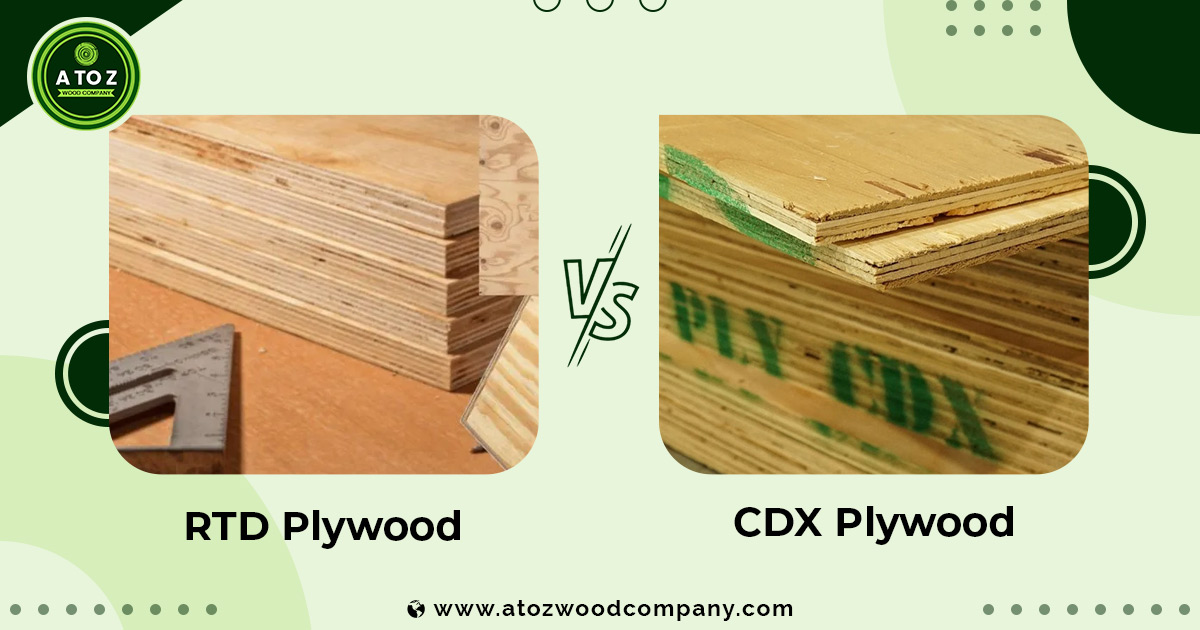
RTD vs CDX Plywood – Key Differences, Uses & Best Option

RTD vs CDX Plywood

When it comes to construction or home improvement projects, choosing the right plywood can make a significant difference in durability, cost, and long-term performance. Two common types often compared are RTD plywood and CDX plywood. Although they may seem similar at first glance, they serve different purposes and come with distinct manufacturing processes and performance characteristics.

In this guide, we’ll break down RTD vs CDX plywood to help you understand the key differences, pros and cons, and which option is better for your project.

What is RTD Plywood?

RTD stands for Resistance Temperature Detector, a term that refers to the manufacturing process rather than the plywood itself. RTD plywood is made using high-heat and pressure-controlled bonding systems that ensure consistent adhesion between the plies.

Key Characteristics of RTD Plywood:

  • Heat-Sensitive Adhesives: RTD sensors are used during production to monitor and control the temperature, ensuring proper glue bonding.

  • Moisture Resistance: Offers good resistance to moisture and humidity, making it ideal for outdoor sheathing and roofing underlayment.

  • Structural Strength: Designed for strength and dimensional stability under various weather conditions.

  • Quality Control: RTD plywood generally meets more stringent quality standards compared to CDX.

What is CDX Plywood?

CDX refers to the grade of the plywood:

  • C = face side with noticeable defects but still structurally sound.

  • D = back side with more visible imperfections.

  • X = exposure rating, suitable for temporary exposure to moisture.

CDX is a type of construction-grade plywood used mainly for structural purposes like subfloors, wall sheathing, and roof decking.

Key Characteristics of CDX Plywood:

  • Affordable and Widely Available: Often chosen for budget-conscious construction projects.

  • Not Fully Waterproof: Can withstand short-term exposure to moisture but is not meant for continuous wet conditions.

  • Less Refined Surface: Rougher texture with more voids and patches.

  • General-Purpose Use: Common in framing, sheds, and temporary structures.

RTD vs CDX Plywood: Side-by-Side Comparison

Feature RTD Plywood CDX Plywood
Manufacturing Uses RTD sensors for precise glue application Standard heat and glue process
Moisture Resistance Higher resistance Moderate resistance
Strength Stronger and more stable Durable but less refined
Surface Quality Better quality bonding and fewer voids Rough surface with visible defects
Cost Slightly more expensive More affordable
Usage Ideal for roofing, exterior sheathing Good for subfloors, wall sheathing
Weather Durability Suitable for wet environments Best for dry conditions or temporary exposure

Which is Better: RTD or CDX?

The better choice depends entirely on your project needs:

  • Choose RTD if:

    • You need higher moisture resistance.

    • Your project is long-term and exposed to the elements.

    • You prioritize strength and structural integrity.

    • You want better adhesive bonding and fewer warping issues.

  • Choose CDX if:

    • You’re working on a tight budget.

    • You need plywood for interior or temporary outdoor use.

    • The plywood will be covered or not exposed directly to weather.

Common Applications

RTD Plywood Uses:

  • Roof sheathing

  • Exterior wall sheathing

  • High-humidity environments

  • Long-term construction projects

CDX Plywood Uses:

  • Subflooring

  • Temporary enclosures

  • Wall bracing

  • Roof decking under roofing felt

Conclusion

Understanding the difference between RTD and CDX plywood is crucial when selecting the right material for your construction needs. While CDX remains a popular choice for standard subfloors and temporary structures due to its affordability, RTD plywood offers better durability, glue bonding, and moisture resistance—making it the preferred option for long-term and exterior applications.

At AtoZ Wood Company, we offer premium-quality RTD and CDX plywood tailored for a wide range of projects—whether you’re building homes, commercial spaces, or outdoor structures. With a strong commitment to quality, sustainability, and global supply, AtoZ ensures that you get the right plywood at the best price, delivered on time.