+237 681 25 6934
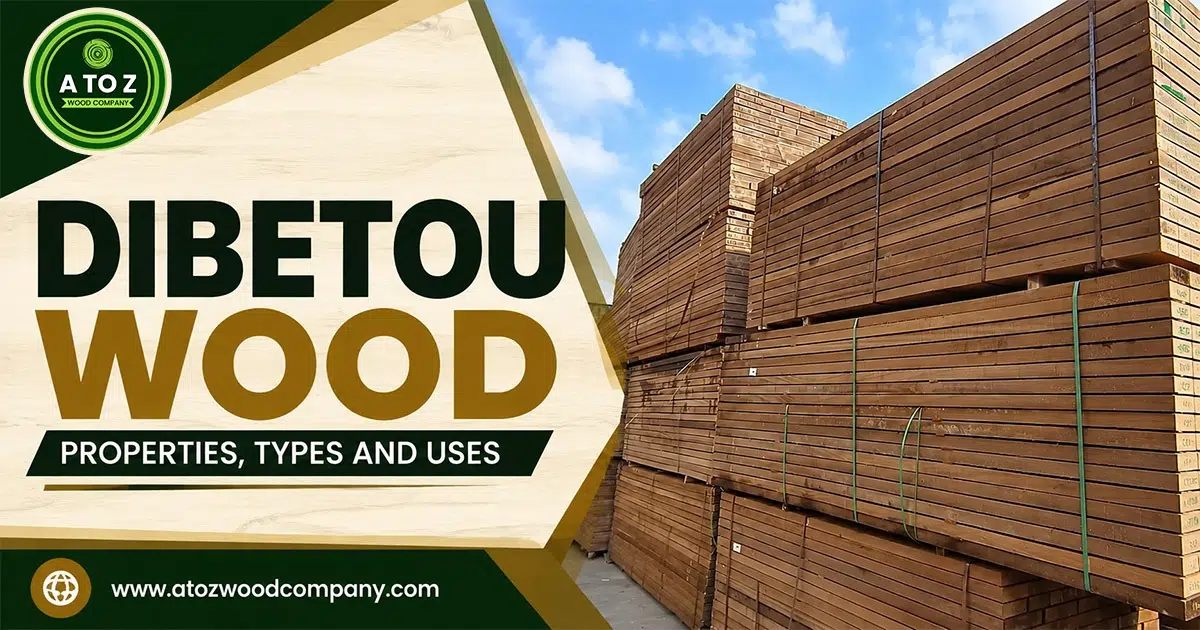
Dibetou wood (scientific name Lovoa trichilioides), commonly known as African Walnut, is a tropical hardwood native to the rainforests of West and Central Africa. It features a golden to reddish-brown heartwood with dark black ribbon-like stripes. The wood color gets darker with age. It has a fine-to-medium texture, an interlocked grain, and a distinct cedar-like scent. Dibetou is moderately durable and typically easy to work with. It is commonly used for veneer, furniture, plywood, flooring, cabinetry, and turned objects.
Searching for a reliable global timber partner for consistent supply of authentic African walnut? Contact AtoZ Wood Company today!
About Dibetou
Widely sold and used under the name African Walnut, Dibetou (Lovoa trichilioides) is an exotic tropical hardwood native to the rainforests of West and Central Africa. Despite its common name, it has no relation to the true walnut family. In fact, it is a member of the Meliaceae (mahogany). It is a versatile wood with many applications.
Key Properties of Dibetou
Dibetou is a medium-density hardwood prized for its excellent dimensional stability and attractive appearance.
- Average Dried Weight: Approximately 540 kg/m³ (34 lbs/ft³)
- Color: The heartwood ranges from golden yellow to deep reddish-brown, often featuring prominent black or dark grey streaks from natural gum deposits. The color darkens upon light exposure.
- Sapwood: Light gray and easily distinguished from the darker heartwood.
- Grain & Figure: The grain is typically interlocked, producing a ribbon-stripe figure in quartersawn pieces. The texture is medium and uniform, with a high level of natural luster.
- Odor: Freshly cut or machined wood has a cedar-like scent.
- Janka Hardness: 940 lbf (4,180 N) for dry wood.
- Drying, Shrinkage & Stability: It dries fairly well and rapidly with minimal defects. It has extremely low movement in service (very stable).
- Fungal Resistance: Moderately to poorly resistant to decay from fungi.
- Insect Resistance: Highly resistant to dry-wood borers but susceptible to termites.
- Workability: Typically easy to work with. Responds well to turning, glues, and finishes.
Main Types/Variants of Dibetou
West African Dibetou: Primarily sourced from western forests across Sierra Leone, Liberia, Ivory Coast, Ghana, and Nigeria. This wood has slightly lower density ranges.
Central African Dibetou: Sourced from central regions including Cameroon, Gabon, Republic of the Congo, and the Democratic Republic of the Congo. The wood is heavier and has a clearer finish.
African Walnut / Congowood: Used in place of dark European walnut for visual similarity.
Tigerwood / Tiger-Walnut: Dibetou logs from old, mature trees that boast exceptionally dense, sharp black streaks on a golden yellowish heartwood.
Bibolo: Local trade name for Dibetou in French-influenced African timber markets.
Quarter-Sawn / Ribbon-Stripe Grade: The most premium and expensive type of Dibetou timber pieces, specifically designed to highlight the striking interlocked grain as alternating light and dark bands.
Flat-Sawn / Flame Grade: This type is produced by cutting a Dibetou log across the growth rings, yielding a wider grain pattern that showcases rich dark veins.
Common Uses of African Walnut
As a strong, versatile hardwood, Dibetou finds applications across a wide range of interior projects, from veneering and plywood construction to flooring, exotic furniture, cabinetry, and specialty objects.
High-End Cabinetry & Furniture
Dibetou is an excellent choice for luxury furniture making and is commonly used to manufacture dining tables, premium desks, chairs, coffee tables, and custom bedroom furniture. Because of its unique combination of strength and stability, it produces sturdy pieces that are easy to handle. It is also used to make gorgeous, rich-colored cabinets for kitchens and living areas.
Architectural Veneers & Millwork
Because Dibetou is widely available in the form of straight, defect-free, cylindrical log boles, it is highly valued for producing sliced and rotary-cut veneers for decorative applications. Dibetou veneer sheets are extensively used for architectural wall paneling, plywood, furniture, cabinets, high-end corporate interiors, and luxury flush doors.
Precision Machining & Turnery
Dibetou machines fairly and responds well to turning, making it a favorite for custom wood turning projects, including decorative moldings, tool handles, architectural columns, bowls, and picture frames.
Speciality Projects
African walnut’s attractive dark yellowish color, ribbon-like grain patterns, and structural stability make it suitable for many speciality applications, such as:
- Musical Instruments: Its natural acoustic properties make Dibetou popular as a tonewood for guitar backs, sides, and turning blanks. It is also often used in other musical devices.
- Gunstocks and tool handles: Its shock resistance, low density, and stability in changing climates make it a practical choice for sporting gunstocks and tool handles. Often used as an alternative to American Black Walnut.
- Flooring: Often sold and used as pre-cut, engineered, or solid premium flooring strips, particularly in North American and European markets.
Conclusion
Dibetou wood is an African tropical hardwood prized for its golden or rich brown color, structural stability, and excellent machining properties, which make it a favorite for interior projects and decorative applications. The wood bends easily and has a pleasant, cedar-like fragrance when freshly cut. It finds applications across furniture making, cabinetry, veneering, and speciality woodworking.
AtoZ Wood Company is the #1 leading global exporter of FSC-certified, 100% authentic, African Walnut (Dibetou) timber and fresh wood logs. We ship to over 70 countries and offer wholesale pricing on all products. Check out more at atozwoodcompany.com.