+237 681 25 6934
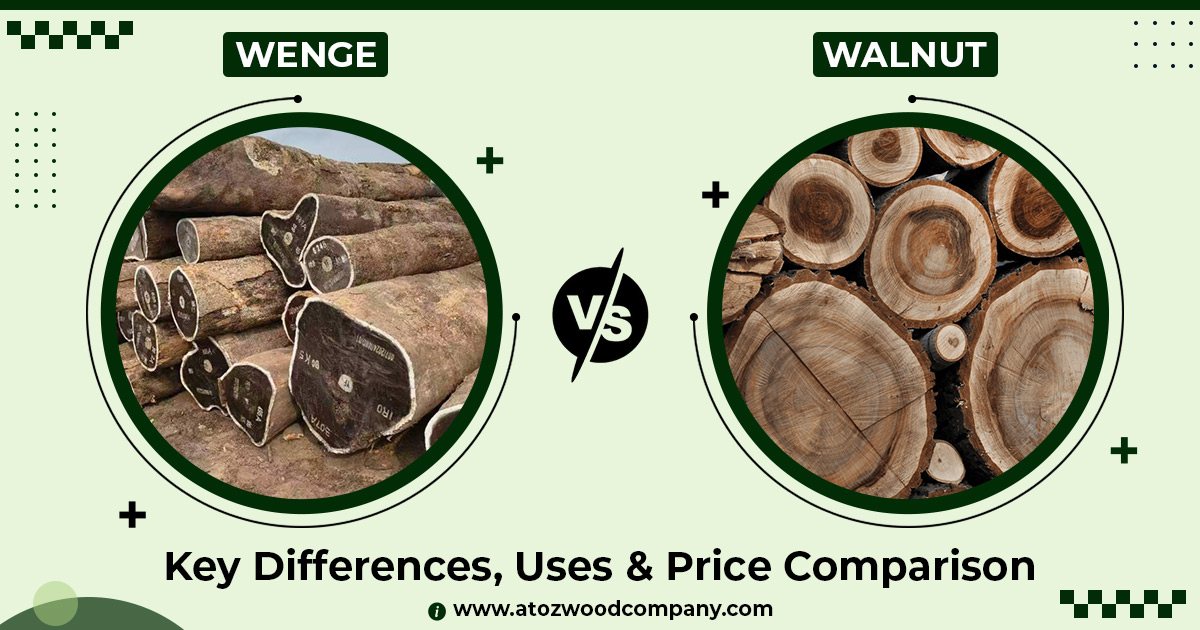
Wenge and Walnut are two premium hardwood species often compared for their beauty, durability, and performance. While both are highly valued, they differ significantly in appearance, hardness, workability, cost, and ideal applications. This detailed comparison of Wenge vs Walnut wood will help buyers, designers, and timber importers make an informed decision based on technical performance and end-use requirements.
Overview of Wenge and Walnut Wood
What Is Wenge Wood?

Wenge wood (Millettia laurentii) is a dense African hardwood native to Central Africa, particularly Cameroon, Congo, and Gabon. It is known for its very dark brown to nearly black color with fine, light streaks.
It is commonly used in:
- Luxury furniture
- Flooring
- Decorative veneers
- Musical instruments
- High-end architectural joinery
What Is Walnut Wood?
Walnut wood (Juglans spp.), especially American Black Walnut, is a premium hardwood sourced mainly from North America and parts of Europe. It is famous for its rich chocolate-brown color, smooth grain, and excellent workability.
It is widely used in:
- Furniture and cabinetry
- Interior paneling
- Veneers
- Doors
- Decorative woodwork
Appearance & Aesthetic Differences
| Feature | Wenge Wood | Walnut Wood |
|---|---|---|
| Color | Very dark brown to black | Light to dark chocolate brown |
| Grain Pattern | Straight with dramatic streaks | Straight to wavy, smooth |
| Texture | Coarse | Fine to medium |
| Aging | Darkens further over time | Lightens slightly with age |
Density, Hardness & Strength Comparison
Mechanical Properties
| Property | Wenge | Walnut |
|---|---|---|
| Density (12% MC) | ~870–900 kg/m³ | ~610–650 kg/m³ |
| Janka Hardness | ~1,930 lbf | ~1,010 lbf |
| Strength | Very high | Medium |
| Wear Resistance | Excellent | Moderate |
Wenge is almost twice as hard as Walnut, making it better suited for heavy-duty applications such as flooring and staircases.
Durability & Resistance
Wenge Wood
-
Naturally resistant to termites and insects
-
Highly durable in dry conditions
-
Moderate resistance to moisture
-
Suitable for indoor and semi-exterior use
Walnut Wood
-
Moderately durable
-
Not naturally termite-resistant
-
Requires treatment for humid or exterior environments
-
Best suited for interior applications
Winner: Wenge for durability and resistance.
Workability & Machining
| Factor | Wenge | Walnut |
|---|---|---|
| Cutting & Shaping | Difficult | Easy |
| Tool Wear | High | Low |
| Finishing | Challenging | Excellent |
| Gluing & Polishing | Moderate | Very good |
-
Wenge is tough on tools and can splinter if not handled carefully.
-
Walnut is one of the easiest hardwoods to work with, making it a favorite for furniture manufacturers.
Common Uses
Best Uses for Wenge Wood
-
Luxury flooring
-
Staircases
-
High-end furniture
-
Decorative panels
-
Guitar fingerboards
-
Statement architectural elements
Best Uses for Walnut Wood
-
Premium furniture
-
Cabinets and wardrobes
-
Doors and wall paneling
-
Veneers and plywood
-
Home décor and carvings
Sustainability & Availability
-
Wenge is less available and subject to stricter export regulations due to overharvesting in the past. Responsible sourcing from certified suppliers is essential.
-
Walnut is more readily available and widely cultivated, especially American Black Walnut, making it easier to source sustainably.
Price Comparison
| Aspect | Wenge Wood Price | Walnut Wood Price |
|---|---|---|
| Availability | Limited | Widely available |
| Price Range | Higher | Medium to high |
| Import Cost | High (African origin) | Moderate |
| Value for Money | High durability | High workability |
Wenge is generally more expensive due to scarcity, density, and premium positioning. Walnut offers a balance between cost, beauty, and ease of use.
Which Wood Should You Choose?
Choose Wenge If:
-
You need extreme hardness and durability
-
You want a dark, bold luxury appearance
-
The project involves flooring or heavy wear
-
You source from a certified, sustainable supplier
Choose Walnut If:
-
You prioritize easy machining and finishing
-
You want warm, elegant interiors
-
The application is furniture or cabinetry
-
You need consistent availability and lower tooling cost
Which one Should You Choose?
Both are premium hardwoods, but they serve different purposes:
-
Wenge excels in strength, durability, and dramatic aesthetics.
-
Walnut stands out for workability, versatility, and timeless appeal.
The right choice depends on budget, application, availability, and design intent.