+237 681 25 6934
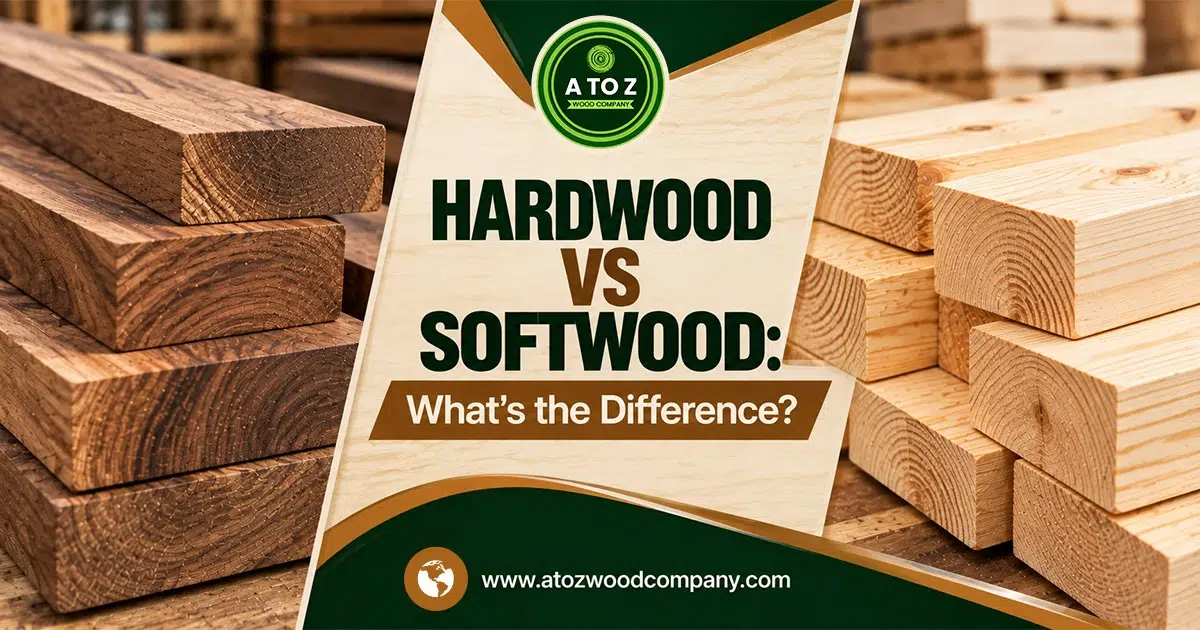
Choosing the right wood can make a significant difference in the appearance, durability, and overall performance of a furniture piece or construction project. Whether you are planning a new dining table, designing custom cabinets, installing wooden flooring, or selecting timber for a building, understanding the difference between hardwood and softwood helps you make a more informed decision.
But here is something many buyers do not realize: hardwood is not always harder than softwood, and softwood is not necessarily less durable. The real difference comes down to the type of tree, the properties of its wood, and how the material will be used.
At AtoZ Wood Company, we believe that understanding different wood types is an important first step toward choosing the right material for your project. This guide explores hardwood vs softwood, their characteristics, common applications, cost differences, and the factors worth considering before making a purchase.
What Is Hardwood?
Hardwood comes from angiosperm trees, which are flowering plants that typically produce seeds enclosed within fruits or similar structures. Many hardwood trees are deciduous, meaning they shed their leaves seasonally, although some remain evergreen.
Hardwoods are widely used in furniture manufacturing, flooring, cabinetry, decorative panels, and other applications where appearance, surface durability, and specific structural properties matter.
Common Characteristics of Hardwood
- Distinctive grain patterns: Many hardwood species feature attractive grains, natural color variations, and unique textures.
- Varied density: Numerous hardwoods are dense and heavy, although some species are exceptionally lightweight.
- Durability: Certain species offer excellent resistance to everyday wear, while others require additional protection.
- Decorative appeal: Hardwood is popular for furniture and interiors because of its range of colors and natural patterns.
- Different price points: Costs vary according to species, availability, grade, dimensions, and processing.
Popular Types of Hardwood
Oak: Known for its prominent grain and good wear resistance, oak is commonly used for furniture, flooring, cabinets, and interior woodwork.
Maple: Often recognized by its relatively fine grain and light color, maple is suitable for furniture, cabinetry, and other applications requiring a durable surface.
Walnut: Walnut is valued for its rich brown tones and attractive grain, making it a popular option for premium furniture and decorative interiors.
Teak: Teak contains natural oils that help it resist moisture and decay. It is frequently used for outdoor furniture and selected interior applications, although quality and suitability depend on the particular material and conditions.
Mahogany: This name covers several related and commercially traded woods. Some varieties are valued for their appearance, workability, and use in furniture and joinery. Responsible sourcing is important when purchasing these woods.
The right hardwood depends on the balance of appearance, performance, maintenance, and budget required for a particular project.
What Is Softwood?
Softwood comes from gymnosperm trees, which produce seeds that are not enclosed within fruits. Many softwoods come from coniferous trees, such as pine, spruce, fir, and cedar.
Softwood is widely used in residential construction, furniture manufacturing, interior fittings, roof structures, doors, and other projects. Its availability and workability make many softwood species practical choices for both professional builders and individual woodworkers.
Common Characteristics of Softwood
- Workability: Many softwoods are relatively easy to cut, shape, drill, and fasten.
- Availability: Several softwood species are commercially available in a wide range of dimensions.
- Lower weight: Many softwoods are lighter than dense hardwoods, which can make handling and installation easier.
- Versatility: Softwoods serve a wide variety of structural, decorative, and furniture applications.
- Cost advantages: Many commonly used softwoods are more affordable than premium hardwoods, although prices vary.
Popular Types of Softwood
Pine: Pine is a versatile option for furniture, shelving, interior panels, and construction applications. Its grain and knots can also create a distinctive rustic appearance.
Cedar: Certain cedar species have natural resistance to decay and insects, making them useful for selected outdoor and interior applications.
Spruce: Spruce is commonly used in construction and structural products when appropriately graded for the intended purpose.
Fir: Fir species are widely used in framing and other building applications where their structural properties meet the project requirements.
Larch: Larch is used for selected construction, cladding, and outdoor applications because of its particular strength and durability characteristics.
Although many softwoods are easy to work with, their performance varies by species, grade, moisture content, and treatment. Selecting the correct material is more important than relying on the softwood label alone.
Hardwood vs Softwood: Key Differences
The primary difference between hardwood and softwood is their botanical classification. However, buyers usually compare them based on practical characteristics such as strength, appearance, cost, durability, and suitability for specific applications.
| Feature | Hardwood | Softwood |
|---|---|---|
| Tree classification | Angiosperms, generally flowering trees | Gymnosperms, commonly conifers |
| Common examples | Oak, maple, walnut, teak | Pine, spruce, fir, cedar |
| Density | Often dense, but varies significantly | Often lighter, but varies significantly |
| Surface hardness | Many species resist dents and wear well | Some species dent more easily; others are very durable |
| Grain and appearance | Wide range of colors and grain patterns | Often features simpler grains, knots, and visible growth rings |
| Workability | Some species require more effort to machine | Many species are easier to cut and shape |
| Cost | Can be expensive, especially premium species | Many common varieties are budget-friendly |
| Common applications | Furniture, flooring, cabinetry, decorative work | Construction, framing, furniture, interior fittings |
| Outdoor performance | Depends on species, treatment, and finish | Depends on species, treatment, and finish |
| Maintenance | Depends on the wood and its application | Depends on the wood and its application |
These comparisons describe common tendencies rather than fixed rules. A particular softwood can outperform a particular hardwood in a specific application, so always consider the individual species and its intended use.
Is Hardwood Always Harder Than Softwood?
No. This is one of the most common misconceptions about wood.
The terms hardwood and softwood identify different botanical groups; they do not directly measure the hardness of a piece of timber.
For example, balsa is botanically a hardwood but is exceptionally lightweight and soft. On the other hand, some softwoods can be relatively dense and strong.
Wood hardness is often measured using the Janka hardness test, which evaluates the force required to embed a steel ball into the wood. This measurement can help compare resistance to dents and surface wear, particularly when selecting flooring or furniture materials.
However, hardness alone does not determine overall performance. Strength, stiffness, grain direction, moisture content, timber grade, and resistance to decay are also important.
For buyers working with AtoZ Wood Company, the practical takeaway is simple: compare the actual wood species and its properties rather than assuming that every hardwood is superior to every softwood.
Hardwood vs Softwood for Different Applications
The best wood depends on what you are building, where it will be used, and how much wear it must withstand.
1. Furniture and Dining Tables
Hardwoods such as oak, maple, and walnut are popular for dining tables, bed frames, cabinets, and furniture designed for long-term use. Many offer good resistance to everyday wear and attractive finishes.
Softwoods such as pine can also work well for furniture, especially when affordability, lighter weight, and a natural or rustic appearance are priorities.
Which should you choose? Consider hardwood when surface durability and a particular premium appearance are priorities. Consider softwood when it meets your strength requirements and offers the appearance and price you want.
2. Wooden Flooring
Flooring must withstand repeated foot traffic, furniture movement, and occasional impacts. Some hardwoods are popular because they provide attractive grain patterns and good resistance to dents.
Softwood flooring can also be suitable, depending on the species, expected traffic, finish, and maintenance routine. However, softer varieties may show dents and scratches more readily.
Which should you choose? Evaluate the hardness, stability, finish, and maintenance requirements of the individual species. The best flooring choice is not determined by classification alone.
3. Kitchen Cabinets and Storage Units
Hardwoods are frequently selected for visible cabinet components, doors, and decorative finishes. Their grain and color can help create a distinctive interior design.
Softwoods may be suitable for certain cabinet frames, shelving, and furniture components. The most appropriate material depends on the design, load requirements, finish, and exposure to moisture.
Which should you choose? Focus on dimensional stability, surface quality, joinery, and protection against moisture rather than simply choosing hardwood or softwood.
4. Doors and Window Frames
Wooden doors and frames must maintain their shape while withstanding everyday use and changes in temperature and humidity.
Both hardwood and softwood species can be used for these applications. Proper drying, installation, sealing, and finishing are important for reducing problems such as warping and moisture damage.
Which should you choose? Select a species and grade suited to the environment, with particular attention to dimensional stability and maintenance.
5. Construction and Structural Framing
Softwoods such as spruce, fir, and pine are widely used in building construction because many are available in standardized structural grades and are practical to cut and install.
Hardwoods can also serve structural purposes, but their suitability depends on their specific properties, dimensions, grading, and the design requirements.
Which should you choose? For structural work, select timber that meets the applicable engineering and building-code requirements. Botanical classification alone is not a reliable guide to structural suitability.
6. Outdoor Furniture and Decking
Outdoor wood is exposed to rain, sunlight, temperature changes, humidity, and potentially insects or decay-causing organisms.
Certain hardwoods, including suitable grades of teak, offer natural durability in outdoor environments. Some softwoods, including suitable cedar species, also perform well. Other woods may require pressure treatment, protective coatings, or more frequent maintenance.
Which should you choose? Evaluate natural decay resistance, treatment, drainage, installation details, and ongoing maintenance before selecting outdoor timber.
Hardwood vs Softwood: Which Is More Expensive?
In many markets, premium hardwoods cost more than commonly available softwoods. This is one reason pine and other softwoods are widely used for budget-conscious construction and furniture projects.
However, there is no universal price rule. Some hardwoods are affordable, while specialty softwoods can command higher prices depending on their quality, availability, and intended use.
Several factors influence the cost of timber:
- Species: Some varieties are naturally more expensive because of demand, supply, or their particular properties.
- Grade and quality: Knots, defects, appearance, and structural classification affect value.
- Dimensions: Board thickness, width, length, and consistency can influence pricing.
- Drying and processing: Kiln drying, machining, and finishing add to production costs.
- Availability: Local supply, transportation, and sourcing requirements can affect the final price.
- Sustainability: Verified sourcing and certification may influence the cost of certain products.
When comparing options, look beyond the initial purchase price. A wood that needs frequent repairs or replacement may cost more over its useful life than a more expensive alternative that better suits the application.
Durability, Moisture Resistance, and Maintenance
Durability is one of the most important considerations when selecting timber, but it depends on more than whether the wood is hardwood or softwood.
Resistance to Scratches and Dents
Dense, hard species can be useful for furniture surfaces and flooring that experience regular contact. However, the actual hardness of the species matters more than its botanical category.
Resistance to Moisture
Wood naturally absorbs and releases moisture as environmental conditions change. This can cause swelling, shrinking, or movement.
Properly dried timber, suitable finishes, good installation practices, and appropriate ventilation can help manage these effects.
Resistance to Decay and Insects
Some species contain natural compounds that improve resistance to decay or certain insects. Others need protective treatments, particularly when exposed to soil, standing water, or persistent moisture.
The Importance of Maintenance
Both hardwood and softwood may benefit from suitable cleaning, finishing, sealing, and periodic inspection. Outdoor installations generally require more attention than wood used in stable indoor environments.
Choosing the correct species and protecting it appropriately can make a significant difference to the material’s service life.
Environmental Impact: Is Hardwood or Softwood More Sustainable?
Sustainability depends on how wood is grown, harvested, processed, transported, used, and eventually replaced. Neither hardwood nor softwood is automatically the more environmentally responsible choice.
Many softwoods grow relatively quickly, but growth rate alone does not determine environmental impact. Some hardwood species come from responsibly managed forests, while others may face sustainability concerns depending on the species and source.
When buying timber, consider the following:
- Look for credible forest certification, such as FSC or PEFC, where applicable.
- Ask about the species and origin of the timber.
- Consider reclaimed wood when it meets the project’s requirements.
- Choose appropriate dimensions to reduce unnecessary material waste.
- Select timber that suits the intended application and expected lifespan.
- Maintain and repair wood products to extend their useful life.
Responsible sourcing helps buyers make decisions that consider both material performance and environmental impact.
How to Choose the Right Wood for Your Project
Before purchasing timber, consider these seven factors.
1. Identify the application. A dining table, structural beam, wardrobe, and outdoor bench have different requirements.
2. Evaluate the required strength. Consider the load the wood must carry and whether the project requires structurally graded timber.
3. Consider the environment. Indoor furniture and outdoor installations face different levels of moisture, sunlight, and temperature variation.
4. Decide on the appearance. Grain pattern, color, knots, and finish can influence the final result.
5. Set a realistic budget. Compare the total cost of materials, processing, installation, finishing, and maintenance.
6. Check timber quality. Moisture content, grading, visible defects, and suitability for the intended application are important.
7. Consider sourcing and maintenance. Responsible sourcing and an appropriate care routine can help protect your investment.
For example, a dining table may benefit from a hardwood with good surface durability, while a properly engineered and graded softwood may be suitable for structural framing. A garden bench may require a naturally durable or appropriately treated species regardless of whether it is classified as hardwood or softwood.
AtoZ Wood Company encourages buyers to assess their project’s actual requirements before making a final selection.
Common Myths About Hardwood and Softwood
Myth 1: All Hardwood Is Harder Than Softwood
Fact: Hardwood is a botanical classification. Balsa is a well-known example of a very soft hardwood, while some softwoods are relatively dense.
Myth 2: Softwood Is Always Weak
Fact: Many softwoods are used in structural construction because suitable species and grades provide the required strength and stiffness.
Myth 3: Hardwood Always Lasts Longer
Fact: Lifespan depends on the species, exposure, construction quality, protection, maintenance, and intended use.
Myth 4: Softwood Is Always Cheaper
Fact: Many common softwoods are affordable, but prices vary according to species, grade, availability, and processing.
Myth 5: Hardwood Is Always Better for Furniture
Fact: Both categories can be used successfully for furniture. The best choice depends on design, expected wear, budget, and material properties.
Myth 6: Softwood Cannot Be Used Outdoors
Fact: Some softwoods are suitable for outdoor use when their natural properties, treatment, installation, and maintenance meet the environmental requirements.
Myth 7: Hardwood Is Always More Sustainable
Fact: Environmental performance depends on responsible sourcing, forest management, transportation, processing, product lifespan, and material waste.
Frequently Asked Questions
1. What is the main difference between hardwood and softwood?
The main difference is botanical. Hardwood comes from angiosperm trees, while softwood comes from gymnosperm trees, commonly conifers. They often differ in density, grain, workability, and typical applications, but these properties vary by species. The terms do not automatically determine how hard, strong, or durable a particular piece of wood will be.
2. Is hardwood stronger than softwood?
Not always. Strength depends on the wood species, grain direction, moisture content, grade, and the type of force being applied. Some hardwoods are very strong, but properly graded softwoods are also widely used in structural construction. For load-bearing applications, use timber that meets the relevant engineering and building requirements.
3. Which is better for furniture, hardwood or softwood?
Both can be suitable. Hardwoods such as oak, maple, and walnut are popular for furniture that requires an attractive finish and good resistance to everyday wear. Pine is a versatile softwood used in many furniture styles. The best choice depends on the design, budget, intended lifespan, and desired appearance.
4. Which wood is best for construction?
The right wood depends on the structural requirements, location, design, and applicable building standards. Graded softwoods are widely used for framing, while hardwoods may suit other structural or specialized applications. Buyers should prioritize verified timber grades, appropriate dimensions, and compliance with engineering specifications instead of relying only on the hardwood or softwood classification.
5. Is hardwood more expensive than softwood?
Premium hardwoods often cost more than common softwoods, but this is not always the case. Species, quality, board dimensions, processing, availability, and sourcing affect timber prices. Comparing the total cost of purchase, installation, finishing, and maintenance provides a more useful picture of value than comparing wood categories alone.
6. Can softwood be used for outdoor furniture?
Yes. Certain softwoods can perform well outdoors, particularly when the species has suitable natural durability or receives appropriate protective treatment. Correct installation, drainage, finishing, and maintenance are also important. Not every softwood is suitable for prolonged weather exposure, so select the material according to the actual environmental conditions.
7. How can you identify hardwood and softwood?
You can sometimes distinguish wood species by examining their grain, pores, growth rings, color, and other anatomical features. However, appearance alone is not always reliable, especially when wood has been painted, stained, or processed. Botanical classification is the defining difference, and accurate identification may require knowledge of the species or expert assessment.
8. Which type of wood lasts longer?
Neither category universally lasts longer. Longevity depends on the species, natural decay resistance, moisture exposure, timber quality, installation, protective treatments, and maintenance. A suitable, well-maintained softwood can outlast an unsuitable hardwood in a particular environment. Choose timber according to the conditions it will face and how it will be maintained.
Final Thoughts: Making the Right Choice Between Hardwood and Softwood
Understanding hardwood vs softwood makes it easier to compare timber options for furniture, flooring, construction, cabinetry, and outdoor projects. Hardwood offers a wide range of attractive grains and species with excellent wear resistance, while softwood provides versatile options for construction, furniture, and many interior applications.
However, neither category is automatically better. The best choice depends on the specific species, required performance, working conditions, appearance, budget, and maintenance expectations.
At AtoZ Wood Company, we believe informed wood selection begins with understanding the material and matching its properties to the project’s needs. Before making a purchase, compare timber quality, intended use, and long-term value to choose a wood that delivers the right balance of performance and appearance.