+237 681 25 6934
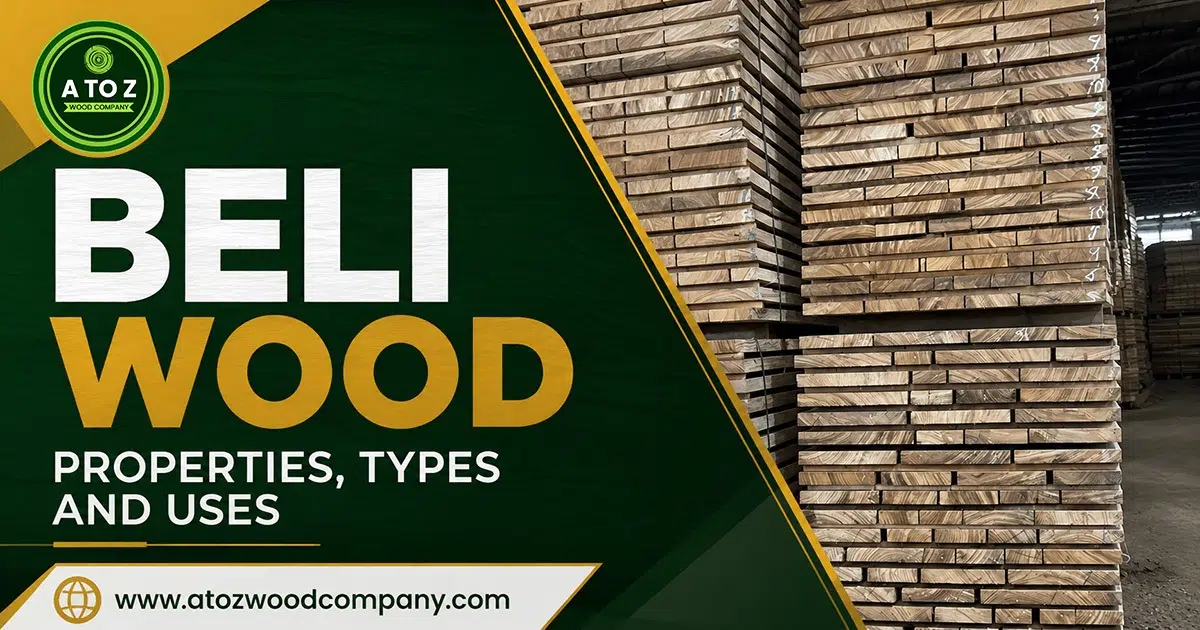
Beli is an attractive, moderately durable African hardwood valued for its unique, zebra-like appearance, good strength and excellent workability. Primarily used in premium furniture and decorative applications for its striking striped grain pattern, Beli is often compared to Zebrawood and used as a readily available alternative in its native regions. Not widely exported, it is mainly used locally but sometimes sold in veneer and lumber form.
As one of the few FSC-certified global exporters of Beli wood, AtoZ Wood Company is your trusted partner for beli wood wholesale export. In this article, we explore the properties, types and common uses of Beli wood.
What is Beli Wood?
Beli wood comes from Julbernardia pellegriniana trees in the Fabaceae (legume) family. These trees are primarily found in the rainforests of Central and West Africa, particularly in Cameroon, Gabon, Equatorial Guinea, and the Republic of the Congo. In the timber trade, it is also commonly sold under the name Ekop (Ekop-beli). The wood is mainly prized for its striking appearance, which makes it suitable for premium interior applications.
Beli Wood Properties
Appearance and Grain
One of Beli wood’s most attractive features is its striking appearance. The heartwood, which ranges from pale yellowish-brown to medium brown, is adorned with alternating darker brown stripes that make it look like zebrawood. However, the dark stripes in beli are less prominent than in zebrawood.
The sapwood of Beli is pale yellow and clearly distinguished from the heartwood. Beli typically has a medium-to-coarse grain with a slightly granulated texture and a natural lustre that gives it a natural shine, especially after polishing or finishing.
Weight & Strength
Beli is a moderately heavy hardwood with an average dried weight of 770 kg/m3, depending on growing conditions. It is known for its decent balance between strength and weight, making it easy to work with and suitable for a range of woodworking applications.
Major physical properties include:
- Good bending and crushing strength.
- Moderate hardness with a Janka rating of approx. 1,480 lbf (6,580 N).
- Medium natural lustre.
- Good dimensional stability after drying.
- Noticeable shrinkage during drying or seasoning, requiring extra care.
Workability
It is generally considered easy to cut and shape using both hand and power tools. However, its interlocked grain can sometimes cause tear-out during planing, requiring sharp cutting tools and specific cutting angles to produce smooth surfaces and finishes.
The wood responds well to gluing, polishing, varnishing, nailing, and screwing, although pre-drilling is recommended.
It shows decent performance in veneer and decorative woodworking applications.
One thing to note when working with beli timber is that it may stain upon contact with iron or other ferrous metals. Using stainless steel or coated fasteners is strongly recommended in finished projects.
Durability
The heartwood of Beli is moderately durable with good resistance to dry-wood borers and other insects. It can also partially resist fungal decay and termite attack. However, exterior use or long-term exposure is strictly restricted to treated wood.
Beli is generally considered a great choice for interior rather than exposed exterior applications.
Types of Beli Wood
The term “Beli” specifically refers to wood obtained from Julbernardia pellegriniana trees. Several other species in the Julbernardia genus have similar characteristics. Many commercial timber suppliers and merchants occasionally market or sell other species together or interchangeably with Beli because of their similar physical properties and appearance.
Beli is commercially sold in both veneer and lumber forms. You can contact AtoZ Wood Company to purchase Beli Sawn Timber, Beli Veneer, and Beli round logs online at the lowest price.
Common Uses of Beli Wood
Thanks to its attractive grain pattern and reliable mechanical properties, Beli wood is considered ideal for various interior woodworking applications, such as:
Furniture Manufacturing
Its decorative zebrawood-like appearance makes Beli an excellent choice for premium indoor furniture, including dining tables (slabs), cabinets, wardrobes, shelves, beds, and display units.
Joinery
The wood’s excellent machining properties and good response to finishes make it highly suitable for kitchen furniture, office furniture, doors, windows, interior molding and joinery.
Decorative Veneers
Beli is occasionally sliced into attractive veneer for architectural panels, laminates, luxury furniture and decorative wall paneling.
Flooring
With its decent strength-to-weight ratio and attractive appearance, Beli is considered suitable for light to moderate interior flooring projects, though it needs regular maintenance.
Interior Trim
Designers favor Beli for numerous interior decorative and finishing applications, including mouldings, stair components, wall panelling and more.
Specialty Woodworking
The timber is also used for other speciality and decorative projects, such as carvings, turned objects, sporting goods, tool handles, musical instruments, toys, ladders and more.
Conclusion
Beli wood is a versatile African tropical hardwood prized for its natural beauty combined with decent performance. Its attractive zebra-like striped appearance, good machining characteristics and good strength with moderate durability make it an outstanding choice for everyday interior applications, such as cabinetry, furniture, veneers and decorative woodwork.
For manufacturers, designers and retailers searching for the best supplier of authentic, 100% sustainable beli hardwood lumber, AtoZ Wood Company provides consistent, worldwide supply with quality assurance.