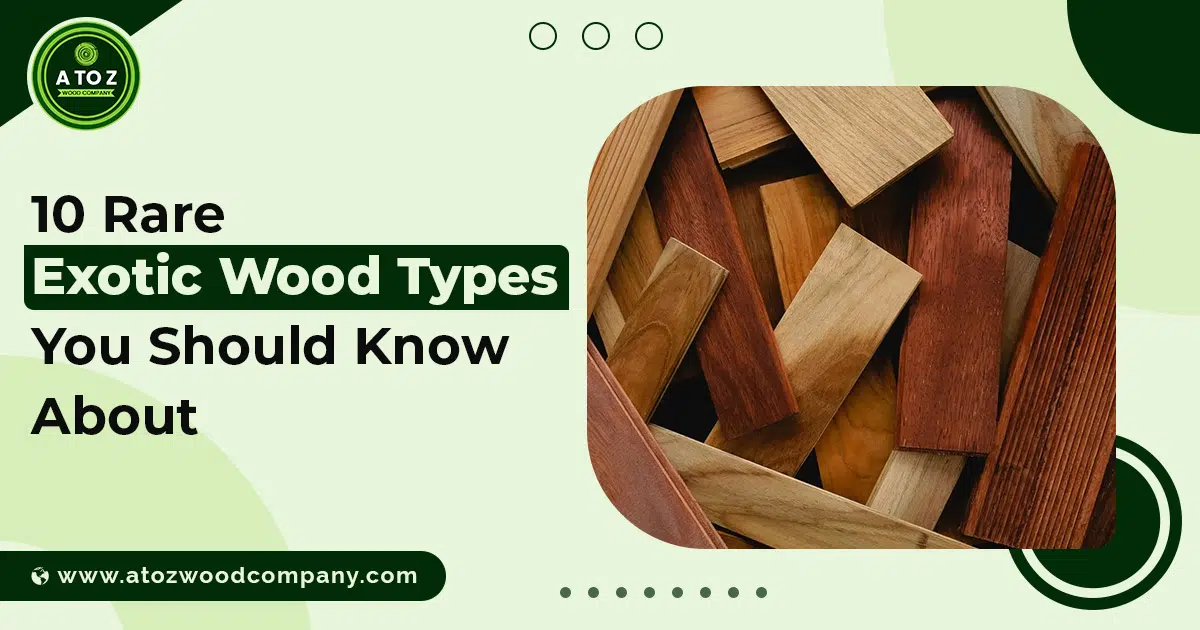
10 Rare Exotic Wood Types You Should Know About

types of exotic woods

Exotic woods have captivated woodworkers, designers, and luxury buyers for centuries. Known for their rare origins, striking grain patterns, and exceptional durability, these premium hardwoods are sourced from tropical and subtropical regions across Africa, Asia, and South America.

Whether you’re a furniture maker, architect, flooring specialist, or collector, understanding the different types of exotic woods — and their unique properties — can help you choose the perfect material for your project.

In this guide, we’ll explore the most sought-after exotic wood species, their characteristics, uses, and market value, along with sustainability considerations.

What Makes a Wood “Exotic”?

In the timber industry, “exotic” refers to wood sourced from non-native, tropical, or subtropical species that aren’t commonly found in your local environment. These woods often have:

  • Unique colors and patterns not seen in domestic species.
  • High density and durability for long-lasting performance.
  • Distinct fragrances or natural oils that enhance their appeal.
  • Limited availability, adding to their value.

Most exotic woods come from Africa, South America, and Southeast Asia, but some are plantation-grown in other parts of the world to meet demand sustainably.

Popular Types of Exotic Woods

1. Teak (Tectona grandis)
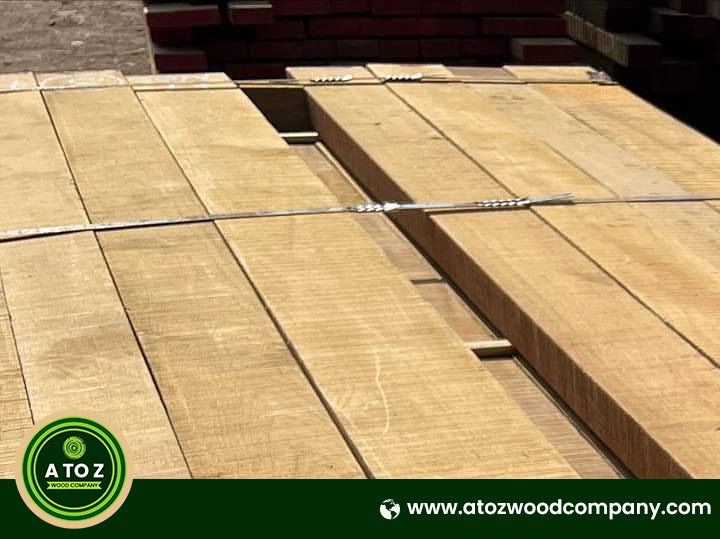
teak sawn timber

  • Origin: Southeast Asia, Africa (plantations)
  • Color: Golden brown, darkening with age
  • Properties: Extremely durable, naturally oily, weatherproof
  • Uses: Luxury furniture, yacht decks, outdoor joinery, flooring
  • Price: Premium due to limited supply

Why It’s Exotic: Teak’s natural oil content gives it unmatched resistance to rot and insects, making it the gold standard for outdoor and marine applications.

2. Iroko (Milicia excelsa, Milicia regia)
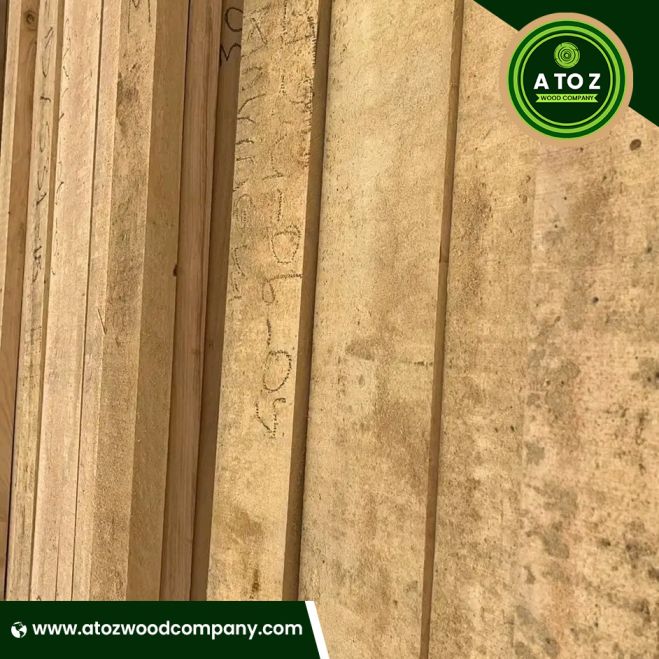
iroko timber

  • Origin: West & East Africa
  • Color: Golden yellow to medium brown
  • Properties: Highly durable, termite-resistant, affordable teak alternative
  • Uses: Outdoor furniture, decking, boatbuilding, flooring
  • Price: More affordable than teak

Why It’s Exotic: Known as “African Teak,” Iroko offers similar performance to teak at a lower cost, with a warmer grain character.

3. Bubinga (Guibourtia spp.)
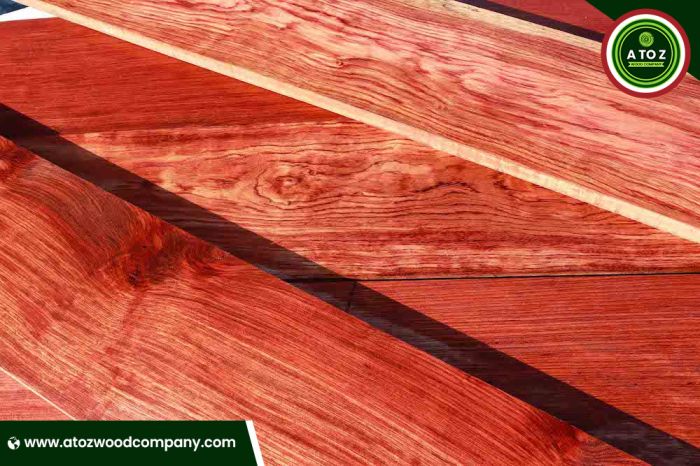
bubinga live edge slab

  • Origin: Central & West Africa
  • Color: Reddish-brown to pinkish-red with darker streaks
  • Properties: Dense, strong, often with striking figure patterns (quilted, pommele)
  • Uses: Luxury furniture, musical instruments, decorative veneers

Why It’s Exotic: Its curly or figured grain and deep coloration make it a statement wood for high-end designs.

4. Wenge (Millettia laurentii)
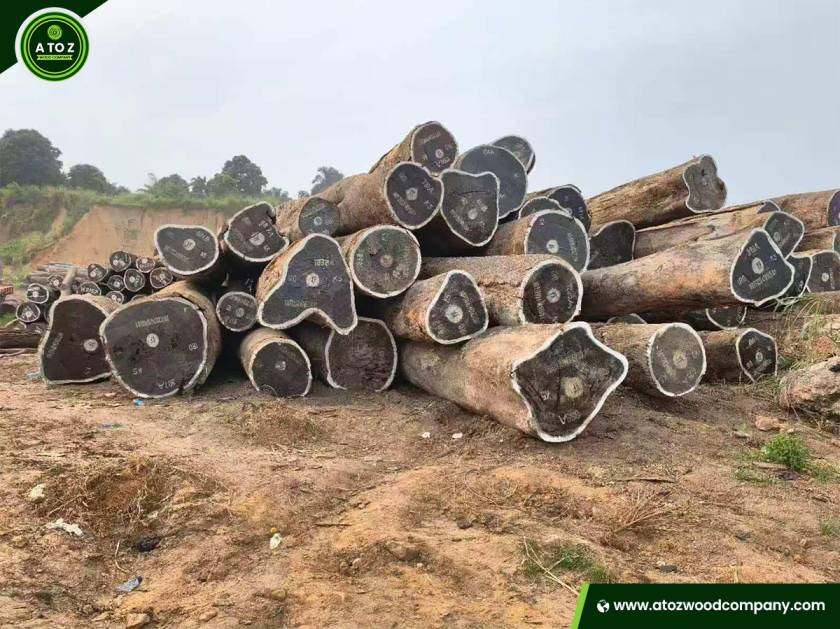
  • Origin: Central Africa
  • Color: Dark chocolate brown with black streaks
  • Properties: Very dense, hard, and rot-resistant
  • Uses: Flooring, furniture, musical instruments, paneling

Why It’s Exotic: Wenge’s dark, almost black tone is rare in natural woods, making it popular for contemporary interiors and contrast designs.

5. Rosewood (Dalbergia spp.)
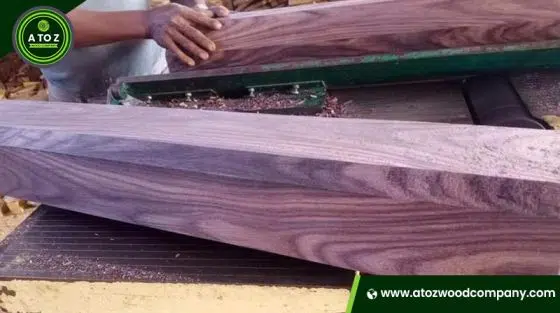
rosewood slabs

  • Origin: Africa, Asia, South America
  • Color: Reddish-brown, purple-brown, or dark brown with darker streaks
  • Properties: Dense, fragrant, rich tonal quality
  • Uses: Musical instruments (guitars, pianos), fine furniture, luxury veneers

Why It’s Exotic: Valued for both its visual appeal and acoustic properties, genuine rosewood is highly regulated due to overharvesting.

6. Zebrawood (Microberlinia brazzavillensis)

  • Origin: West Africa
  • Color: Light brown or cream with dark brown to black stripes
  • Properties: Medium-hard, coarse texture, eye-catching pattern
  • Uses: Decorative furniture, paneling, inlays

Why It’s Exotic: Its bold striped pattern resembles a zebra’s coat, making it a favorite for statement pieces.

7. Padauk (Pterocarpus soyauxii)
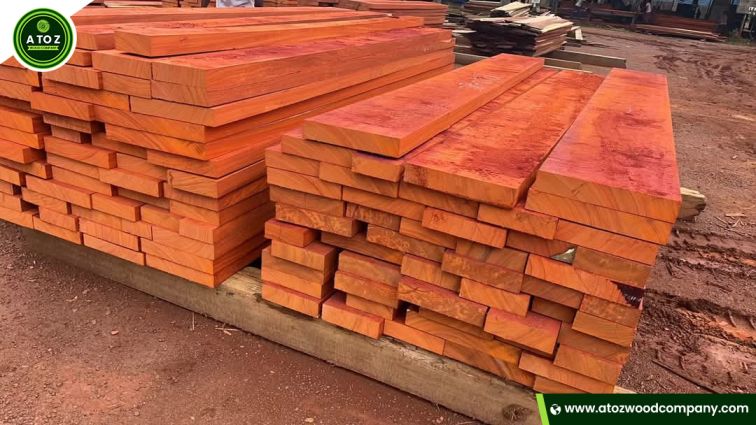
padauk timber for sale

  • Origin: Central & West Africa
  • Color: Vivid orange-red, darkening to deep reddish-brown
  • Properties: Dense, durable, resistant to insects
  • Uses: Flooring, furniture, turnery, carvings

Why It’s Exotic: Its vibrant natural color stands out without staining, perfect for eye-catching projects.

8. Purpleheart (Peltogyne spp.)

  • Origin: Central & South America
  • Color: Vibrant purple, deepening over time
  • Properties: Extremely hard, dense, rot-resistant
  • Uses: Furniture accents, flooring inlays, decorative work

Why It’s Exotic: Its unique purple hue is natural and unlike any other commercially available hardwood.

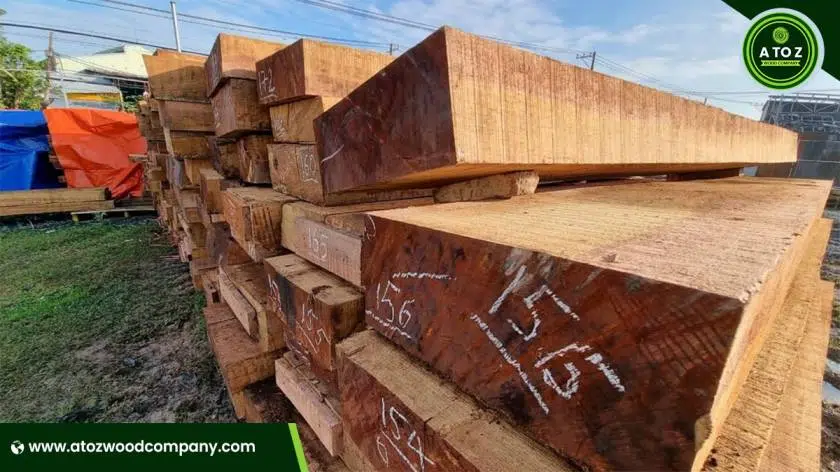
9. Mahogany (Khaya spp., Swietenia spp.)
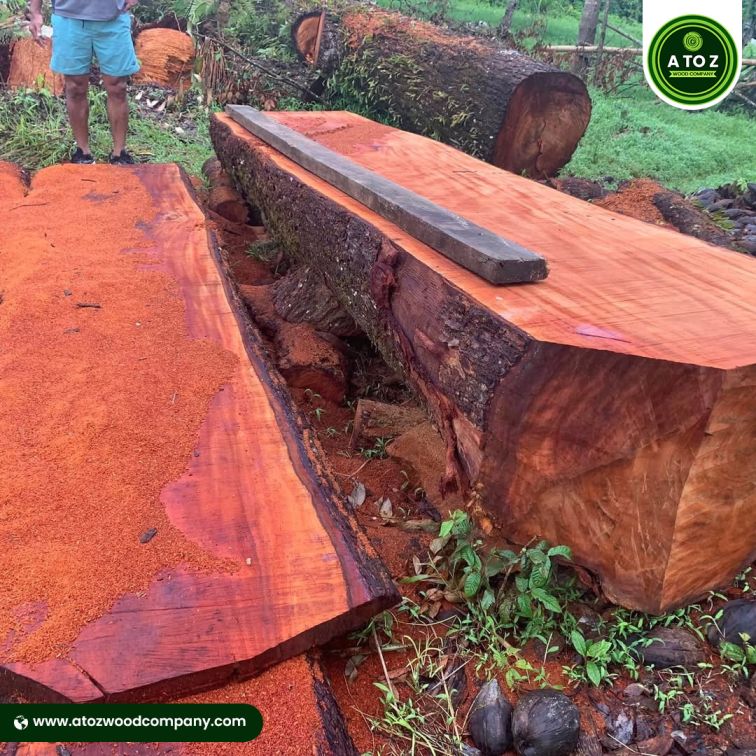
mahogany wooden slabs

  • Origin: Africa, Central & South America
  • Color: Reddish-brown, deepening with age
  • Properties: Stable, easy to work, moderately durable
  • Uses: Furniture, boats, paneling, doors

Why It’s Exotic: Synonymous with luxury furniture and classic interiors.

10. Ebony (Diospyros spp.)

  • Origin: Africa, India, Sri Lanka, Southeast Asia
  • Color: Deep black, sometimes with dark brown streaks
  • Properties: Extremely dense, fine texture, smooth finish
  • Uses: Musical instruments (piano keys, guitar fingerboards), luxury carvings, decorative accents
  • Price: Among the most expensive hardwoods

Why It’s Exotic: Known for its jet-black appearance and rarity, Ebony is one of the most luxurious and sought-after woods in the world.

Why Exotic Woods Are in High Demand?

  • Unique aesthetics – Rare colors and grains elevate design value.
  • Superior performance – High density and natural oils extend lifespan.
  • Prestige factor – Associated with luxury and exclusivity.
  • Investment potential – Certain species appreciate in value due to scarcity.

Where to Buy Different Types of Exotic Woods?

At AtoZ Wood Company, we supply sustainably harvested exotic hardwoods including Teak, Iroko, Bubinga, Wenge, Rosewood, Zebrawood, and more.

We offer:

  • Bulk supply for commercial projects
  • Custom cuts and kiln drying
  • Competitive prices for global buyers
  • Proven export records to over 30 countries
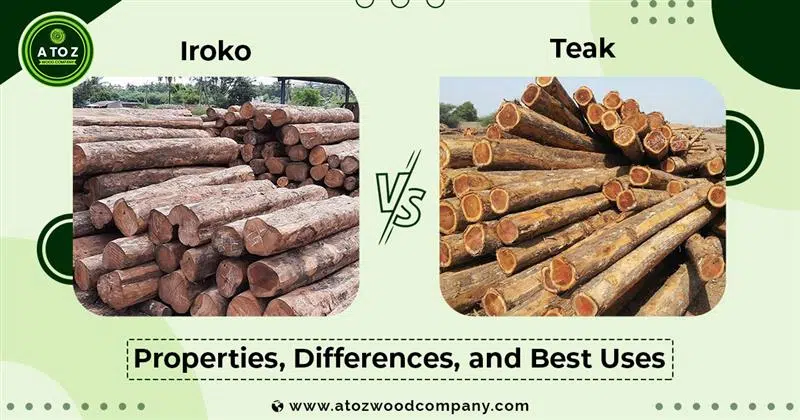
Iroko vs Teak – Properties, Differences, and Best Uses

iroko vs teak

The two premium hardwoods, Iroko and Teak often stand side by side in discussions among woodworkers, furniture makers, boat builders, and homeowners. Both are renowned for their durability, weather resistance, and attractive appearance — but there are distinct differences that can influence which one is the right choice for your project.

In this detailed guide, we’ll compare Iroko vs Teak in terms of origin, properties, appearance, durability, cost, and applications, helping you make an informed decision.

Overview: Iroko and Teak at a Glance

Feature Iroko Teak
Botanical Name Milicia excelsa, Milicia regia Tectona grandis
Origin West & East Africa South & Southeast Asia, Africa (plantations)
Color Golden yellow to medium brown (darkens over time) Honey brown to golden brown (darkens with age)
Grain Interlocked, medium to coarse texture Straight grain, smooth texture
Durability Very durable, termite & rot resistant Extremely durable, naturally oily & weatherproof
Common Uses Outdoor furniture, decking, boatbuilding, flooring Marine applications, luxury furniture, ship decks, outdoor joinery
Price More affordable than teak Higher price due to demand & limited supply

Iroko Wood Detailed Video

Teak Wood Detailed Video

Origin and Availability

  • Iroko is native to tropical Africa, especially countries like Nigeria, Ghana, Cameroon, and Ivory Coast. It is widely available and considered a sustainable alternative to teak because of its abundance and fast growth rate.

  • Teak originates from South and Southeast Asia (Myanmar, Thailand, Indonesia) but is now also grown on plantations in Africa, Central America, and the Caribbean. Genuine Burmese Teak is rare and expensive due to strict harvesting controls.

Appearance and Grain Pattern

  • Iroko: Freshly cut Iroko has a golden-yellow hue that matures to a richer brown with time. Its grain is interlocked, giving it a more textured, rustic appearance.
  • Teak: Teak’s golden to deep brown color and naturally oily feel give it a luxurious look. The grain is typically straight and fine, lending a smoother finish than Iroko.

Durability and Resistance

Both woods are excellent for outdoor and marine use, but there are differences:

  • Iroko: Naturally resistant to rot, decay, and insect attack. Slightly less oily than teak, so it requires occasional sealing for maximum weather resistance.
  • Teak: Extremely durable due to its high natural oil content. This oil acts as a built-in protective barrier against moisture, pests, and fungi, making it the gold standard for marine applications.

Workability and Maintenance

  • Iroko: Works well with both hand and machine tools, but interlocked grain can cause some tear-out. Takes finishes and oils well.
  • Teak: Easy to work with, but its high oil content can affect gluing — requiring proper surface preparation. Minimal maintenance is needed for outdoor use, though some prefer to oil it to preserve its color

Price Comparison: Iroko vs Teak

  • Iroko: Generally 40–50% cheaper than teak, making it an attractive alternative for budget-conscious buyers seeking durability without the premium price.

  • Teak: Commands a higher price due to limited supply, slow growth, and exceptional properties. Genuine Burmese Teak can be several times the cost of Iroko.

Best Uses for Each Wood

Iroko

  • Outdoor furniture

  • Garden decking

  • Flooring

  • Boatbuilding (keel, planking)

  • Window frames and doors

Teak

  • Marine applications (yacht decks, shipbuilding)

  • High-end outdoor furniture

  • Luxury flooring and paneling

  • Bridges and heavy construction

  • Decorative veneers

Sustainability Considerations

  • Iroko: Often harvested from sustainably managed African forests, making it a more eco-friendly choice when sourced responsibly.

  • Teak: Plantation-grown teak can be sustainable, but old-growth teak from Myanmar is restricted due to overharvesting concerns. Always look for FSC-certified timber to ensure ethical sourcing.

Which Should You Choose?

  • Choose Iroko if you want a cost-effective, durable, and attractive hardwood for outdoor or indoor use. It’s ideal for those who want teak-like qualities at a lower cost.

  • Choose Teak if you need maximum weather resistance, minimal maintenance, and a luxurious appearance — and you’re willing to invest in a premium material.

Where to Buy Best Quality Iroko and Teak Wood?

At AtoZ Wood Company, we supply sustainably harvested Iroko and Teak wood in logs, slabs, and sawn timber. Whether you’re a furniture maker, builder, or distributor, we provide:

  • FSC-certified timber
  • Bulk supply and custom sizes
  • Kiln drying and treatment
  • Competitive global shipping rates

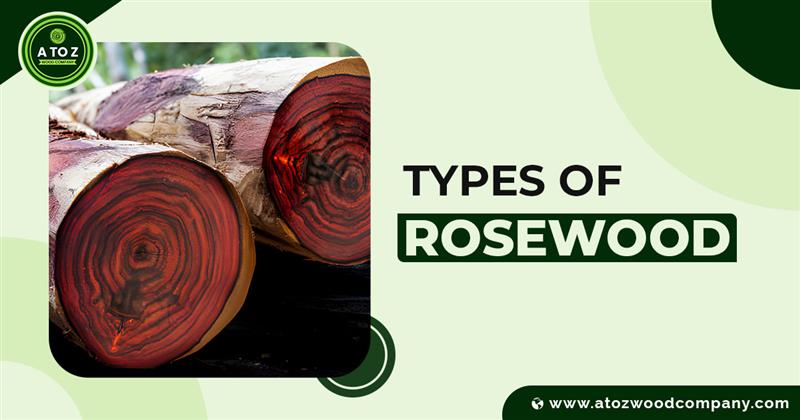
8 Types of Rosewood Wood | Properties, Uses & Prices

rosewood wood types

Rosewood is a premium-quality hardwood highly prized for its strength, beauty, fragrance, and tonal quality. Known for its luxurious appearance and durability, rosewood is widely used in furniture, musical instruments, flooring, and fine cabinetry.

But did you know there are several types of rosewood found across the world — each with unique characteristics?

we’ll break down the most popular rosewood types, their origins, properties, and best uses. If you’re a buyer, supplier, craftsman, or designer, this article will help you choose the right rosewood for your project or business.

What is Rosewood?

Rosewood refers to several richly hued timbers, often reddish or purplish-brown in color, belonging to the Dalbergia genus. The name “rosewood” comes from the sweet, floral scent released when the wood is freshly cut. Rosewood trees grow in tropical regions and are mainly sourced from Africa, Asia, and South America.

Popular Types of Rosewood

Here are the most well-known types of rosewood used globally:

    1. Indian Rosewood (Dalbergia latifolia)

  • Origin: India, Sri Lanka, Indonesia
  • Color: Dark brown to purple-brown with darker streaks
  • Grain: Even and straight
  • Hardness (Janka): ~2,440 lbf
  • Uses: Luxury furniture, musical instruments (guitars, sitars), veneer

Indian Rosewood is highly valued for its stability, durability, and superior tonal quality. It’s one of the most commonly used rosewoods in musical instrument manufacturing.

2. Brazilian Rosewood (Dalbergia nigra)

  • Origin: Brazil
  • Color: Deep chocolate brown to purple-black with black streaks
  • Grain: Interlocked with medium to coarse texture
  • Hardness: ~2,790 lbf
  • Uses: High-end furniture, acoustic guitars, antique restoration

Brazilian Rosewood is rare and protected due to overharvesting. It’s prized for its rich coloration and exceptional acoustic properties.

3. Madagascar Rosewood (Dalbergia maritima)

  • Origin: Madagascar (Africa)
  • Color: Reddish-orange to deep red
  • Grain: Striped, fine texture
  • Hardness: ~2,500–2,700 lbf
  • Uses: Decorative veneers, musical instruments, inlays

Madagascar rosewood has vibrant tones and attractive grain patterns, making it a favorite for luxury interiors and instruments.

4. Honduran Rosewood (Dalbergia stevensonii)

  • Origin: Central America (Belize, Honduras)
  • Color: Purplish brown with darker streaks
  • Grain: Straight to interlocked
  • Hardness: ~2,200 lbf
  • Uses: Marimbas, xylophones, high-end cabinetry

Renowned for its acoustic resonance, Honduran Rosewood is widely used in percussion instruments and exotic hardwood furniture.

5. African Rosewood (Guibourtia coleosperma / Bubinga)

  • Origin: Central and West Africa
  • Color: Reddish-brown to deep pink with purple or black streaks
  • Grain: Often curly or figured
  • Hardness: ~2,410 lbf
  • Uses: Luxury furniture, flooring, turning, musical instruments

Though not a true Dalbergia species, African Rosewood (Bubinga) is often classified under the rosewood trade due to its similar appearance and performance.

6. Amazon Rosewood (Dalbergia spruceana / Dalbergia cearensis)

  • Origin: South America (Brazil, Bolivia)
  • Color: Violet-brown with dark streaks
  • Grain: Fine, smooth texture
  • Hardness: ~2,000–2,400 lbf
  • Uses: Woodturning, musical instruments, fine inlays

Amazon Rosewood is beautiful and dense, often used in small decorative projects and high-end crafts.

7. Southeast Asian Rosewood (Dalbergia oliveri / Dalbergia cochinchinensis)

  • Origin: Vietnam, Laos, Cambodia, Thailand
  • Color: Deep red to dark brown
  • Grain: Interlocked with oily texture
  • Hardness: ~2,800 lbf
  • Uses: Flooring, sculptures, luxury furniture

This type is heavily restricted due to overharvesting but still appreciated for its density and aesthetic quality.

8. Sissoo Rosewood (Dalbergia sissoo)

  • Origin: India, Pakistan, Nepal
  • Color: Golden to dark brown
  • Grain: Medium, straight to interlocked
  • Hardness: ~1,820 lbf
  • Uses: Structural timber, furniture, boats, veneer

Sissoo wood is a sustainable, more accessible alternative to Indian rosewood with similar characteristics and strength.

Where to Buy Authentic Rosewood?

At AtoZ Wood Company, we specialize in sourcing sustainably harvested African rosewood, including Bubinga, Madagascar rosewood, and other exotic hardwoods from Africa. Whether you are a wholesaler, carpenter, or furniture maker, we provide:

  • Origin and legality (CITES compliant)
  • Bulk timber supply
  • Custom cuts and drying
  • Worldwide shipping
  • Competitive wood price

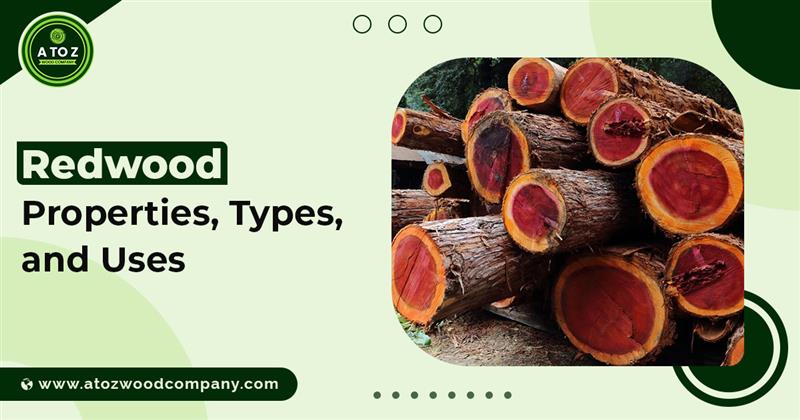
Redwood Properties, Types, and Uses

redwood properties, types and uses

Redwood is one of the most sought-after softwoods in the global timber market due to its remarkable combination of beauty, strength, and durability. Whether you’re building outdoor structures or crafting premium-grade furniture, redwood properties offers unmatched performance and aesthetic appeal. In this guide, we explore the properties, types, and uses of redwood wood, helping buyers, builders, and designers make informed choices.

What is Redwood?

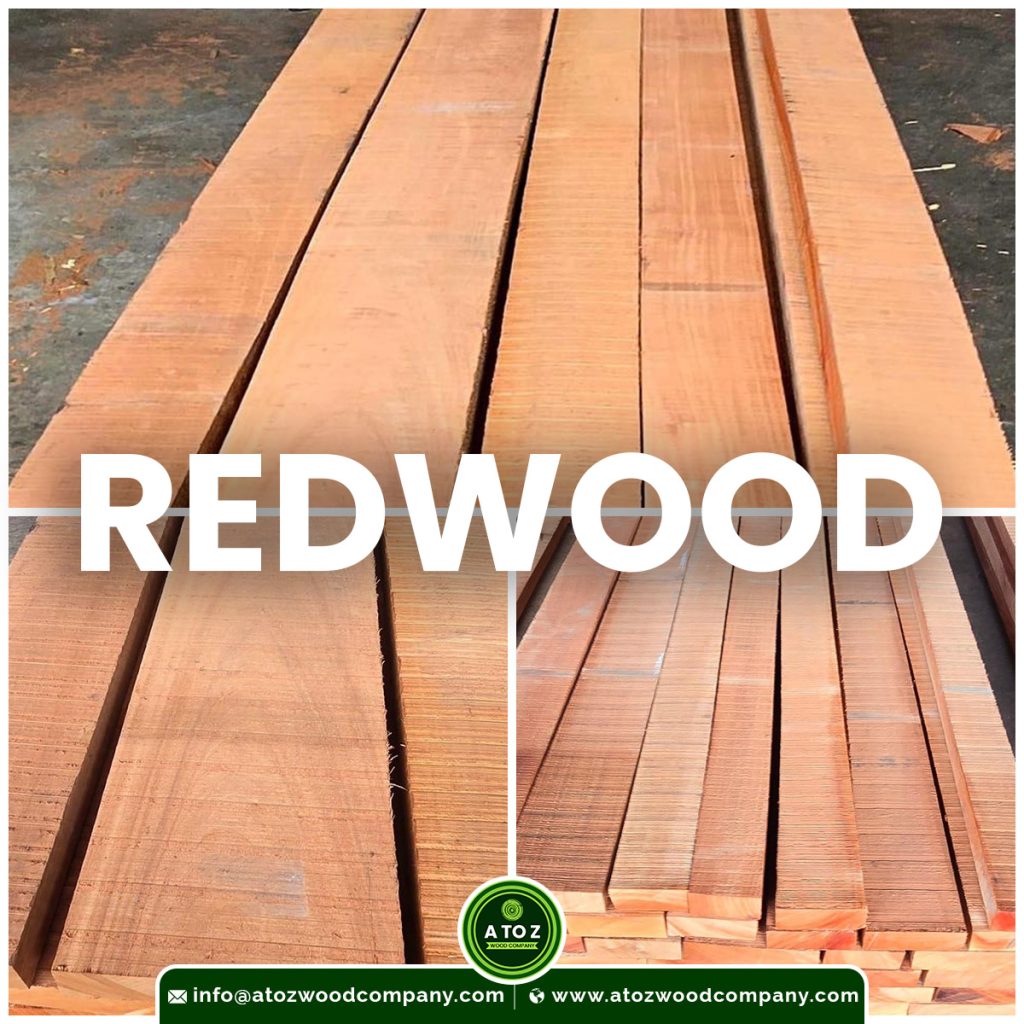
Redwood, scientifically known as Sequoia sempervirens, is a softwood species native to the coastal forests of Northern California and parts of Oregon. It is prized for its tall, straight trunks, reddish-brown heartwood, and high resistance to decay. Despite being classified as softwood, it performs excellently in both structural and decorative applications.

Key Properties of Redwood

1. Durability & Weather Resistance

The heartwood contains natural tannins and oils that make it resistant to rot, fungi, and insects—perfect for long-term outdoor use without chemical treatments.

2. Lightweight Yet Strong

Despite being a softwood, redwood has a favorable strength-to-weight ratio, making it ideal for structures where both stability and ease of handling are important.

3. Thermal Insulation

It has a low thermal conductivity, meaning it helps maintain more stable temperatures in buildings—ideal for siding, paneling, and cabins.

4. Workability

Redwood is easy to saw, nail, glue, and sand. It planes cleanly and finishes beautifully, making it a favorite among woodworkers and builders.

5. Color and Grain

Heartwood: Ranges from light pink to deep reddish-brown.

Sapwood: Pale white or yellowish.

Grain: Typically straight, occasionally wavy or figured. It has a medium to coarse texture.

Types of Redwood

redwood

It is categorized based on the species and the part of the tree from which the timber is harvested. Below are the three main types:

1. Coast Redwood (Sequoia sempervirens)

Native to: Northern California and Southern Oregon.

Use: Commonly harvested for commercial lumber.

Traits: Tallest trees on earth; heartwood is rich, reddish, and durable.

Applications: Decking, siding, fencing, and garden structures.

2. Giant Redwood (Sequoiadendron giganteum)

Native to: Sierra Nevada mountains, California.

Use: Rare in the timber industry; mostly preserved.

Traits: Largest tree by volume; very dense wood.

Applications: Reclaimed wood used in restoration projects.

3. Dawn Redwood (Metasequoia glyptostroboides)

Native to: Central China.

Use: Grown as ornamental; not widely used for lumber.

Traits: Fast-growing, deciduous conifer; softer wood.

Applications: Landscaping, educational arboretums, bonsai.

Common Uses of Redwood

1. Decking & Outdoor Flooring

It is a top choice for outdoor decks due to its resistance to weather, insects, and warping.

2. Siding & Cladding

It offers a rich, warm appearance and excellent insulation—ideal for exterior siding and paneling.

3. Fencing & Garden Structures

Used extensively for fences, pergolas, gazebos, raised beds, and planter boxes thanks to its aesthetic value and longevity.

4. Furniture & Carving

It’s smooth grain and rich color make it suitable for handcrafted furniture, decorative panels, and artisan woodworking.

5. Boatbuilding & Water Tanks

Due to its natural water resistance, redwood has been historically used in boatbuilding, barrels, and even water tanks.

6. Interior Applications

Though primarily known for outdoor use, redwood also excels in indoor projects like beams, ceilings, and feature walls.

Pros and Cons of Redwood

Pros:

  • Naturally resistant to decay and pests
  • Lightweight and strong
  • Beautiful natural coloring and grain
  • Sustainable when sourced responsibly

Cons:

  • More expensive than common softwoods
  • Can dent or scratch due to softness
  • Limited availability in some regions

Where to Buy High-Quality Redwood?

If you’re looking to buy redwood timber in bulk for construction, landscaping, furniture, or commercial supply, it’s essential to source from a trusted, experienced supplier who guarantees quality, sustainability, and global delivery.

AtoZ Wood Company is a leading global timber exporter and wholesale supplier of premium redwood logs, slabs, and sawn timber. We provide high-quality redwood products sourced responsibly and processed to meet international standards.

Order top-grade timber at competitive prices—available in logs, slabs, or sawn timber formats, delivered straight to your location.

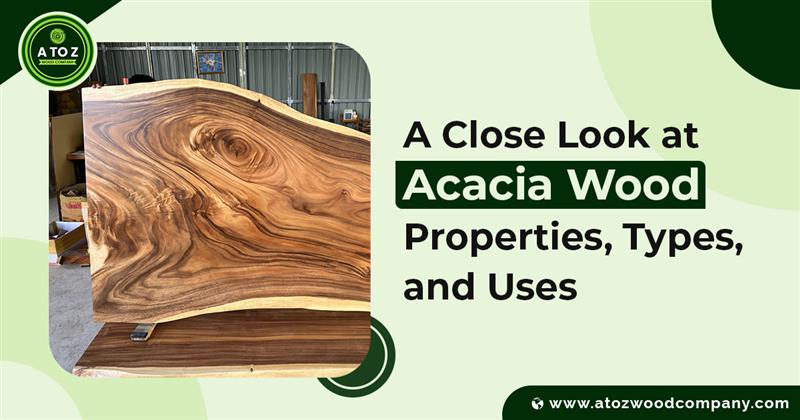
Acacia Wood Properties, Types & Uses Explained

acacia wood properties, types, and uses

Acacia wood has earned a well-deserved reputation for its durability, elegance, and sustainability. Whether you’re crafting luxurious furniture, upgrading your flooring, or looking for a strong material for outdoor use, acacia wood stands out as a reliable and visually striking choice.

In this comprehensive guide, we’ll explore the properties, types, and uses of acacia wood, helping homeowners, woodworkers, furniture makers, and importers make informed decisions.

📌 What is Acacia Wood?

acacia sawn timber

It comes from the Acacia genus, a group of over 1,300 species of trees and shrubs found across Asia, Africa, Australia, and the Americas. Known for its rich grains, golden hues, and remarkable strength, acacia has been used for centuries in shipbuilding, carving, and furniture making.

It’s classified as a hardwood, and thanks to its high density and natural oils, it is highly resistant to moisture, insects, and decay—making it an excellent choice for both indoor and outdoor applications.

🌳 Key Properties of Acacia Wood

Understanding the core characteristics of acacia wood helps in evaluating its quality and suitability for various applications.

1. Durability & Hardness

  • It ranks high on the Janka hardness scale (approx. 1700–2200 lbf).

  • Naturally resistant to scratches, dents, and fungal attacks.

  • With proper care, acacia products can last for decades.

2. Appearance & Grain

  • Color ranges from light amber to deep brown with contrasting dark streaks.

  • Has a striking, wavy or interlocked grain pattern.

  • Can develop a beautiful patina with age and exposure.

3. Water & Weather Resistance

  • Naturally water-resistant due to its dense structure and natural oils.

  • Ideal for bathroom furniture, kitchen counters, and outdoor decking.

  • With finishing treatments, it performs even better in humid climates.

4. Sustainability

  • Many acacia species grow rapidly, making them a sustainable choice for timber.

  • Harvested from managed plantations and agroforestry systems.

  • Ideal for eco-conscious buyers seeking FSC-certified wood.

Different Types of Acacia Lumber

Several species are harvested for commercial purposes. Here are the most common types:

1. Acacia Koa

  • Native to Hawaii.

  • Highly prized for musical instruments and high-end furniture.

  • Rich reddish-brown color with curly grain.

2. Acacia Mangium

  • Grows in Southeast Asia and Australia.

  • Commonly used in furniture, veneer, and plywood.

  • Easy to process and budget-friendly.

3. Acacia Senegal (Gum Arabic Tree)

  • Known for gum production, but the wood is also used.

  • Durable and moderately heavy.

  • Used for tool handles and turnery.

4. Acacia Melanoxylon (Australian Blackwood)

  • Dark brown to golden hues.

  • Used for cabinetry, musical instruments, and flooring.

  • Close-grained with excellent workability.

5. Babul (Acacia Nilotica)

  • Native to Africa and the Indian Subcontinent.

  • Dense and strong.

  • Suitable for agricultural tools, furniture, and fences.

Common Uses of Acacia Wood

1. Furniture

  • Dining tables, bed frames, chairs, and sideboards.

  • Perfect for rustic, farmhouse, or modern aesthetics.

  • Known for blending durability with artistic grain patterns.

2. Flooring

  • Strong alternative to traditional hardwood flooring.

  • Offers a warm, rich color tone and long lifespan.

  • Resistant to scratches and water damage.

3. Kitchenware & Cutting Boards

  • Food-safe and antimicrobial.

  • Stylish serving trays, salad bowls, and chopping boards.

4. Outdoor Furniture & Decking

  • Naturally resists the elements when sealed properly.

  • Acacia benches, patio tables, and pergolas last for years with minimal maintenance.

5. Interior Décor

  • Wall panels, shelves, decorative accents.

  • Adds a touch of luxury and warmth to interiors.

✅ Advantages of Acacia Wood

  • Long-lasting & Durable

  • Aesthetically Appealing Grain & Color

  • Water & Pest Resistant

  • Sustainable & Eco-Friendly

  • Low Maintenance with Proper Finishing

⚠️ Disadvantages of Acacia Wood

  • Can be heavy and dense, making transportation costly.

  • Susceptible to cracking or warping if not properly dried and sealed.

  • Slightly more expensive than other common hardwoods.

  • Color variation can occur between batches.

Where can I buy high-quality acacia wood in bulk?

At AtoZ Wood Company, we offer sustainably harvested, kiln-dried Acacia wood logs, slabs, and sawn timber with global shipping. Trusted by importers, builders, and furniture makers across Asia, Europe, North America, and Oceania, our timber meets international standards for strength, sustainability, and aesthetic value.

We offer bulk quantities, custom dimensions, and FSC-compliant wood at competitive prices.

Frequently Asked Questions (FAQs)

1. How durable is Acacia Wood compared to teak or oak?

Acacia is very durable and ranks higher than oak on the Janka hardness scale. While it’s slightly less weather-resistant than teak, it’s still a cost-effective and robust alternative for many outdoor and indoor applications.

2. Does Acacia Lumber scratch easily?

Acacia is a dense hardwood that resists scratches better than softer woods like pine. While no wood is completely scratch-proof, acacia holds up well under regular use, especially with a proper finish.

3. Is Acacia sustainable?

Yes, acacia is considered a sustainable hardwood, especially when sourced from managed plantations. Many species grow quickly, and responsible harvesting ensures minimal environmental impact.

4. How do I maintain Acacia Wood furniture?

  • Clean with a soft, damp cloth.

  • Avoid harsh chemicals.

  • Use wood oil or sealant periodically for protection.

  • Keep away from direct sunlight and excess moisture when used indoors.

5. Is acacia termite-resistant?

Yes, acacia has natural oils and density that help repel termites and other insects. However, for long-term protection, especially in humid regions, additional treatment is recommended.

6. Can it be used for cutting boards and kitchenware?

Absolutely. It is naturally antimicrobial, making it a safe and popular choice for cutting boards, serving trays, and kitchen utensils.

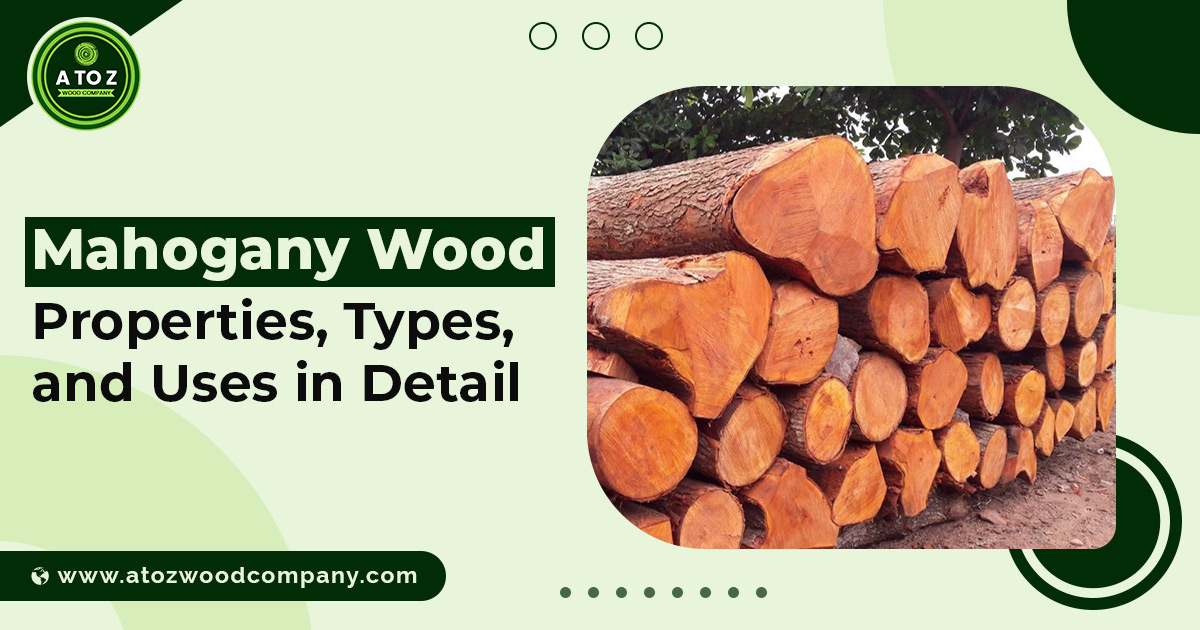
Mahogany Wood Properties, Types, and Uses in Detail

mahogany wood properties, types and uses

Mahogany wood has long been revered in the woodworking and furniture industries for its elegance, rich reddish-brown color, durability, and dimensional stability. Whether it’s antique furniture, musical instruments, or high-end cabinetry, Mahogany has earned its place as a luxury hardwood with both aesthetic and practical appeal.

In this comprehensive guide, we explore Mahogany wood properties, various types, common applications, and why it continues to be a top choice for woodworkers and architects worldwide.

What is Mahogany Wood?

It is a tropical hardwood primarily harvested from three main genera: Swietenia, Khaya, and Entandrophragma. It is native to Central and South America, Africa, and parts of Asia. It is prized for its reddish to deep brown color, fine straight grain, and resistance to decay.

Despite facing challenges from overharvesting in the past, sustainably sourced Mahogany remains available from managed forests and certified timber suppliers.

Technical and Physical Properties of Mahogany Wood

Property Description
Scientific Name Swietenia macrophylla, Khaya ivorensis, Entandrophragma cylindricum
Wood Type Hardwood
Color Reddish-brown to deep brown; darkens with age
Grain Texture Straight to interlocked; fine and even
Janka Hardness 800 – 900 lbf (varies by species)
Density (Dry) ~0.55–0.75 g/cm³ (medium to high density)
Durability Highly durable; naturally resistant to rot and insects
Workability Excellent; machines and finishes well
Moisture Movement Low; dimensionally stable
Finish Smooth; accepts stain, oil, and polish beautifully

4 Different Types of Mahogany Wood

There are several species of Mahogany, each with unique qualities. Here’s an overview of the most well-known types:

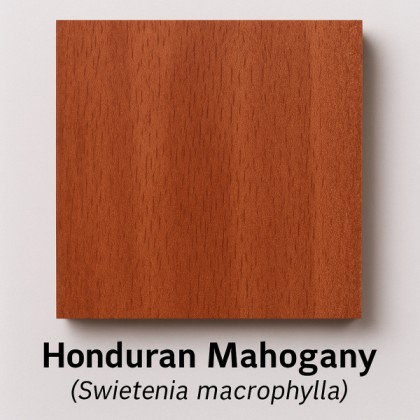
1. Honduran Mahogany (Swietenia macrophylla)

honduran mahogany

  • Also called “Genuine Mahogany”
  • Native to Central and South America
  • Fine grain, excellent workability, rich tone
  • Used in high-end furniture, boats, and musical instruments

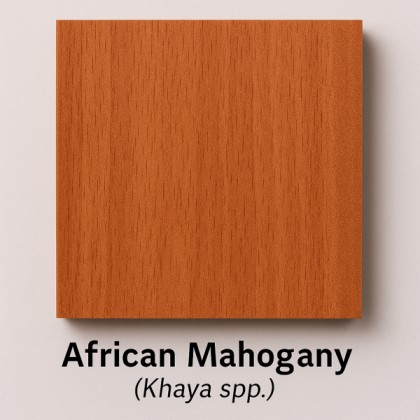
2. African Mahogany (Khaya spp.)

african mahogany

  • Origin: West and Central Africa
  • Slightly coarser grain, similar color and strength to Honduran
  • More affordable and widely available
  • Ideal for cabinetry, furniture, and paneling

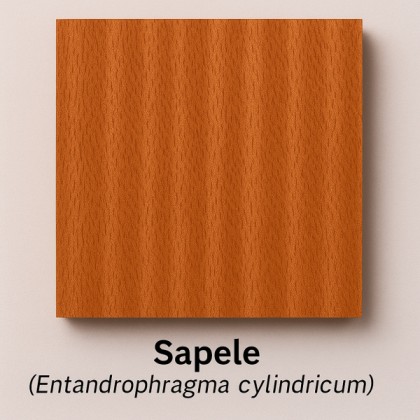
3. Sapele (Entandrophragma cylindricum)

sapele

  • Sometimes marketed as Mahogany
  • Denser and harder with interlocked grain
  • Attractive ribbon-like patterns
  • Commonly used in flooring, doors, and musical instruments

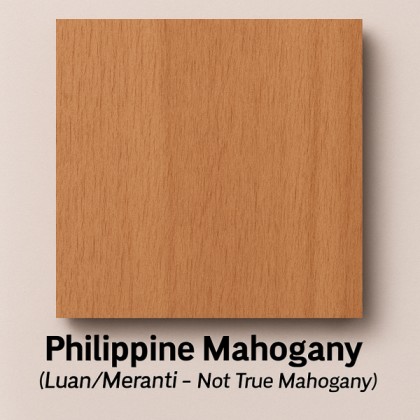
4. Philippine Mahogany (Luan/Meranti – Not True Mahogany)

Philippine mahogany

  • Often mistaken for genuine Mahogany
  • Softer, less durable
  • Economical option for plywood and paneling

Uses of Mahogany Wood

It is highly versatile and used in both luxury and functional applications:

High-End Furniture

It’s beauty and strength make it ideal for crafting elegant tables, chairs, cabinets, beds, and more. It holds screws and nails well and polishes to a smooth, rich finish.

Musical Instruments

Due to its resonance and tonal quality, Mahogany is a preferred wood for guitars, violins, and piano cases.

Doors & Windows

Its natural resistance to moisture and decay makes Mahogany suitable for solid wood doors, window frames, and shutters.

Interior Paneling & Mouldings

It brings warmth and luxury to interior trims, mouldings, and wall paneling, often seen in upscale homes and executive offices.

Boatbuilding & Exterior Applications

Honduran Mahogany is traditionally used in boat decks and hulls due to its water resistance and dimensional stability.

Flooring

Denser Mahogany types like Sapele are used in hardwood flooring, offering beauty and wear resistance.

Mahogany Wood Price – Is It Worth the Investment?

Yes, it is a premium wood, and its price reflects that status. While it is more expensive than many hardwoods, its longevity, elegance, and performance justify the investment — especially in furniture, doors, and structures meant to last for generations.

Pricing depends on:

  • Species (Genuine Mahogany vs. African or Philippine)

  • Grade and thickness

  • Certification (FSC-certified wood may cost more)

  • Market availability and region

Where to Buy Mahogany Timber?

At AtoZ Wood Company, we supply sustainably sourced Mahogany timber in various forms including:

  • Logs

  • Sawn timber

  • Finished wood slabs

  • Custom-cut orders

Our Mahogany wood is suitable for interior, exterior, and luxury applications. We offer bulk exports to the USA, Europe, Asia, Australia, and other regions with full compliance on forest sustainability and timber legality.

Conclusion

Mahogany continues to be a top-tier choice for discerning woodworkers, furniture makers, and designers. Its stunning appearance, unmatched workability, and natural resistance to wear and decay make it a timeless material in woodworking.

By choosing sustainably harvested Mahogany from trusted suppliers like AtoZ Wood Company, you ensure both quality and environmental responsibility in your projects.

Frequently Asked Questions (FAQs)

Q: Is Mahogany good for outdoor use?

Yes, Genuine Mahogany and African Mahogany are resistant to moisture, decay, and insects, making them suitable for outdoor furniture, decking, and boatbuilding—especially when properly sealed or treated.

Q: Is Mahogany a sustainable wood choice?

It can be a sustainable option if sourced from certified, well-managed forests. Always look for FSC-certified Mahogany timber to ensure legal and eco-friendly harvesting practices.

Q: How to identify Genuine Mahogany?

Real Mahogany wood properties typically features:

  • A reddish-brown hue that darkens with age
  • Straight, fine grain
  • Even texture and rich natural sheen
  • It’s also heavier and denser than imitation woods. Ask your supplier for species verification and certification.

Poplar Wood Properties, Types, Uses, Pros & Cons

poplar wood properties, types and uses

Known for its lightweight, smooth grain, and adaptability, Poplar is widely used in cabinetry, furniture making, plywood, and interior trim. But is it the right choice for your project?

In this comprehensive guide, we’ll explore the key properties of Poplar wood, its various types, common applications, and the advantages and disadvantages that come with using this hardwood. Whether you’re sourcing timber for construction, design, or industrial use, this article will help you make an informed decision.

What is Poplar Wood?

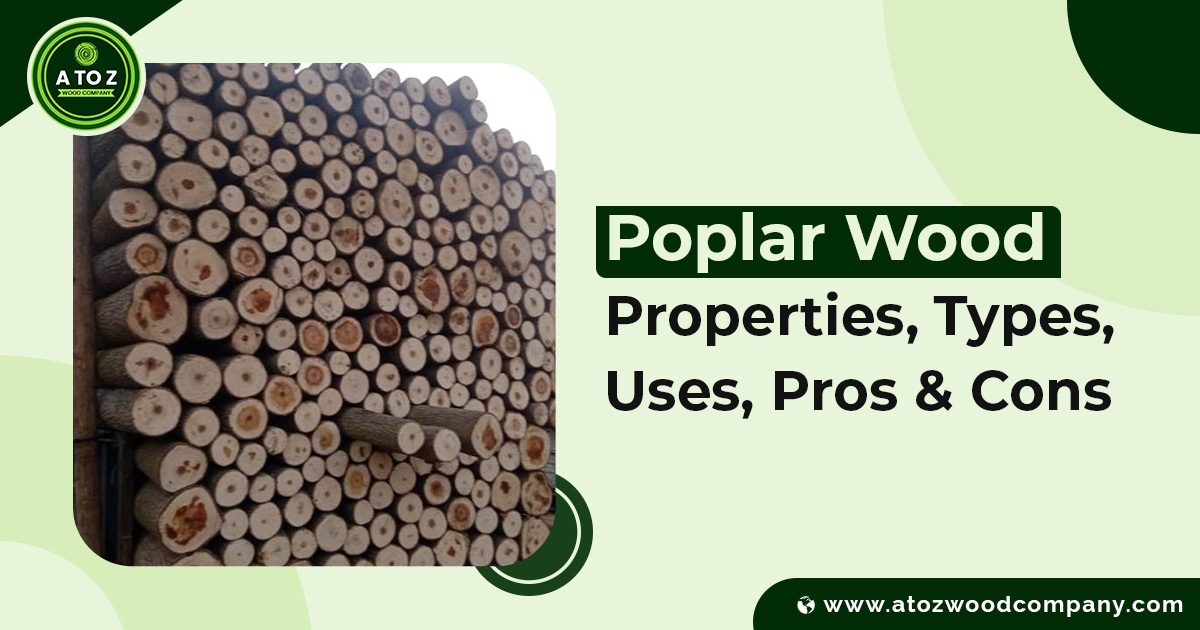
poplar timber manufacturer

Poplar is a hardwood sourced from trees in the Populus genus, which includes species like Yellow Poplar (Liriodendron tulipifera), Black Poplar, and White Poplar. Though it’s technically a hardwood, Poplar behaves more like a softwood due to its low density and ease of workability.

It is widely available in North America, Europe, and parts of Asia, and is valued for its consistent grain, pale appearance, and cost-effectiveness.

Physical & Technical Properties of Poplar Wood

Property Value/Description
Scientific Name Liriodendron tulipifera (Yellow Poplar – most common)
Wood Type Hardwood
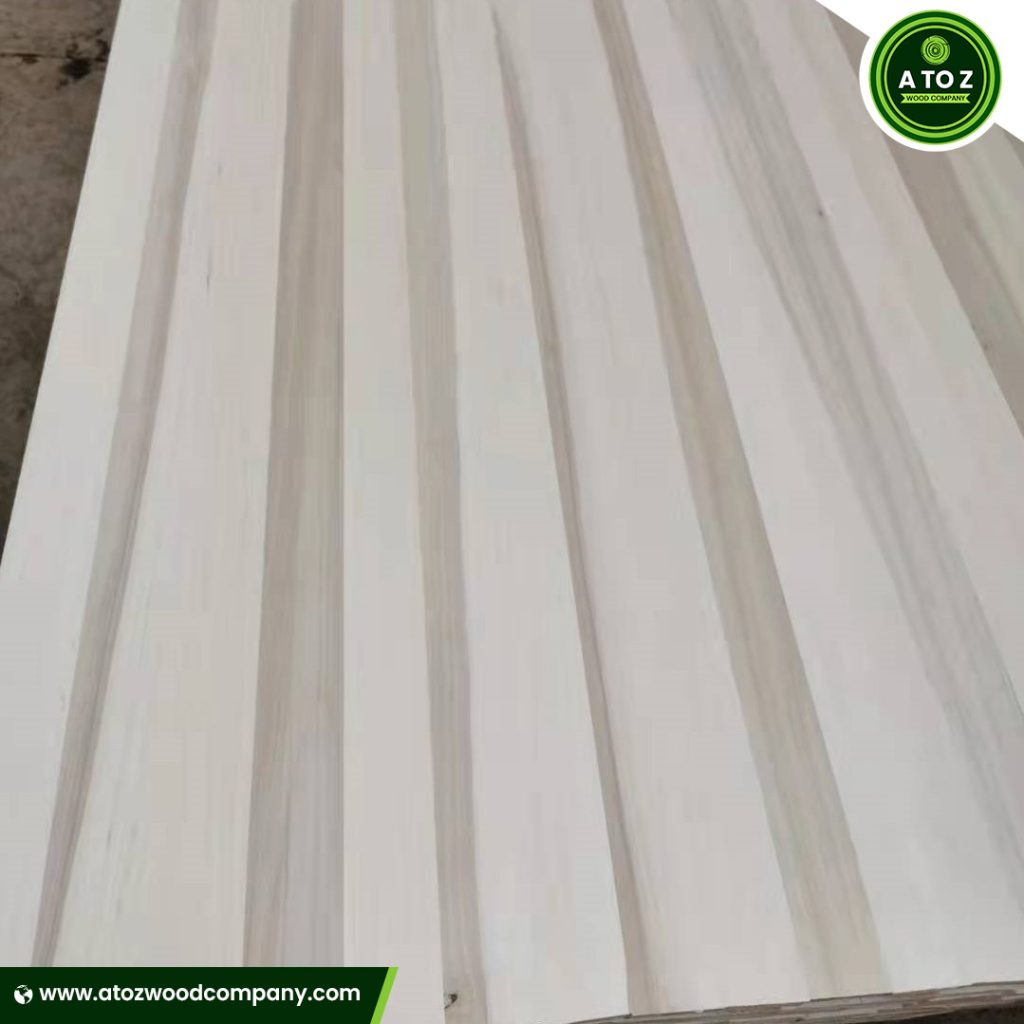
Color Creamy white, pale yellow, light brown with green streaks
Grain Texture Fine to medium; uniform; usually straight
Janka Hardness 540 lbf (soft for a hardwood)
Density (Dry) ~0.42–0.45 g/cm³ (lightweight)
Modulus of Rupture (MOR) ~71.5 MPa (10,400 psi)
Modulus of Elasticity (MOE) ~9.3 GPa (1.35 million psi)
Crushing Strength ~35 MPa (5,080 psi)
Shrinkage (Radial/Tangential) Radial: 4.5%, Tangential: 7.2%
Durability Non-durable; susceptible to decay and insect attack
Workability Excellent; easy to machine, nail, glue, and finish
Paintability/Stainability Paints well; requires conditioner for even staining
Moisture Movement Low to moderate (relatively stable when dry)

Types of Poplar Wood

Poplar comes in several species, each with slightly varying characteristics:

1. Yellow Poplar (Tulipwood)

  • Most common in North America

  • Pale yellow to greenish-brown

  • Easy to stain and paint

  • Often used in furniture frames and millwork

2. White Poplar (Populus alba)

  • Pale white to silvery-grey appearance

  • Grows in Europe and Asia

  • Popular in carving and lightweight joinery

3. Black Poplar (Populus nigra)

  • Native to Europe and Western Asia

  • Darker in tone, more durable

  • Used in pallets, boxes, and outdoor applications (when treated)

4. Hybrid Poplar

  • Fast-growing plantation wood

  • Often used in paper production and composite panels

Common Uses of Poplar Wood

Poplar wood is widely used across various industries due to its affordability and versatility. Here are the most popular applications:

Interior Furniture

Poplar is ideal for drawer sides, cabinets, shelves, and hidden furniture components. It holds nails and screws well, making it great for frames and support.

Cabinetry & Millwork

Thanks to its smooth surface and paint-accepting quality, Poplar is frequently used in interior trim, baseboards, crown mouldings, and painted cabinetry.

Plywood & Veneer Core

Poplar is used as a core in plywood panels due to its stability and low cost.

Doors and Panels

Its light weight makes it perfect for interior doors, especially hollow-core styles.

Crafts & Woodturning

Artists and woodturners use Poplar for carving, laser cutting, scroll work, and DIY projects.

Pros of Poplar Wood

Affordable – One of the most budget-friendly hardwoods
Lightweight – Easy to handle, transport, and assemble
Easy to Work With – Machines, glues, and finishes effortlessly
Smooth Finish – Ideal for painting or staining (with prep)
Stable – Minimal movement when dried properly
Sustainable – Grows quickly, making it eco-friendly for mass use

Cons of Poplar Wood

Soft for a Hardwood – Dents and scratches easily
Not Very Durable Outdoors – Requires treatment for outdoor use
Color Variation – May show greenish or streaky hues, which can affect staining
Lacks Visual Appeal for High-End Furniture – Not ideal where exotic grain or luxury finish is needed

Is Poplar a Good Wood to Use?

Poplar is a reliable, economical wood that’s perfect for internal structures, painted furniture, mouldings, and general woodworking. While it may not be your first choice for visible or luxury pieces, it’s unbeatable in projects where performance and affordability are key.

If you need a wood that balances cost-efficiency, ease of use, and availability, Poplar is an excellent option — especially when the final piece will be painted or hidden.

Poplar Wood Price – Is It Cost-Effective?

Yes, Poplar is one of the most cost-effective hardwoods in the timber market. Prices vary by region, grade, and thickness, but it’s generally cheaper than oak, maple, or walnut. This makes it ideal for bulk orders, commercial use, and custom woodwork where budget is a concern.

Sustainable Timber Supply from AtoZ Wood Company

At AtoZ Wood Company, we provide high-quality Poplar wood logs, slabs, and sawn timber sourced from sustainably managed forests. Our Poplar timber is:

  • FSC-certified (on request)

  • Available in bulk or custom sizes

  • Exported globally across the US, Europe, Asia, and Oceania

We ensure low-impact logging, ethical labor, and precision processing for all Poplar and hardwood timber products. For high-quality, eco-friendly Poplar wood, trust AtoZ Wood Company — your global timber partner.

Frequently Asked Questions (FAQs)

Q: Is Poplar a hardwood or softwood?

Poplar is technically a hardwood, but it has many characteristics of softwoods—like its low density and easy workability. This makes it perfect for light-duty applications where cost and ease of use matter.

Q: Does Poplar wood warp or shrink easily?

Poplar has minimal warping and low shrinkage when properly dried. It’s dimensionally stable, which is why it’s often used for mouldings, door frames, and trim.

Q: How does Poplar compare to other hardwoods like Oak or Maple?

Poplar is lighter, softer, and more affordable than hardwoods like Oak or Maple. While not as durable, it’s easier to cut, shape, and paint, making it ideal for projects that don’t require high structural strength.

Q: Can Poplar wood be used outdoors?

Poplar is not naturally resistant to moisture, decay, or insects, so it’s not recommended for outdoor use unless it’s treated or used in protected areas.

Q: Is Poplar a sustainable wood choice?

Yes, Poplar grows quickly and is widely cultivated, making it a sustainable and eco-friendly option. When sourced from certified suppliers like AtoZ Wood Company, it supports responsible forestry practices.

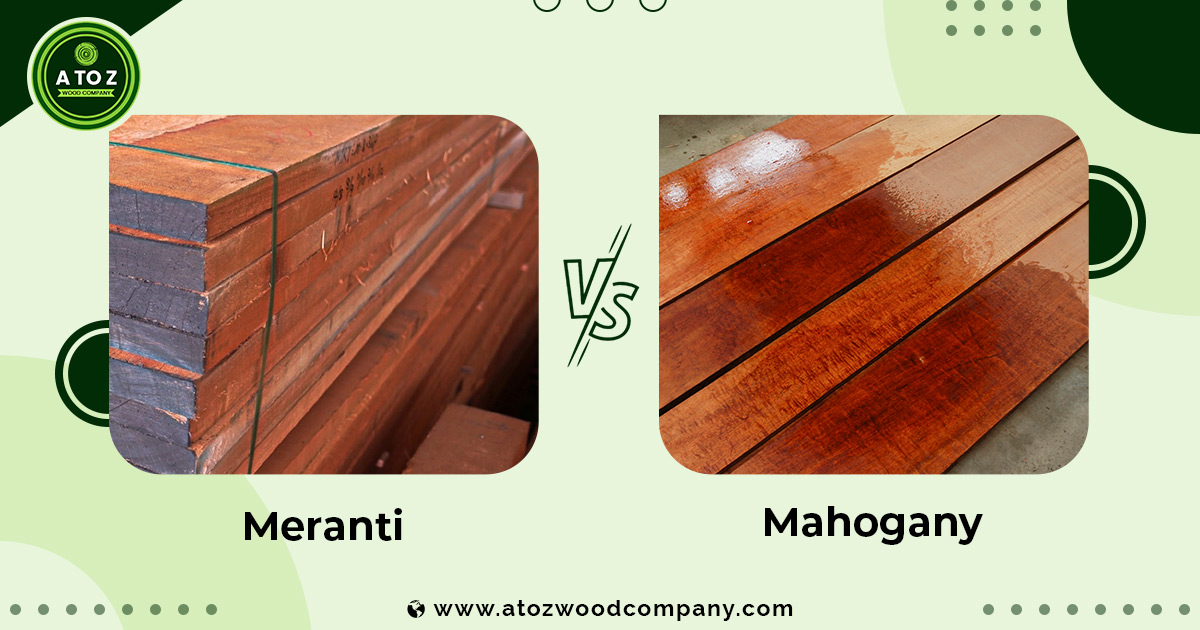
Meranti vs Mahogany – Top Comparison for Wood Buyers

meranti vs mahogany

Both Meranti and Mahogany woods come from tropical regions, offer rich aesthetics, and have been trusted by woodworkers for decades. However, understanding their differences in durability, appearance, price, and applications is essential before making a purchase decision.

In this comprehensive comparison, we break down everything you need to know about Meranti vs Mahogany wood, helping you decide which timber best fits your needs.

What is Meranti Wood?

red-meranti supplier

Meranti is a group of hardwood species primarily sourced from Southeast Asia, especially countries like Malaysia, Indonesia, and the Philippines. It belongs to the Shorea genus and is generally classified into types like Light Red Meranti, Dark Red Meranti, Yellow Meranti, and White Meranti, depending on density and color.

Key Characteristics of Meranti Wood:

  • Color: Ranges from pale pink to deep reddish-brown.

  • Texture: Medium to coarse with interlocked grain.

  • Density: Moderate – around 400 to 800 kg/m³.

  • Workability: Easy to saw, plane, and glue; accepts stains and finishes well.

  • Durability: Moderate; suitable for indoor applications.

  • Common Uses: Plywood, furniture, doors, moldings, veneers, and paneling.

What is Mahogany Wood?

mahogany wood export

Mahogany is a prized tropical hardwood mostly harvested from Central and South America, West Africa, and parts of Southeast Asia. The most well-known types are Honduran Mahogany (Genuine Mahogany), African Mahogany, and Philippine Mahogany (often actually a Meranti variety).

Key Characteristics of Mahogany Wood:

  • Color: Rich reddish-brown, darkens beautifully over time.

  • Texture: Fine to medium; straight or interlocked grain.

  • Density: 500 to 850 kg/m³ depending on the species.

  • Workability: Highly workable, excellent for carving and turning.

  • Durability: High resistance to rot and pests (especially Genuine Mahogany).

  • Common Uses: High-end furniture, cabinetry, musical instruments, boats, luxury interiors.

Meranti vs Mahogany – Side-by-Side Comparison

Feature Meranti Mahogany
Origin Southeast Asia Central/South America, Africa, SE Asia
Appearance Light to dark reddish hues Deep reddish-brown with elegant grain
Durability Moderate (not suitable for outdoor use) High (especially Genuine Mahogany)
Workability Good; may have tear-out with interlocked grain Excellent; easy to shape and machine
Cost Affordable Premium (especially Genuine Mahogany)
Weight Medium Medium to heavy depending on species
Rot Resistance Moderate to low High (Genuine); Moderate (African)
Uses Budget-friendly furniture, paneling Luxury-grade furniture, musical instruments

Which is Better – Meranti or Mahogany?

Choose Meranti if:

  • You’re on a budget but still want a beautiful hardwood.

  • Your application is primarily indoor (like paneling or cabinets).

  • You need large volumes for plywood or construction with moderate expectations for durability.

Choose Mahogany if:

  • You want superior durability and luxury aesthetics.

  • You’re crafting fine furniture, musical instruments, or boats.

  • You’re willing to invest more in long-term value and visual appeal.

Where to Buy Best Quality Meranti or Mahogany Wood?

Both Meranti and Mahogany are excellent hardwoods, each with its own advantages. If cost is a concern and your project is indoors, Meranti can deliver good aesthetics and workability. But if you’re after premium quality and timeless beauty, Mahogany is unmatched in elegance and longevity.

With increasing concern for forest sustainability, it’s important to source both Meranti and Mahogany from legally harvested and FSC-certified suppliers. At AtoZ Wood Company, we supply responsibly sourced hardwoods—including Meranti and Mahogany—that comply with international environmental standards.

We offer bulk timber supply, kiln-dried options, and global shipping to the U.S., Europe, Australia, Asia, and beyond.

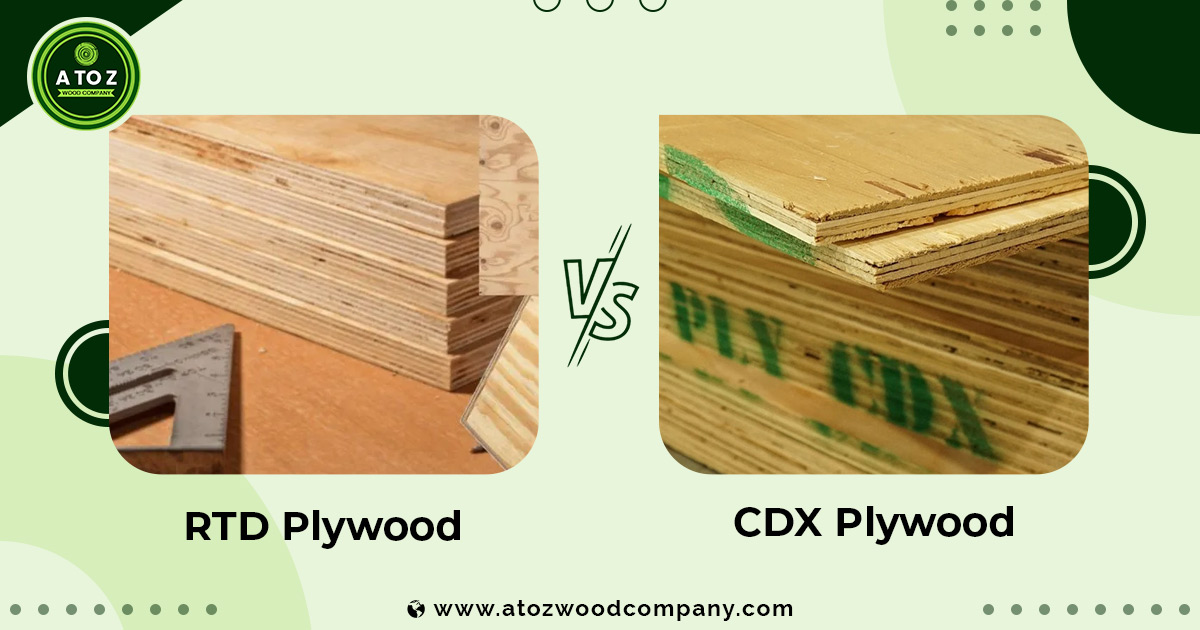
RTD vs CDX Plywood – Key Differences, Uses & Best Option

RTD vs CDX Plywood

When it comes to construction or home improvement projects, choosing the right plywood can make a significant difference in durability, cost, and long-term performance. Two common types often compared are RTD plywood and CDX plywood. Although they may seem similar at first glance, they serve different purposes and come with distinct manufacturing processes and performance characteristics.

In this guide, we’ll break down RTD vs CDX plywood to help you understand the key differences, pros and cons, and which option is better for your project.

What is RTD Plywood?

RTD stands for Resistance Temperature Detector, a term that refers to the manufacturing process rather than the plywood itself. RTD plywood is made using high-heat and pressure-controlled bonding systems that ensure consistent adhesion between the plies.

Key Characteristics of RTD Plywood:

  • Heat-Sensitive Adhesives: RTD sensors are used during production to monitor and control the temperature, ensuring proper glue bonding.

  • Moisture Resistance: Offers good resistance to moisture and humidity, making it ideal for outdoor sheathing and roofing underlayment.

  • Structural Strength: Designed for strength and dimensional stability under various weather conditions.

  • Quality Control: RTD plywood generally meets more stringent quality standards compared to CDX.

What is CDX Plywood?

CDX refers to the grade of the plywood:

  • C = face side with noticeable defects but still structurally sound.

  • D = back side with more visible imperfections.

  • X = exposure rating, suitable for temporary exposure to moisture.

CDX is a type of construction-grade plywood used mainly for structural purposes like subfloors, wall sheathing, and roof decking.

Key Characteristics of CDX Plywood:

  • Affordable and Widely Available: Often chosen for budget-conscious construction projects.

  • Not Fully Waterproof: Can withstand short-term exposure to moisture but is not meant for continuous wet conditions.

  • Less Refined Surface: Rougher texture with more voids and patches.

  • General-Purpose Use: Common in framing, sheds, and temporary structures.

RTD vs CDX Plywood: Side-by-Side Comparison

Feature RTD Plywood CDX Plywood
Manufacturing Uses RTD sensors for precise glue application Standard heat and glue process
Moisture Resistance Higher resistance Moderate resistance
Strength Stronger and more stable Durable but less refined
Surface Quality Better quality bonding and fewer voids Rough surface with visible defects
Cost Slightly more expensive More affordable
Usage Ideal for roofing, exterior sheathing Good for subfloors, wall sheathing
Weather Durability Suitable for wet environments Best for dry conditions or temporary exposure

Which is Better: RTD or CDX?

The better choice depends entirely on your project needs:

  • Choose RTD if:

    • You need higher moisture resistance.

    • Your project is long-term and exposed to the elements.

    • You prioritize strength and structural integrity.

    • You want better adhesive bonding and fewer warping issues.

  • Choose CDX if:

    • You’re working on a tight budget.

    • You need plywood for interior or temporary outdoor use.

    • The plywood will be covered or not exposed directly to weather.

Common Applications

RTD Plywood Uses:

  • Roof sheathing

  • Exterior wall sheathing

  • High-humidity environments

  • Long-term construction projects

CDX Plywood Uses:

  • Subflooring

  • Temporary enclosures

  • Wall bracing

  • Roof decking under roofing felt

Conclusion

Understanding the difference between RTD and CDX plywood is crucial when selecting the right material for your construction needs. While CDX remains a popular choice for standard subfloors and temporary structures due to its affordability, RTD plywood offers better durability, glue bonding, and moisture resistance—making it the preferred option for long-term and exterior applications.

At AtoZ Wood Company, we offer premium-quality RTD and CDX plywood tailored for a wide range of projects—whether you’re building homes, commercial spaces, or outdoor structures. With a strong commitment to quality, sustainability, and global supply, AtoZ ensures that you get the right plywood at the best price, delivered on time.

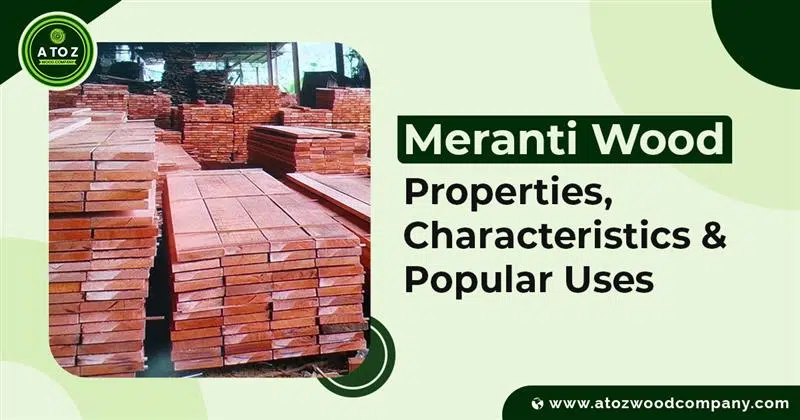
Meranti Wood Properties, Characteristics & Popular Uses

meranti wood properties

Meranti wood is a tropical hardwood that offers a blend of workability, pleasing aesthetics, and reliable performance, making it a go-to choice for builders, manufacturers, and homeowners alike.
In this comprehensive guide, we’ll explore the meranti wood properties, characteristics, and uses in detail, helping you understand why it continues to be favored across global markets.

What is Meranti Wood?

red-meranti supplier

It is not a single species but a collective trade name used to describe timber from several species of the Shorea genus, primarily found in Southeast Asia, including Malaysia, Indonesia, and the Philippines. Depending on the species and density, it is broadly classified into:

  • Light Red Meranti (Lauan)
  • Dark Red Meranti
  • White Meranti
  • Yellow Meranti
  • Balau (often included in heavy Meranti types)

Each category has slight differences in color, grain, density, and mechanical strength. However, all varieties share certain core attributes that make them suitable for wide-ranging applications.

Key Properties of Meranti Wood

✅ Density and Strength

  • It ranges from medium to moderately heavy, with densities typically between 400 kg/m³ to 850 kg/m³.
  • Light Red Meranti is on the lighter side, while Dark Red Meranti and Balau are heavier and stronger.
  • Its strength is sufficient for general structural uses but it is not as hard or durable as teak or oak.

✅Grain and Texture

  • It generally has a straight or interlocked grain, with a medium to coarse texture.
  • It often features attractive ribbon-like patterns on quarter-sawn surfaces, making it visually appealing for furniture and paneling.

✅Color

  • Color varies depending on the type:
    • Light Red Meranti: pale pink to light reddish-brown
    • Dark Red Meranti: dark red to brownish

    • Yellow Meranti: yellowish-brown
    • White Meranti: pale cream to light yellow

✅Durability

  • In general, Meranti has moderate natural durability. It is somewhat resistant to decay but can be vulnerable to insect attacks if left untreated, especially in outdoor settings.
  • Not suitable for direct ground contact unless properly preserved.

✅Workability

  • One of it’s biggest advantages is its excellent workability:
    • Easy to saw, plane, drill, and nail.

    • Glues well and takes paints, stains, and varnishes evenly.

    • Minimal blunting effect on cutting tools.

Seasoning and Stability

  • It dries relatively quickly with minimal risk of warping or checking if properly handled.

  • Once seasoned, it is stable and holds its shape well.

Characteristics that Set Meranti Apart

Feature Meranti Advantage
Appearance Warm hues and subtle grain make it aesthetically versatile.
Cost More affordable than teak, mahogany, or oak.
Availability Widely available due to sustainable plantation sources.
Versatility Suitable for both structural and decorative applications.

These traits have made Meranti a favored wood species not only in Asia but also in Europe, the Middle East, Australia, and the U.S.

What is Meranti Commonly Used for?

Thanks to the balanced properties of meranti wood, it serves a broad spectrum of uses:

Interior Joinery & Carpentry

It is extensively used for:

  • Door frames
  • Window frames and sashes
  • Mouldings and skirtings
  • Stair components

Its fine finish and ease of machining make it ideal for detailed woodwork.

Furniture

Especially the lighter and medium density Meranti species are popular for:

  • Cabinets and wardrobes
  • Shelving units
  • Tables and chairs

When stained or varnished, it can closely resemble costlier hardwoods.

🏠 Paneling & Veneers

Meranti is often sliced into veneers for:

  • Plywood cores and decorative surfaces

  • Wall paneling

  • Ceiling panels

Its uniform texture ensures smooth finishes.

🚪 Doors & Windows

It is a top choice for solid and laminated doors because:

  • It resists warping once seasoned

  • It holds hinges and screws firmly

  • It provides a balanced weight-to-strength ratio

🛠 Light Construction & General Utility

Heavier Meranti types are used for:

  • Roof trusses
  • Beams in non-load critical structures
  • Partition frames

🎨Other Applications

  • Boat interiors (though not recommended for hulls without treatment)
  • Musical instruments and wooden craft items

Is Meranti a Sustainable Wood Choice?

Much of the Meranti on the market today comes from responsibly managed forests and certified sources. Countries like Malaysia have strict MTCS (Malaysian Timber Certification Scheme) and export controls to ensure sustainable harvesting.

When buying, look for certifications like FSC® or PEFC™, which guarantee the wood comes from sustainably managed forests.

What Makes Meranti a Good Choice and Where Can You Purchase It?

It strikes an attractive balance between appearance, workability, and cost. Whether you’re planning a furniture line, fitting out interiors, or sourcing wood for windows and doors, Meranti provides:

✅ Reliable performance
✅ Warm, appealing looks
✅ Versatility across numerous applications
✅ Budget-friendly pricing

Buy FSC certified Meranti wood from reliable suppliers like AtoZ Wood Company, known for sustainably sourced, high-quality timber exporting worldwide.

FAQs About Meranti Wood

Q: Is Meranti suitable for outdoor use?

It can be used outdoors if treated with appropriate preservatives and finishes. However, for heavy-duty exterior applications or direct ground contact, more durable species or pressure-treated wood is recommended.

Q: How does Meranti compare to Mahogany?

Meranti is often seen as a more affordable alternative to genuine Mahogany. It shares similar colors and grain patterns but is generally less durable and slightly less hard.

Q: What is the lifespan of Meranti wood?

It typically lasts 15 to 25 years, depending on treatment and usage. With proper care, it offers great durability for both interior and exterior use.