+237 681 25 6934
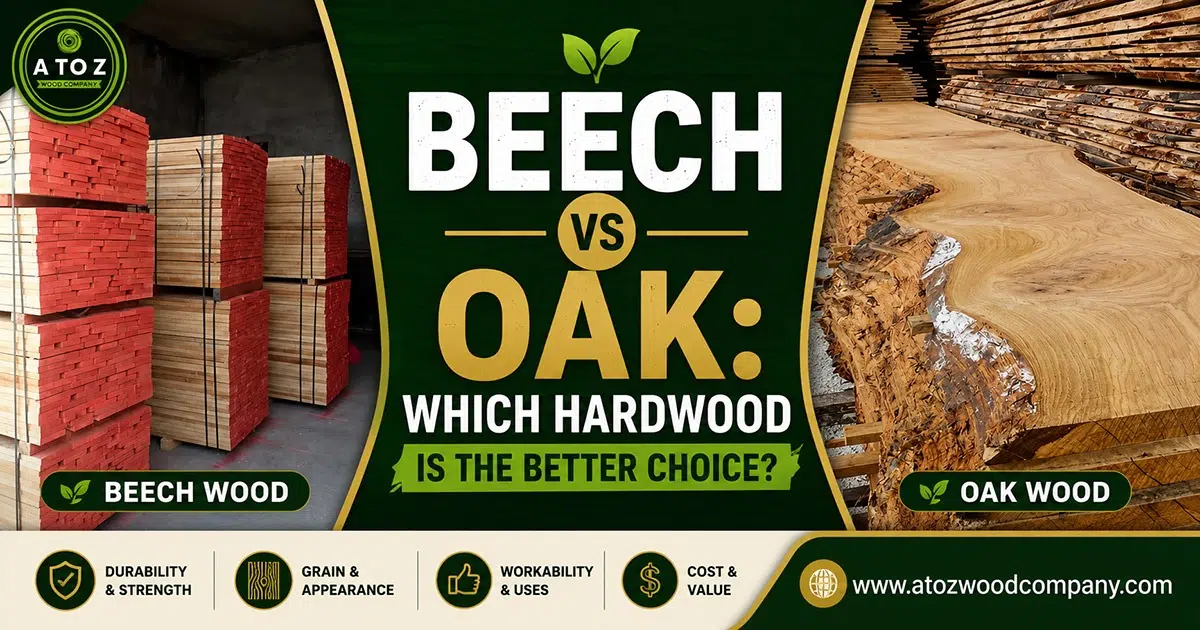
When selecting the right timber for your next project, whether it’s a piece of furniture, commercial flooring, interior cabinetry, or exterior woodwork, beech and oak are two of the most popular hardwood options. Both are attractive, durable hardwoods with impressive strength and workability. However, knowing the difference between the two is crucial to make an informed choice.
In this article, we compare beech and oak across a range of parameters, including physical characteristics and uses.
What Is Beech Wood?
Beech comes from the genus Fagus and includes several species, with European beech (Fagus sylvatica) and American beech (Fagus grandifolia) being the two most popular types. It is a hardwood known for its stunning pale yellowish tone with a fine, uniform grain and excellent machining properties. It is moderately hard and heavy, making it easier to handle than most hardwoods.
Beech is extensively used for furniture, kitchen utensils, cabinetry, plywood, tool handles, and bending applications.
What Is Oak Wood?
Oak is a harder, stronger hardwood sourced from trees in the Quercus genus in the Fagaceae family. Similar to beech, oak has many species, of which red oak and white oak are the most commonly used. Oak is yellowish-brown and is known for its dense structure, pronounced grain, and exceptional durability.
Oak is commonly used in flooring, cabinetry, furniture, plywood, construction, barrels, and marine applications.
What’s the difference between Beech and Oak Timber?
Appearance
A major difference between beech and oak is the grain pattern.
While both woods share a similar color tone, Beech has a straight, fine grain that offers a clean appearance. Its natural color ranges from pale cream to light pink or yellowish brown. It’s usually easy to stain and paint.
Grain in oak is much more pronounced with visible growth rings and unique patterns, especially in quarter-sawn boards. It’s particularly favored for furniture and flooring that need a dramatic, rustic appearance.
Strength and Hardness
Both beech and oak are strong hardwoods with good overall hardness and density.
Beech is particularly known for its high shock resistance. It is highly resistant to dents and everyday wear.
Oak is equally strong and dense but offers slightly better overall durability, especially in demanding environments and outdoor or marine projects.
Durability and Moisture Resistance
While beech is very hard and resistant to everyday wear, it’s only moderately resistant to decay or moisture and may need to be treated when used outdoors.
Oak is the clear winner here. White oak performs exceptionally well in demanding conditions due to its high natural resistance to moisture, fungal attack, and decay, making it suitable for kitchens, bathrooms, exterior construction, and marine projects.
Workability
Both hardwoods respond well to machine and hand tools, but they process differently.
Beech’s fine texture and straight grain make it particularly easy to work with. It cuts, sands, glues, paints, and finishes well, making it a favorite among furniture manufacturers. It also responds extremely well to steam-bending, making it ideal for curved furniture components.
Oak is denser and has a more prominent grain, which can make it slightly difficult to machine. Sharp tools and pre-drilling are recommended to avoid tear-out.
Common Applications of Beech Wood vs. Oak Wood
Beech is commonly used for:
- Indoor furniture
- Bentwood products
- Kitchen utensils and cutting boards
- Toys
- Stair components
- Plywood
- Tool handles
Oak is favored for:
- Hardwood flooring
- Durable & premium furniture
- Cabinetry
- Exterior and marine applications
- Dining tables
- Doors
- Structural timber
- Wine and whiskey barrels
Oak vs Beech Cost
In most locations, beech is generally more affordable than oak (particularly white oak), making it a suitable choice for budget buyers and bulk interior furniture projects.
White oak usually commands a higher price because of its distinct grain pattern, rustic appearance, durability and moisture resistance, and higher demand.
Beech vs Oak: Quick Comparison
| Feature | Beech | Oak |
| Wood Type | Hardwood | Hardwood |
| Color | Cream to pale pink | Light brown to medium brown |
| Grain | Fine and uniform | Bold and pronounced |
| Hardness | Very hard | Very hard |
| Moisture Resistance | Low | High (especially white oak) |
| Workability | Excellent | Good |
| Steam Bending | Outstanding | Good |
| Outdoor Use | Not recommended | Resistant to decay |
| Cost | Low to moderate | Usually higher |
How to Choose the Right Wood for Your Project?
- Analyze your requirements
- Compare the features of different woods
- Try before you buy
Both beech and oak are excellent and highly popular hardwoods. Both are beautiful and strong, but also have a few differences.
Choose beech for a clean, contemporary appearance, easy workability (with excellent steam bending), and a budget-friendly price.
Choose oak if durability, particularly moisture resistance, and a distinctive classic appearance are your priorities.
Conclusion
Beech and oak share more than just appearance. They are both strong, durable woods with long-lasting reliability. While beech is widely available, competitively priced, and offers great workability with a smooth appearance, oak is favored for its premium impression and superior durability.
At AtoZ Wood Company, we help you choose the right wood for your project and offer the most competitive pricing with seamless and safe worldwide delivery. Whether you’re building custom furniture, hardwood flooring, or any other woodworking project, buy quality hardwood timber online at special wholesale rates at atozwoodcompany.com.