+237 681 25 6934
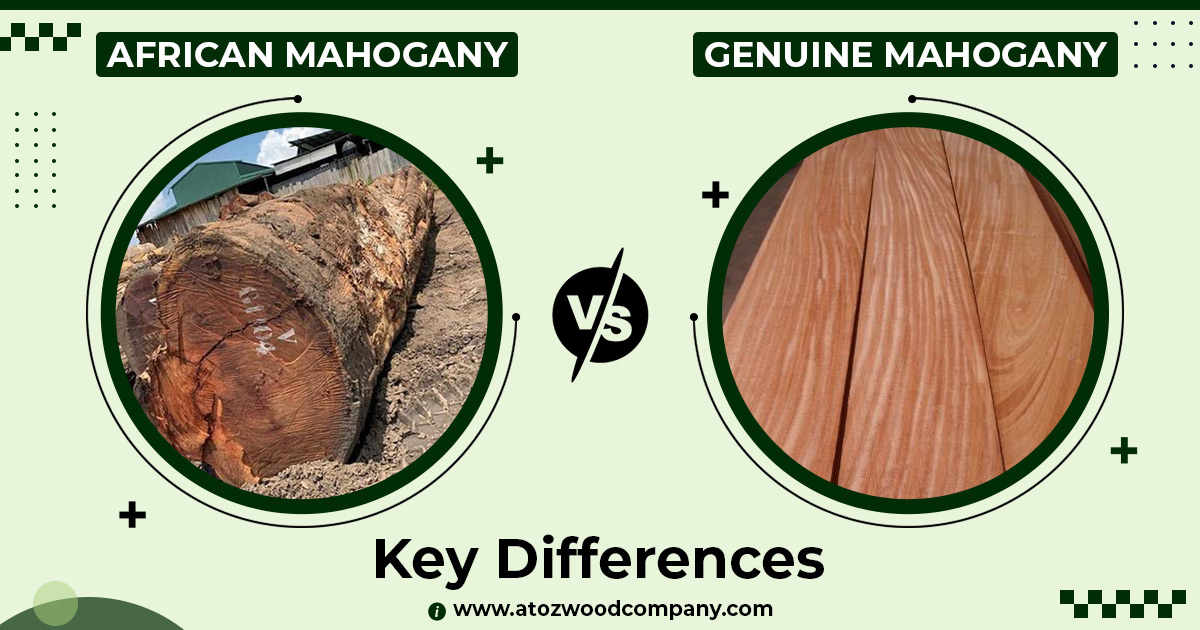
Mahogany is one of the most sought-after hardwoods in the global timber trade. However, many buyers often confuse African Mahogany with Genuine Mahogany, assuming they are the same species. In reality, they differ significantly in botanical classification, durability, appearance, price, and applications.
This detailed comparison will help you understand the real differences between the two, enabling you to make an informed choice for furniture manufacturing, construction, marine use, or bulk timber sourcing.
Understanding the Two Mahoganies
What Is African Mahogany?
It refers to several hardwood species native to West and Central Africa, mainly from the Khaya genus, including:
-
Khaya ivorensis
-
Khaya senegalensis
-
Khaya anthotheca
-
Khaya grandifoliola
These species are widely exported for furniture, doors, plywood, flooring, and boat building, making it a major player in the international timber market.
What Is Genuine Mahogany?
It is also known as True Mahogany, comes from the Swietenia genus, primarily:
-
Swietenia macrophylla (Honduran Mahogany)
-
Swietenia mahagoni (Cuban Mahogany – now restricted)
Native to Central and South America, Genuine Mahogany is considered the premium benchmark hardwood, prized for its consistency, beauty, and exceptional workability.
African Mahogany vs Genuine Mahogany: Technical Comparison
| Feature | African Mahogany | Genuine Mahogany |
|---|---|---|
| Botanical Genus | Khaya | Swietenia |
| Origin | Africa | Central & South America |
| Density (12% MC) | 530–670 kg/m³ | 480–640 kg/m³ |
| Durability Class | Moderately durable | Durable |
| Stability | Good | Excellent |
| Grain Pattern | Interlocked | Straight & uniform |
| Color | Pinkish brown to reddish | Deep reddish-brown |
| Workability | Good (may tear) | Excellent |
| Price | More affordable | Premium & expensive |
| Availability | Widely available | Limited supply |
Strength, Durability & Performance
African Mahogany Performance
It offers good strength and moderate natural durability, making it suitable for:
-
Interior furniture
-
Doors and frames
-
Veneers and plywood
-
Medium-duty construction
However, its interlocked grain can cause tearing during machining if not handled correctly.
Genuine Mahogany Performance
It is renowned for its exceptional dimensional stability, minimal movement, and resistance to warping. This makes it ideal for:
-
High-end furniture
-
Luxury interiors
-
Musical instruments
-
Marine and boat components
Its consistent grain allows for precise cutting, shaping, and finishing.
Appearance & Aesthetic Differences
-
African Mahogany typically displays a lighter tone with more variation in color and grain, making it suitable for large projects where cost efficiency matters.
-
Genuine Mahogany offers a rich, deep, uniform reddish-brown hue that darkens beautifully with age, making it the preferred choice for luxury applications.
Workability & Finishing
-
African Mahogany machines well but may require sharp tools due to grain interlocking.
-
Genuine Mahogany is considered one of the best woods to work with, responding excellently to sanding, carving, polishing, and staining.
Both species accept finishes well, but Genuine Mahogany produces a smoother, more refined final surface.
Price & Market Availability
-
African Mahogany price is significantly lower due to wider availability and multiple species.
-
Genuine Mahogany price is higher due to limited supply, strict regulations, and slow growth rates.
For bulk timber buyers, African Mahogany is often the more economical and scalable option.
Sustainability & Legal Considerations
Genuine Mahogany is subject to CITES regulations, making sourcing more complex and documentation-intensive.
African Mahogany, when harvested from certified and sustainably managed forests, offers a more reliable and compliant supply chain, especially for international exports.
At AtoZ Wood Company, African Mahogany is sourced using strict sustainable harvesting practices, ensuring legal compliance, environmental responsibility, and long-term supply stability.
Best Applications: Which Mahogany Should You Choose?
Choose African Mahogany if you need:
-
Bulk timber supply
-
Cost-effective hardwood
-
Furniture, doors, flooring, and plywood
-
Reliable international shipping availability
Choose Genuine Mahogany if you need:
-
Premium aesthetics
-
High-end furniture or marine use
-
Exceptional stability and workability
-
Luxury or heritage-grade projects
Final Verdict
While both woods carry the “mahogany” name, they serve different market needs:
-
African Mahogany is a versatile, affordable, and widely available hardwood ideal for large-scale projects and commercial applications.
-
Genuine Mahogany remains the gold standard for premium woodworking but comes with higher costs and limited availability.
Understanding these differences ensures you select the right wood for your budget, application, and performance requirements.