+237 681 25 6934

Teak wood (scientific name Tectona grandis) is widely regarded as one of the most premium hardwoods in the world — prized for its beauty, durability, and weather resistance. From luxurious outdoor furniture and marine decking to architectural interiors and bespoke carpentry, teak has earned a legendary reputation among woodworkers, builders, and designers worldwide.
In this guide, we’ll explore teak wood’s key physical and mechanical properties, its unique characteristics, primary uses, benefits, maintenance best practices, and how to choose authentic, high-quality lumber.
What is Teak Wood?
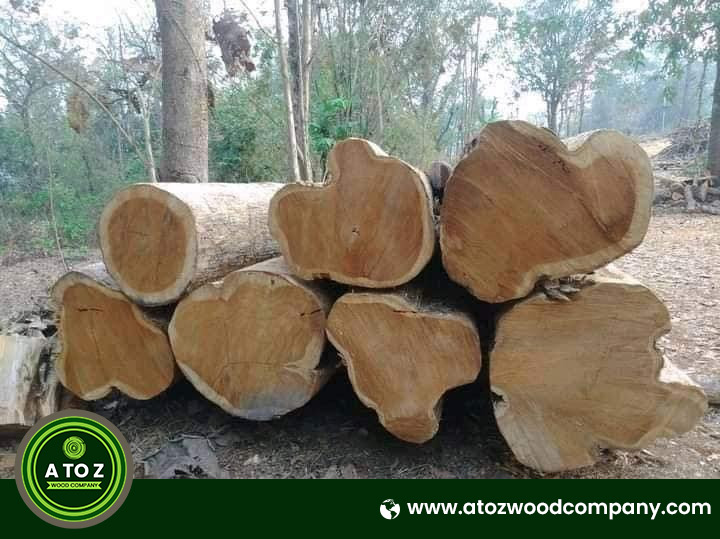
It is a tropical hardwood derived from large deciduous trees native to South and Southeast Asia — including India, Myanmar (Burma), Thailand, and Indonesia. Over centuries, it has been used in royal architecture, shipbuilding, and fine furniture due to its natural resilience and timeless appearance.
Key Physical Properties of Teak Wood
1. Hardness & Strength
-
Teak’s Janka hardness is around 1,000–1,070 lbf, which places it in the medium-hard hardwood category. This balance gives it durable strength without sacrificing workability for furniture and joinery.
Understanding teak’s measurable properties can help architects, builders, and buyers make informed decisions:
2. Density
-
With a density of approximately 630–750 kg/m³ at 12% moisture content, teak provides a high strength-to-weight ratio — strong enough for heavy-duty applications yet manageable for craftsmen.
3. Natural Oils & Weather Resistance
-
It contains natural oils and silica that form a built-in moisture-repellent barrier, making it exceptionally resistant to water, decay, fungus, and pests — even in harsh conditions.
4. Dimensional Stability
-
It exhibits low shrinkage and excellent dimensional stability, meaning it resists warping, twisting, and cracking across different climates and humidity levels — ideal for outdoor and marine settings.
Visual & Structural Characteristics
| Feature | Description |
|---|---|
| Color | Golden-brown that ages to rich brown or silvery-gray over time |
| Grain | Straight grain with occasional waviness |
| Texture | Smooth and moderately coarse |
| Aroma | Earthy, leathery scent due to natural oils |
| Workability | Easy to machine, sands and finishes beautifully |
Top Uses of Teak Wood
Thanks to unique combination of teak wood properties, that helps in serving a wide range of applications:
✅ Outdoor & Garden Furniture
It’s moisture resistance and durability make it a premium choice for patio sets, garden benches, and outdoor dining furniture.
✅ Marine & Boat Construction
Used extensively in boat decks, hull interiors, and marine fittings, teak thrives in salty, humid environments that would degrade most other woods.
✅ Decking & Flooring
Teak decking is highly sought after for its non-slip surface, beautiful grain, and weather-resistance, perfect for poolside terraces and premium hardwood floors.
✅ Doors, Windows & Architectural Features
Its stability and aesthetics make teak suited for entry doors, window frames, and fine architectural joinery.
✅ Fine Carpentry & Luxury Interiors
Teak’s workability and finish quality are ideal for cabinetry, decorative paneling, and bespoke furniture.
✅ Specialty Items
It is also used for cutting boards, veneers, musical instruments, and other high-end wood products due to its strength and fine finish.
Exceptional Benefits of Teak Wood
Here’s why it continues to be highly preferred across industries:
🌟 Unmatched Durability
Teak lasts for many decades — often outliving other woods by years — due to its natural resistance to rot, insects, and decay.
🌟 Low Maintenance
Unlike many woods that require chemical treatments or frequent sealing, teak performs exceptionally well with minimal maintenance thanks to its inherent oils.
🌟 Aesthetic Elegance
Its warm golden-brown hue and smooth texture add luxury and sophistication to furniture and interiors — and even develops a premium silvery patina when weathered without finish.
🌟 Sustainability Options
Plantation-grown and FSC-certified teak provide eco-friendly choices for conscientious buyers.
Conclusion
Teak wood stands at the top of hardwood choices due to its rare blend of natural strength, water resistance, aesthetic appeal, and longevity. Whether you’re sourcing timber for furniture, construction, marine use, or interior design, teak delivers performance that justifies its premium reputation.
Looking for premium, sustainably sourced teak lumber at competitive prices? Contact AtoZ Wood Company for bulk teak logs, sawn timber, and custom solutions with global delivery.
FAQs About Teak Wood
Q: Why is teak more expensive than other hardwoods?
A: Teak grows slowly, has limited global supply, and offers unmatched durability and beauty, making it a high-value investment.
Q: Can I use teak outdoors year-round?
A: Yes — it’s natural oil and stability make it ideal for all-weather outdoor use.
Q: What’s the difference between plantation and old-growth teak?
A: Plantation teak grows faster and can be slightly less dense, while old-growth teak (e.g., Burmese teak) typically offers deeper color and higher oil content.